

Why This Matters
The single most common mistake a subletter-host makes is over-customizing the room for their own taste, then expecting a stranger to feel at home. The other common mistake is under-customizing it—leaving personal items on shelves, photos on walls, a worn desk pad—and hoping the subletter just deals with it. Both approaches make the arrangement awkward for the subletter and risky for the host.
The right model is neutral layering: items that look intentional to anyone (a rolling cart, a reading lamp, a desk wrap) without being so personalized that they advertise "this is your host's stuff, please don't touch." The five touches below are reversible, cheap, and renter-safe. They come out in 17 minutes and fit in one car trunk.
The 5 Touches
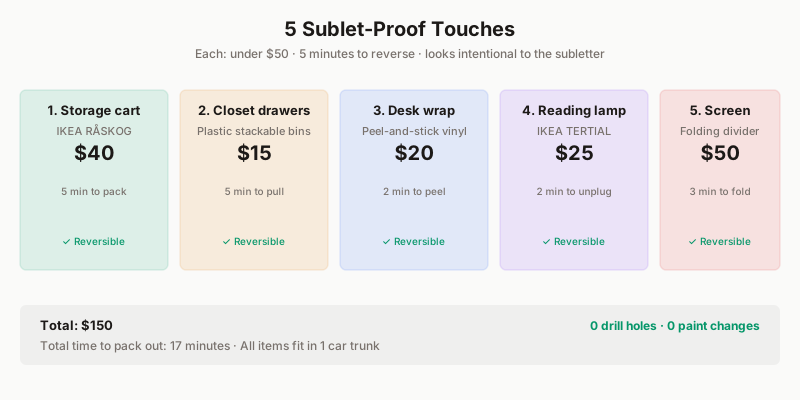
Touch 1 · Storage Cart · $40 · 5 min to pack
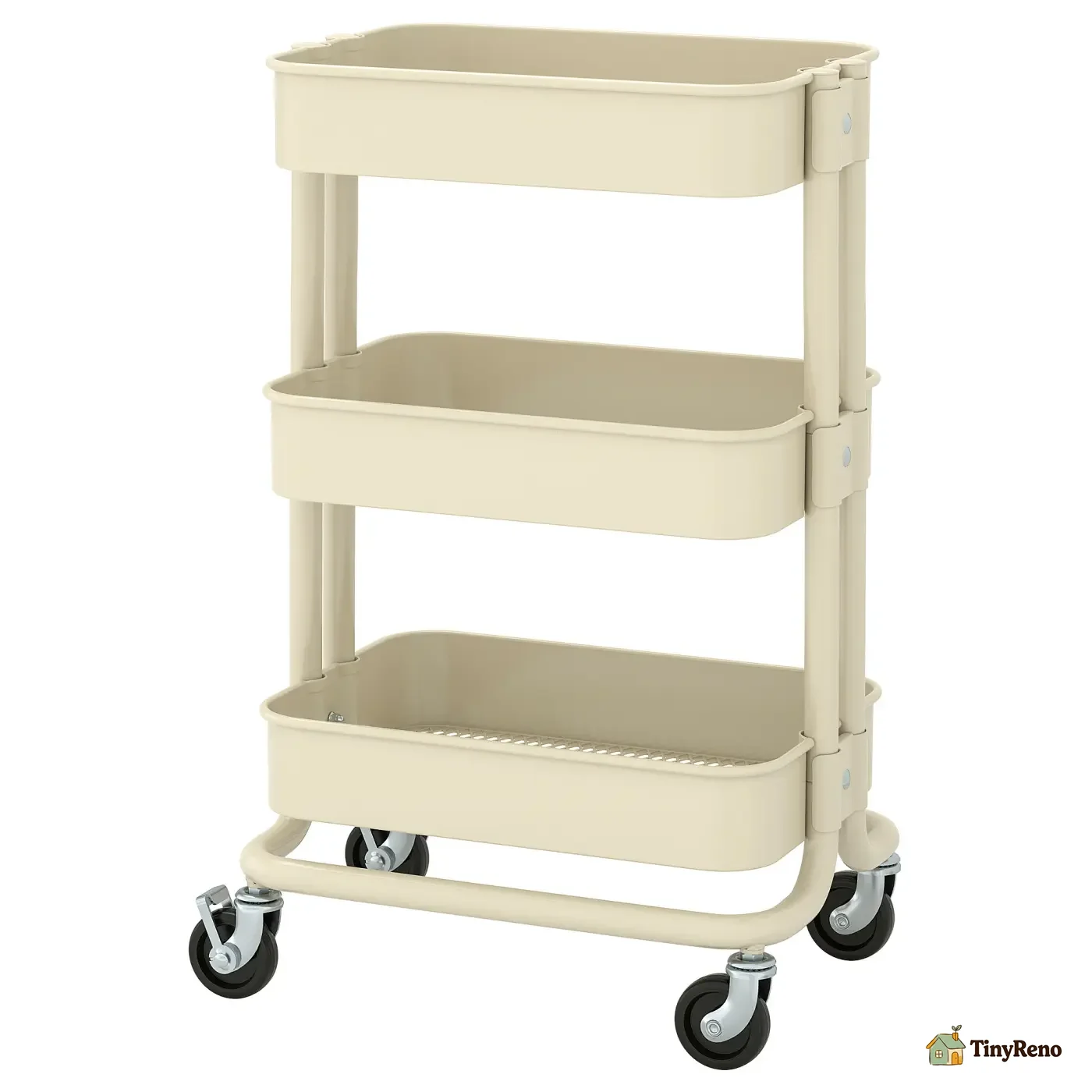
The single highest-leverage piece in any sublet arrangement is a three-tier rolling cart. The host's clothes, books, and small electronics go in the top two tiers; the bottom tier is left empty for the subletter's things. The cart rolls under the desk at night and beside the bed during the day. When the host returns, the cart rolls back out and the room reverts to its pre-sublet state.
The IKEA RÅSKOG is the standard at $40 in turquoise, beige, or black. The three tiers slide in and out independently, so the host can pre-pack each tier before leaving and unpack them in the same order at return. No tools required.
Touch 2 · Closet Stackable Bins · $15 · 5 min to pull
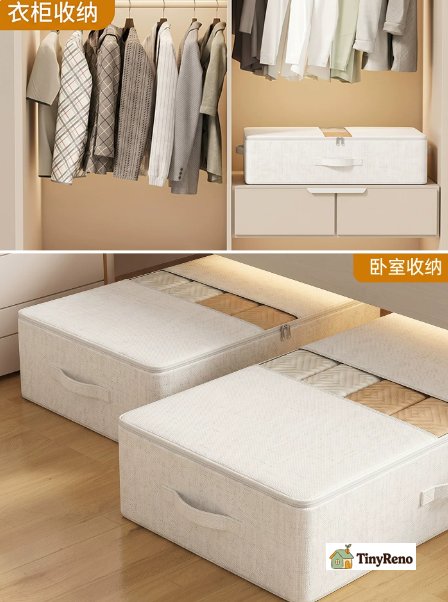
Closet space is the most contested area in any sublet arrangement. The host's solution: stackable clear plastic bins that fit a standard closet rod. The host puts their off-season clothes in 3–4 bins on the top shelf, leaves the bottom 4 feet of the rod for the subletter's clothes. Each bin clips closed, so the host can carry them out in one trip. When the host returns, the bins come back down to the top shelf, and the room reverts.
Look for bins labeled "underbed stackable" or "closet rod compatible" at Target, Walmart, or Amazon. The $15 figure is for a 4-pack. Avoid bins with wheels—they collect dust and look "moving in" rather than "storing."
Touch 3 · Peel-and-Stick Desk Wrap · $20 · 2 min to peel
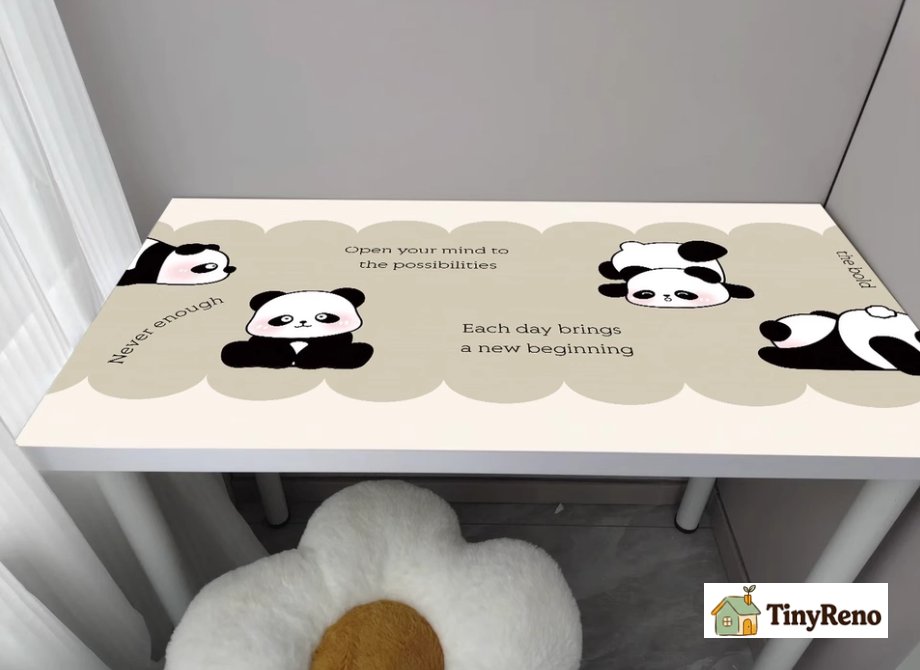
The desk is the second most contested surface after the closet. If the host has been using a desk pad, mouse pad, or a specific organizational setup, the subletter will inherit it—often awkwardly. The fix is a peel-and-stick vinyl wrap applied to the desk surface before the subletter arrives. The wrap gives the subletter a clean, neutral working surface; the host peels it off in one piece at return, and the desk is back to its original state.
Look for "peel-and-stick desk liner" or "shelf liner vinyl" at Amazon. The $20 figure covers a 18-by-48 inch desk. Avoid self-adhesive contact paper with strong adhesive (designed for permanent installation); look for "removable" or "renter-safe" specifically.
Touch 4 · Reading Lamp · $25 · 2 min to unplug
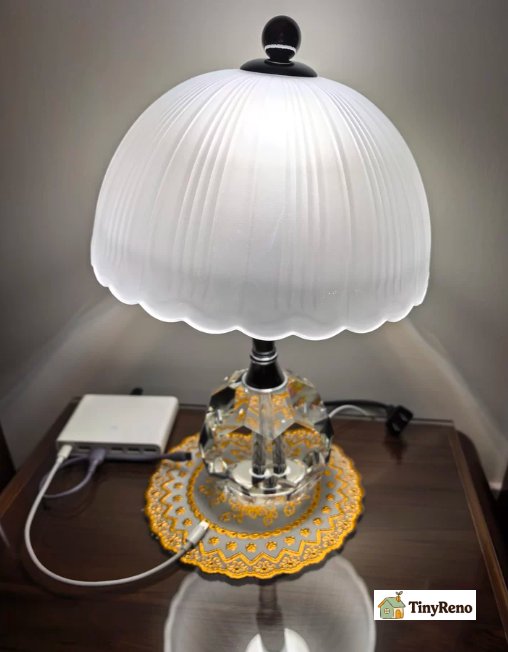
The single most appreciated amenity a subletter-host can provide is a reading lamp. Most apartments have either no bedside light or one ceiling fixture, both of which are uncomfortable for evening reading. The IKEA TERTIAL ($25) clips onto a headboard or desk and uses a standard E26 bulb. The host takes it at return; the subletter gets a fully functional reading setup.
Alternative: a small table lamp with a USB power cord, which eliminates the need to plug into the wall outlet. The host can leave the lamp behind as a "thank you" gift if the subletter wants to keep it.
Touch 5 · Folding Privacy Screen · $50 · 3 min to fold
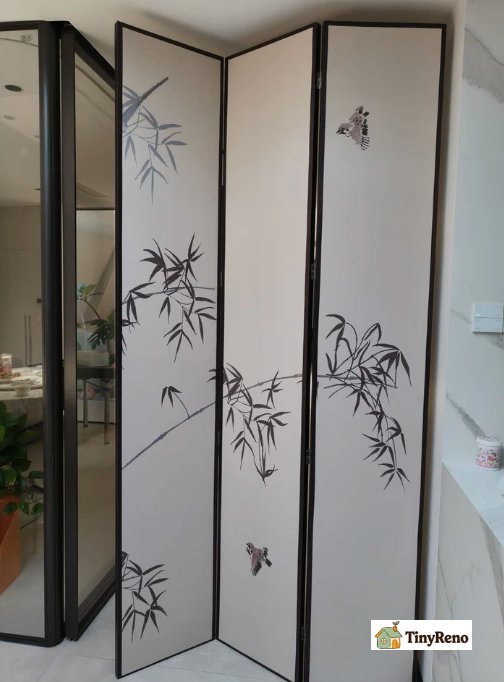
A privacy screen is the answer to a sublet-specific problem: how to separate "host's remaining items" from "subletter's space" without using a wall. A 4-panel folding screen (60 inches wide, 60 inches tall) creates a visual boundary behind which the host can stack their bins, the desk wrap, or other items that don't fit in the rolling cart. When the host returns, the screen folds flat and slides behind the door or under the bed.
Look for "4-panel folding privacy screen" at Amazon, Target, or IKEA (the IKEA RISÖDAL model is the budget pick at $50). Avoid framed canvas prints or heavy wood screens—they're hard to move and read as permanent furniture.
The 17-Minute Pack-Out
When the subletter moves out and the host returns, the room reverts in 17 minutes flat:
- Touch 1 (cart): Pull out, roll to the car. 5 min.
- Touch 2 (bins): Pull each bin from the closet top shelf, carry out. 5 min.
- Touch 3 (desk wrap): Peel from one corner, lift in one sheet. 2 min.
- Touch 4 (lamp): Unplug, unclip, carry out. 2 min.
- Touch 5 (screen): Fold flat, slide behind door or under bed. 3 min.
Total: 17 minutes, one car trunk, zero damage to the apartment. The host returns to a room that looks exactly like the day they left it.
Legal Note: Always Check the Lease First
Subletting legality varies by city, state, and lease language. Two things to verify before subletting:
- The lease allows subletting. Some leases prohibit it entirely; others require landlord written approval. In NYC, for example, the prime tenant has a legal right to sublet with landlord approval (which cannot be unreasonably withheld). In San Francisco, subletting is allowed but the master lease controls. Most leases in most states require landlord notification regardless of whether subletting is allowed.
- The five touches above do not constitute a "modification." None of the items involve drilling, painting, or removing fixtures. A landlord who sees a subletter using a rolling cart and a reading lamp cannot reasonably claim that the room has been "modified." If the host wants extra peace of mind, photograph the room before the subletter arrives and again after they leave—the standard move-out documentation.
This article does not constitute legal advice. For state-by-state sublet rules, consult your local tenant union or attorney.
Frequently Asked Questions
Can you decorate a room you're subletting?
The short answer: keep it light. Anything you bring in should be removable without damage. The five touches in this article all qualify: a rolling cart, stackable bins, a peel-and-stick desk wrap, a reading lamp, and a folding screen. None of them drill, paint, or anchor to the wall. Avoid wall art with nails (use command strips instead), avoid painting or wallpapering, and avoid moving the existing furniture. If you want a more permanent change, get written landlord approval first.
How do I protect my stuff when subletting?
Three layers of protection: (1) photograph everything you leave in the room before the subletter arrives, time-stamped; (2) store anything you cannot replace in a locked bin (touch 2 in this article) or take it with you; (3) photograph the room again at return. For valuable items, consider a small dorm-style safe that bolts to the desk. The five touches in this article are designed to make the boundary between "host's things" and "subletter's space" visible without needing locks.
What should I remove when subletting?
Take anything that is not replaceable in 24 hours: passport, jewelry, family photos, electronics chargers, sentimental items. Leave what is replaceable or that the subletter might use: towels, basic kitchenware, books, decorative items you do not care about. The five-touch kit in this article handles the "leave" side: items that look intentional to the subletter but are easily packed when you return.
How do I make my sublet feel like home?
The single highest-leverage move is to provide a clean, neutral starting point and let the subletter personalize within it. The five-touch kit does this: the rolling cart, the reading lamp, and the desk wrap are all "ready for your things." Avoid leaving personal items on shelves, walls, or surfaces—they signal "this is not your space." A short welcome note with the wifi password, the trash schedule, and one sentence about the apartment ("the shower pressure is weak but the kitchen light is great") is worth more than any amount of decoration.
Do I need to tell my landlord about a sublet?
In most jurisdictions, yes. Many leases require written landlord approval before subletting; some require only notification. In NYC, landlords cannot unreasonably withhold consent but they can require the subletter to fill out a standard application. In California, the prime tenant remains liable for rent and damages even during a sublet. Always check your lease language and your state and city rules before finalizing a sublet arrangement. Skipping this step can result in eviction proceedings against both you and your subletter.
What happens if sublet causes damage?
In most jurisdictions, the prime tenant (you) remains liable for damage to the apartment during a sublet. The subletter is liable to you, not to the landlord, under most sublet agreements. This is why the move-out checklist (linked below) matters even for a sublet: photograph the room at the start and end of the sublet, and have the subletter sign a brief acknowledgment of the room's condition. The reversible-touch kit in this article also helps: items you bring in do not modify the room, so there is nothing to "damage" beyond normal wear.
How long can you sublet for?
Most leases cap sublets at 30 to 90 days; longer sublets often require landlord approval and may trigger master lease reassignment clauses. In NYC, sublets cannot exceed 30 days without landlord consent under the prime tenant's protection. In California, the cap depends on local rent control rules. Always check your lease and local rules; the five-touch kit works for sublets of any length, but the legal framework may not.
Are sublets legal?
In most US cities and states, sublets are legal with proper notification and (in many cases) landlord approval. NYC's 2019 Housing Stability and Tenant Protection Act codified the right of prime tenants to sublet with landlord consent that cannot be unreasonably withheld. San Francisco allows sublets but the master lease terms control. Some cities restrict short-term sublets under 30 days to prevent de facto short-term rentals. The five-touch kit assumes a legal sublet arrangement; if your jurisdiction restricts subletting, this article does not apply.
Wrapping Up
Subletting your room does not require giving up your space or your belongings. Five reversible touches—a rolling storage cart, stackable closet bins, a peel-and-stick desk wrap, a reading lamp, and a folding privacy screen—make the room look intentional to your subletter and pack out in 17 minutes when you return. Total cost: $150. Zero drill holes. Zero paint changes. One car trunk.


Discussion (0)
Sign in to join the discussion