

My neighbor Mei asked me to help her pick out a bathroom exhaust fan with light and heater last fall. She was renovating the bathroom in the apartment she had just moved into, her contractor had quoted her two prices, and she did not understand the difference between them. The cheap option was a fan with a heat lamp. The expensive option was a fan with a real heater built in. She texted me: "Are these the same thing?"
They are not the same thing. The first heats one square foot under the bulb and leaves the rest cold. The second heats the whole room. Mei had been about to spend a weekend installing the wrong unit in her bathroom. After two hours on the phone and three rounds of pictures, she ended up with a wall mount bathroom exhaust fan with light and heater that her electrician said was "the quietest thing I have installed in years."
This article is the research I wish I had done for my own place a few years earlier. I made the same mistakes Mei almost made, and so did my mom when she redid her rental. The four mistakes below are not theoretical. They are things I have personally watched go wrong in three different bathrooms I have helped with.
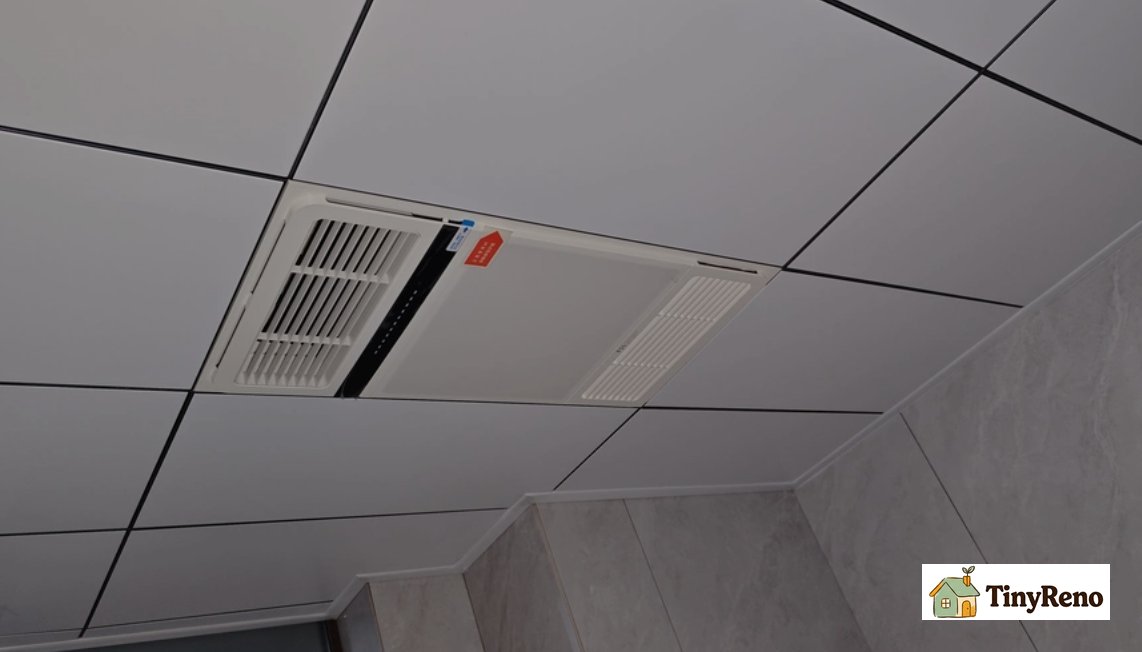
When My Neighbor Asked Me to Help Pick One Out
Mei's contractor showed her two pictures of a bathroom exhaust fan with heat lamp versus a bathroom exhaust fan with a built-in heater. Both looked clean and modern. The heat lamp version was $40 cheaper. To someone who has never lived with either, the choice seems obvious.
Here is what the spec sheet does not tell you. A heat lamp bathroom exhaust fan uses an infrared bulb, the same kind of bulb you would find in an outdoor patio heater. It throws a column of infrared light straight down. The square foot directly below the bulb gets warm. The rest of the bathroom stays cold. In a 50 square foot bathroom, you end up with one warm circle and a chilly ring around it. The unit is technically working. The unit is not actually heating you.
A real bathroom exhaust fan with light and heater uses either a PTC ceramic element or a fan-forced heating coil to warm the air, then blows the warm air through the room with the same fan that does the ventilation. The whole room warms up. The mirror stops fogging. The towels actually dry. The whole point of a combined unit is the whole room, not a spot.
When I explained this to Mei, she asked the obvious question: why does the cheap one even exist? Because some bathrooms have low ceilings, and some buyers do not realize what they are getting. The heat lamp design is not bad for what it is. It is just not what most people think they are buying.
What I Got Wrong About the First Unit at My Own Place
I bought my first bathroom fan with light and heater the way most people do. I scrolled through pictures online, found one that looked clean and modern, ordered it, and waited two weeks for delivery. When my electrician installed it, the heating element was so loud on high that it sounded like a small hair dryer running inside the ceiling.
Three mistakes in one unit.
Mistake 1: I Bought the Loudest Single-Motor Unit on the Market
The first unit I bought had a single motor driving both the heating fan and the exhaust fan. The spec sheet listed the CFM at 110, which sounds great. The spec sheet did not list the sones. When installed, the unit ran at 52 sones on high, which is roughly the volume of a hairdryer running in the next room. In a small bathroom, that is uncomfortable. In a bathroom next to a bedroom, that is a deal-breaker.
The fix is to check the motor count before you buy. Single-motor units in this category typically run 50 to 55 sones at full speed. Dual-motor units run 35 to 42 sones, which is a soft hum. Triple-motor units run 28 to 35 sones, which is near silent. The spec sheet almost always lists CFM. It almost never lists sones. You have to ask.
Her electrician said the same thing: two motors is enough for a small bathroom.
Mistake 2: I Bought the Wrong Wattage Lighting
The first unit I bought had a 20W LED panel. The spec sheet described this as "efficient" and "modern." What it actually meant was dim. The 20W panel was fine for showering, but anything that required more visual detail was a struggle. Applying makeup, shaving, or reading the labels on my shampoo bottles all happened under light that was borderline usable.
I have heard the same complaint from other buyers. The whole point of a combined unit is one fixture doing the work of three. Skimping on the lighting defeats the purpose.
The fix is to match the wattage to what actually happens in the bathroom. 20W works for a shower-only room under 4 square meters where nobody applies makeup. 24W is the practical minimum if anyone applies makeup, shaves, or reads in the room. 26W or higher is needed for accessible bathrooms, vision-impaired users, or anyone doing detailed grooming.
Mei's contractor sent her a 24W unit after I explained this. She told me two weeks later that the lighting was the single best thing about her new bathroom.
Mistake 3: I Got the Duct Size Wrong
The unit I bought had a 3 inch duct outlet. The existing duct in the ceiling was 4 inches. I forced a reducer on, ran the fan for ten minutes to test, and the airflow dropped by a third. The motor worked harder to push air through the smaller opening, which shortened its life.
The fix was returning the unit for the right size. Before you buy, measure the diameter of the existing duct pipe at the ceiling hole. Common sizes are 3, 4, and 6 inches. Match the new unit's outlet to your duct, not the housing dimensions.
The same lesson applies to a wall mount bathroom exhaust fan. Wall mount units vent directly through an exterior wall instead of up through the ceiling. The duct run is shorter and quieter. But the wall cap has to match the wall thickness, and the cap color has to match the local aesthetic if you live in a place with an HOA. One buyer I read about installed his wall mount unit only to find that the HOA rejected the bright white vent cap because the building standard was beige.
Mistake 4: I Ignored the First-Run Smell
The first time I ran my unit on the highest heat setting, there was a faint burnt-plastic smell. After some research, I learned this is normal. The PTC element ships with a thin protective coating that burns off the first time the unit reaches full temperature. The smell clears in ten to fifteen minutes.
The fix is not to return the unit. The fix is to run it on high for thirty minutes with the bathroom door open and the window cracked before you shower in the room for the first time. If the smell persists after a week of regular use, that is a defect. One or two cycles of first-run smell is just the new-unit smell working its way out.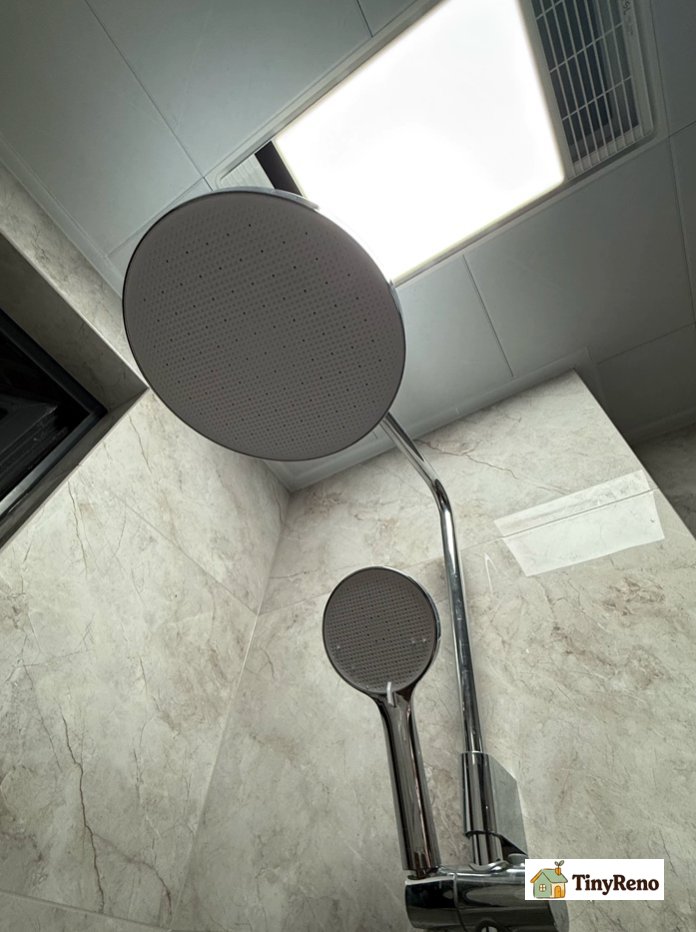
The Three Features the Spec Sheets Don't Tell You About
Most product descriptions spend their time on wattage, CFM, and sones. They almost never mention the features that actually make a unit livable day to day. Here are three I have seen make or break a buyer's experience.
The 3W Night Light
A handful of units include a small 3W night light for late-night bathroom trips. The wattage is small enough that it does not wake anyone up but bright enough that you do not stub your toe. One buyer told me his 3W night light "is brighter than I expected." 3W is the sweet spot for a small bathroom.
A Drying Cycle
Some units include a drying cycle that runs the heating fan for twenty minutes, pauses, then repeats. One buyer I read about said she uses it to dry laundry during the rainy season instead of running a separate dryer: "The drying cycle runs for twenty-some minutes, then I switch to high heat."
It is not a real clothes dryer for a full load, but it is genuinely useful for a wet towel, a sweater, or finishing a load that came out of the washer damp. If you live somewhere without a dryer, this feature alone can justify a higher-end unit.
A Backflow Damper
A backflow damper is a small flap inside the exhaust port that closes when the fan is off. Without it, outside air comes back through the vent pipe. In any climate with birds, raccoons, or curious rodents, a missing damper is an open invitation. One buyer found a bird nest in his duct when he finally opened the cover to clean it. A missing damper on a new unit is a sign the manufacturer cut corners.
What My Mom's Rental Bathroom Taught Me
My mom redid her rental bathroom last spring. The landlord paid for the renovation, but she got to pick the fixtures. Her bathroom has a concrete ceiling with no cavity, and the duct had to run through the exterior wall. The answer was a wall mount unit, which is quieter in this setup because the duct run is short and direct.
I steered her toward a unit with a wireless remote. Wireless remotes stick to the wall with adhesive, which means no electrical wiring to run. For a renter, that is the difference between a reversible change and a permanent modification. When she moves out, she pulls the remote off the wall and the apartment is back to its original state.
For her situation, the keypad option made more sense. She is in her seventies, and the large buttons are easier to read than a small remote. The trade-off is that the keypad has to be hardwired, which is a job for the landlord. The point is to pick the control type that matches the person who will actually be using it.
How to Talk to Your Landlord If You're Renting
If you rent, you almost certainly cannot replace the bathroom exhaust fan yourself. Here is how renters frame the conversation.
The opening line is: "The bathroom fan is broken and the mirror stays fogged after every shower. Is that a habitability issue, or do you want to handle it directly?" That framing puts the landlord in the position of choosing between two outcomes. Most choose to handle it directly. Once they are handling it directly, you can suggest the unit you want installed, with a link to a product page. Landlords do not want to be called back for a return visit, so a unit with a 3-year warranty and quiet operation is more likely to get approved than the cheapest unit on the market.
If your landlord does not act, your local housing code or tenant union can write a letter on your behalf. A non-functional exhaust fan is a habitability issue in most cities.
What I Told My Neighbor in the End
After two hours of research, here is what I told her.
A dual-motor or triple-motor unit with a real PTC heating element, not a heat lamp. A 24W lighting panel if she was ever going to apply makeup or shave in the room. A duct size that matched her existing ceiling opening, which I told her to measure before she ordered. A wall mount configuration if her bathroom had an exterior wall, a ceiling configuration if it had attic access. An inline bathroom exhaust fan with the motor in the attic is quieter than either, but it needs a professional to install. A wireless remote if she was renting, a hardwired keypad if she owned the place.
She ordered a unit that hit all five. Her electrician installed it in three hours. Two weeks later she texted me that her bathroom was the warmest room in the apartment in the morning, the mirror cleared in ten minutes after a shower, and her boyfriend had stopped complaining about the noise.
The right bathroom exhaust fan with light and heater is the one your family stops noticing, because it does the job without making you think about it. The wrong one is the one you keep adjusting and apologizing for when guests stay over. Mei has stopped thinking about hers. That is how I know the research was worth it.


Discussion (0)
Sign in to join the discussion