

In March of last year my friend Maya bought a 1980s Atlanta townhouse with a powder room so small it barely qualified as a room. Five feet by five feet, no window, a single overhead light, and a builder-grade vanity that had been there since the Reagan administration. She wanted to make it feel intentional without spending what a full bathroom renovation would cost. We went to three stores, ordered eight sample sheets, taped them all to the wallpaper powder room over one weekend, and lived with them for a week before deciding. Out of eight samples, five patterns looked right, three looked like a mistake by month three, and one got installed. This is the cheat sheet for choosing a wallpaper for a powder room, what to skip, who to buy from, and how to hang it in a single Saturday so it comes back off cleanly when the lease ends.
Five Wallpaper Patterns That Work in a Small Powder Room With No Window
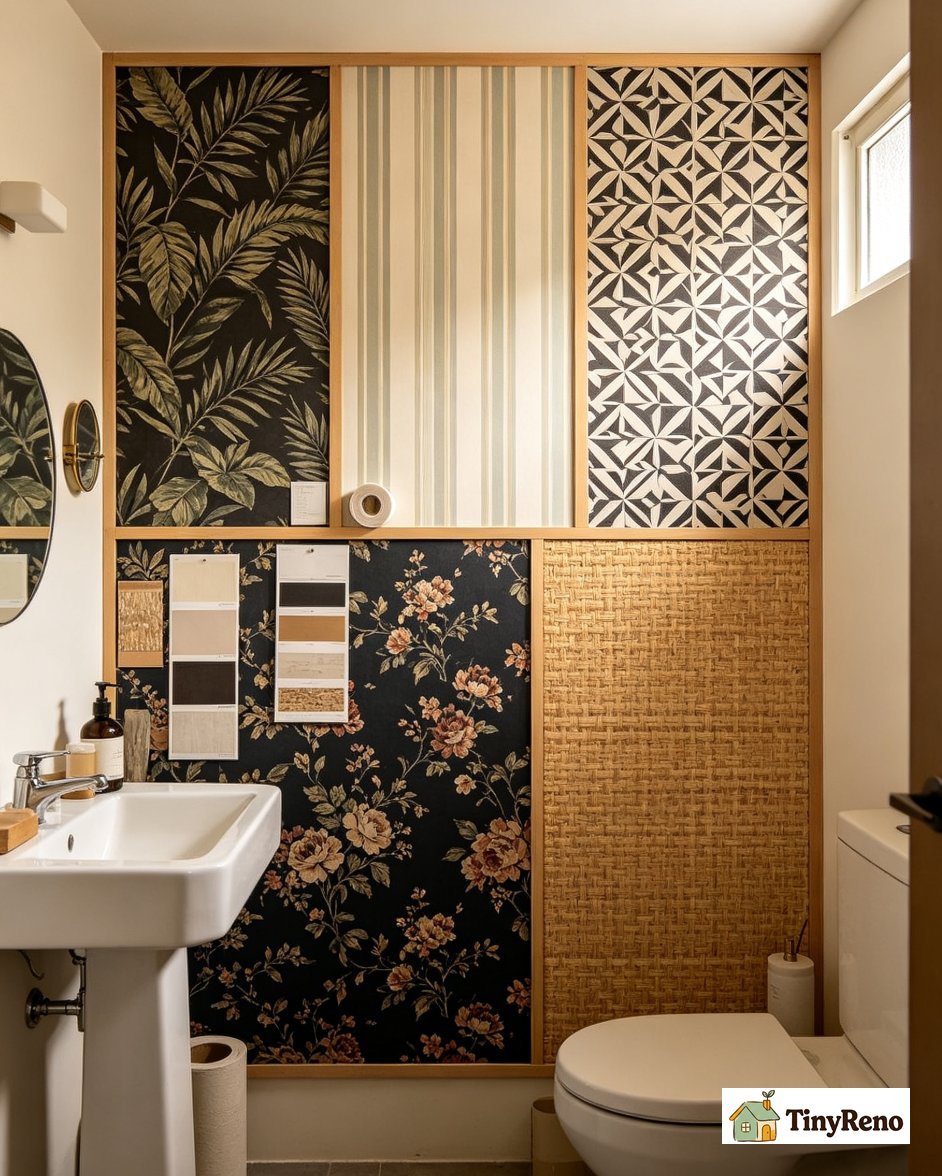
Maya's powder room is the worst case for any pattern. Five by five means the walls are visible from inches away. No window means there is no natural light to soften a busy print. The single overhead light means any pattern that does not read well in direct artificial light will look different at night than it did in the store. After a week of living with the eight samples, here are the ones that survived.
Large-scale botanical. Oversized leaves in deep green or jewel tones on a soft background. This is the pattern Maya ended up choosing, and the reason it works in a small room is counterintuitive. Large-scale prints actually make a small room feel bigger because the eye reads them as continuous depth rather than as repeating small bumps. The specific paper Maya chose was Tempaper Palm Leaves in emerald, which ran about $2.50 a square foot when she bought it. Tempaper's pricing varies by pattern and retailer — I've seen it anywhere from $2 to $4 depending on the design — so budget for the higher end and treat anything lower as a bonus. It looks expensive, it photographs well, and it forgives the slightly crooked seams that always happen on a first wallpaper job.
Vertical stripe. Thin, evenly spaced stripes in a soft contrast like cream and pale gray or cream and navy. This is the most reliable pattern for a powder room with a low ceiling because the vertical lines draw the eye up and make the ceiling feel taller. The catch is that any seam misalignment becomes obvious on a stripe, so this pattern demands careful hanging. Maya considered it as a backup if the botanical felt too bold.
Black and white geometric. Diamond, hexagon, or trellis patterns in flat black on white or charcoal on cream. This is the timeless choice that ages well, photographs well on real estate listings, and survives any paint color change in the rest of the house. It also hides the inevitable scuffs near the door handle because the pattern distracts the eye. For renters who plan to sell or move within five years, geometric is the lowest-risk powder room wallpaper pattern.
Moody floral or dark romantic. Deep plum, burgundy, midnight blue, or forest backgrounds with botanical or damask overlays, ideally with a touch of metallic gold. This is the choice for someone who wants the powder room to feel like a small jewel box, dramatic and intentional. It only works if the rest of the powder room is kept simple (white vanity, plain mirror, single sconce) because the wallpaper is doing all the design work.
Grasscloth or natural texture. Real grasscloth or a high-quality faux grasscloth in a warm natural tone like oat, sand, or soft sage. This is the choice for someone who wants the room to feel spa-like and quiet. Grasscloth is forgiving of seams because the texture is supposed to be irregular. It is also one of the more expensive options at roughly $3 to $6 per square foot for real grasscloth.
Three Wallpaper Patterns That Fail Within Three Months in a Powder Room
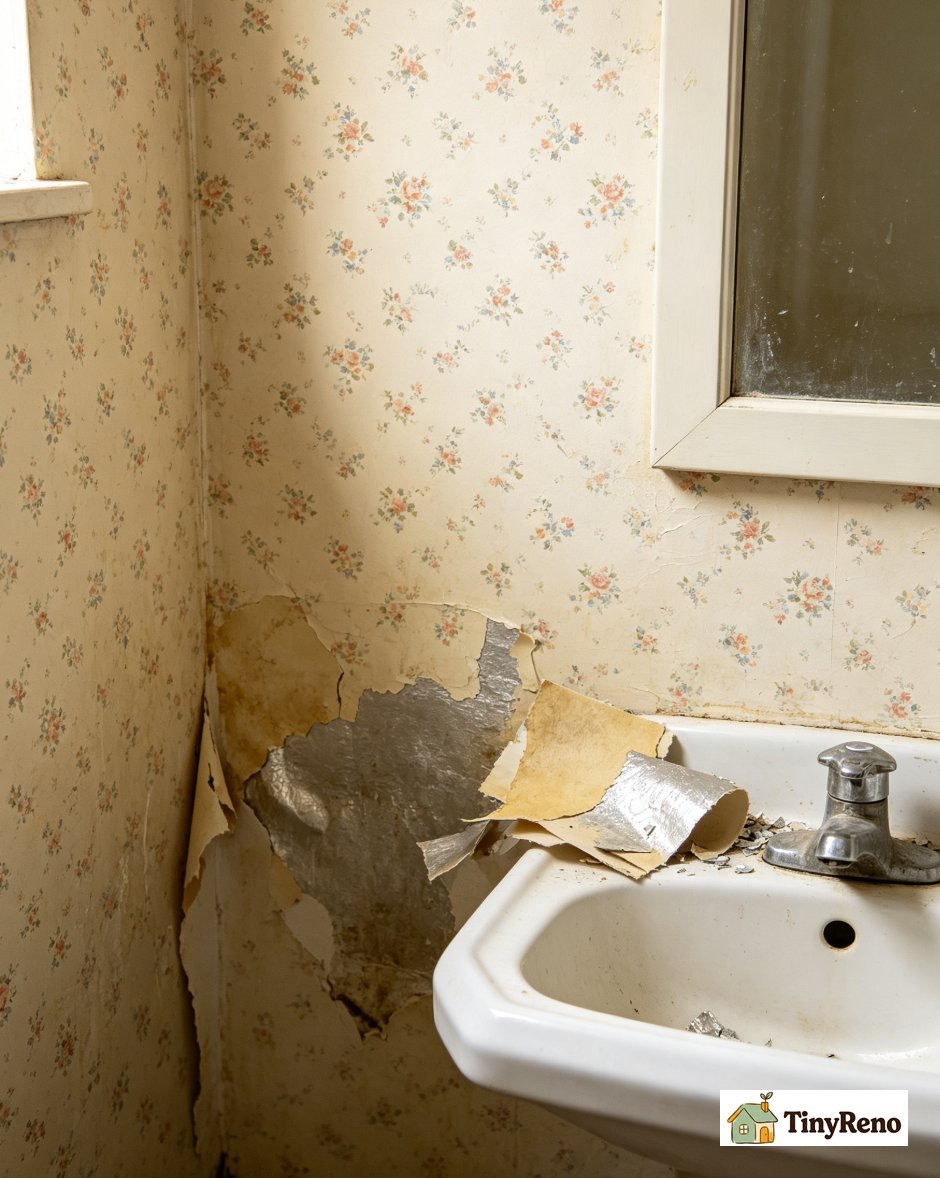
Maya's sister used a budget brand from Amazon — the kind that costs $0.80 a square foot and has 4,000 reviews with an average of 4.2 stars. So part of her failure was the product, not just the pattern. But the pattern choices she made would have failed even on a premium substrate. By month three, two of the panels had started peeling at the seams, one section near the sink had yellowed, and a metallic stripe along the ceiling had begun flaking off in small silver chips that ended up on the floor and on her cat. Her three mistakes map to the three patterns we tell everyone to avoid in a small humid room with no window and no margin for error.
Small busy pattern. Anything under about two inches in repeat, especially florals with multiple colors per square inch. In a larger room with natural light, these patterns look charming. In a five by five powder room with a single bulb overhead, they look like visual static. The eye cannot rest. After a week, the room feels exhausting. After three months, Maya's sister stopped going in there if she did not have to. A powder room should feel like a small delight, not a small headache.
Light pastel, cream, or warm white. Anything in the off-white, ivory, or pale yellow family will yellow visibly within six months in a powder room because humidity from the sink plus the closed space plus artificial lighting accelerates oxidation. Maya's sister had a soft buttercream pattern with white daisies. By month three the background had turned a faint but unmistakable nicotine yellow, and the daisies looked dirty against it. In a powder room, you either commit to white (cool white, not warm) or you commit to color.
Glitter, metallic, or foil finish. Any wallpaper with a metallic or foil-printed surface will oxidize and flake in a humid room. The metallic layer is essentially a thin foil bonded to the paper, and the bond fails in the presence of repeated humidity cycles. Maya's sister had a gold-and-cream damask that looked stunning in the store. By month three the metallic had begun separating in the area above the sink, and the room looked like it was shedding glitter. The fix is full replacement, not patching, because once the metallic fails, it keeps failing.
One Botanical Wallpaper Supplier Comparison Across Four Sources
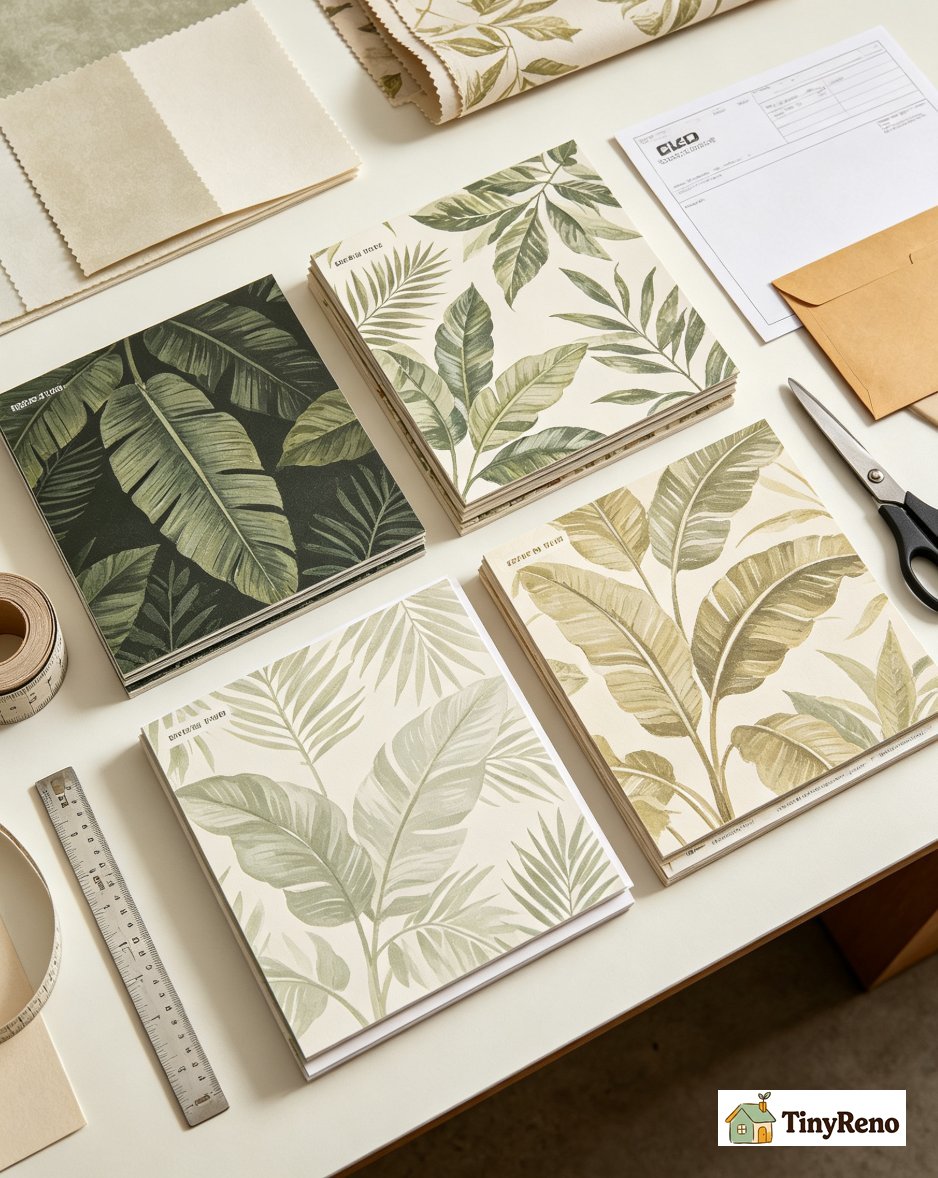
Once Maya decided on large-scale botanical, we still had to pick a source. Four suppliers sell comparable patterns at four very different price points. Here is how they compare across the four dimensions that mattered for Maya's wallpaper powder room: print quality, removability, price, and lead time.
Tempaper was our starting point — it's the brand you've seen on Instagram, and for good reason. The print quality is consistent and the adhesive holds up for at least two years in a normal room. Maya ordered a sample overnight and had the full roll by the following weekend.
Chasing Paper is the more curated cousin of Tempaper. Slightly thicker paper, slightly more expensive, and a smaller pattern library. We didn't find anything there that Tempaper didn't have a near-identical version of, so we passed.
Wall Pops was the budget option we almost bought before reading reviews more carefully. It's the kind of paper you'd put in a kid's room or a short-term rental, not a powder room you want to survive humidity for two years.
Spoonflower is a completely different category. It's for when you want something no one else has. Here's the thing about their pricing: paper is sold by the yard, but the roll is only 27 inches wide, so you're really paying around $11 per square foot — not the $2.50 Tempaper charges. That's the difference between a $200 powder room and a $900 one. Maya used Spoonflower for just one accent panel behind the toilet, because the math only makes sense on a small wall. The other three walls used Tempaper. That mix of brands is what made the room feel curated rather than catalog.
Six Steps to Hang Wallpaper in a Five by Five Powder Room in One Day
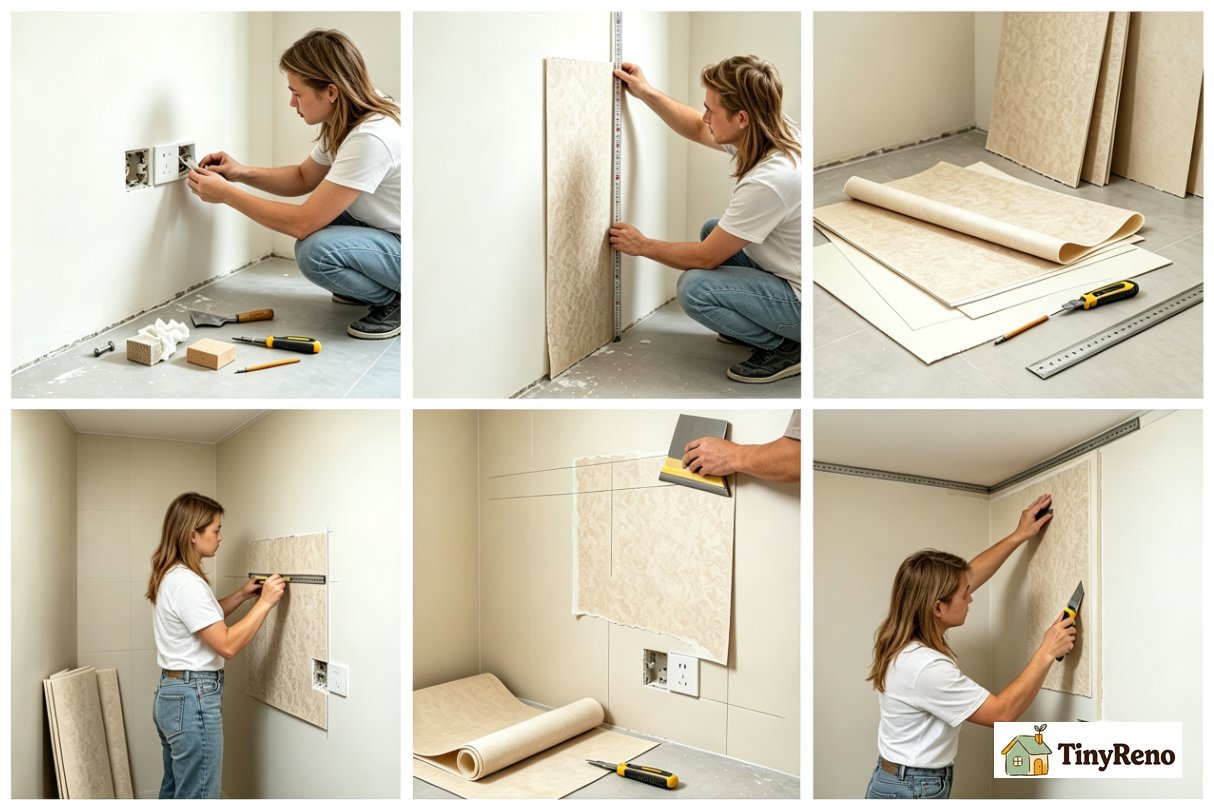
Maya's powder room is twenty linear feet of wall, roughly one hundred square feet of surface. With two people, working at a relaxed pace, the install took six hours including lunch. Here is the exact sequence we used, and where you can safely skip a step.
Step one, prep the walls. Remove outlet and switch covers. Fill any nail holes and sand smooth. Wipe the walls with a damp microfiber cloth to remove dust and any residue. If the walls have any texture (orange peel or knockdown), spend an extra hour skim coating the area where the seams will land, because peel-and-stick will telegraph texture through the seams and they will show.
Step two, measure and cut panels. Measure the wall height and add two inches of overlap top and bottom. Cut all the panels in advance, number the back of each one in the order they will hang, and lay them on the floor face down in the same order. This is the single biggest time saver. Do not try to measure and cut as you go.
Step three, plan the layout. Pick which wall gets the first panel. The wall with the most visible corner is the right choice because you want the cleanest seam there. Dry-fit the first panel on the wall (peel the backing only at the top, tape it in place, step back, and check) before you commit to peeling the whole backing off.
Step four, hang the first panel. Peel six inches of backing off the top, align the panel with a plumb line (use a level), press the top section to the wall, then slowly peel the backing downward while smoothing the paper with a flat plastic smoother. Work from the center out to the edges to push air bubbles away. If a bubble appears, lift that section and re-press rather than trying to push it out.
Step five, repeat and align. Hang the next panel, butt the seam against the previous one, do not overlap. Use a seam roller to press the seam flat. Work around the outlet by cutting an X over the outlet box and trimming the flaps with a utility knife. Do not stretch the paper to fit. Stretching causes the seam to gap a few days later when the paper relaxes.
Step six, trim and finish. Use a sharp utility knife and a metal straightedge to trim the overlap at the ceiling line and baseboard. Replace the outlet covers. Run a thin bead of paintable caulk along the ceiling seam and baseboard seam to hide any minor gap and to give the wallpaper a finished edge. Wipe down with a damp cloth to remove any adhesive that squeezed out at the seams.
Renter Rules for Powder Room Wallpaper Plus Seam Checks and Removal
Maya is a renter, which means the install had to be reversible. Two rules made the difference between getting her deposit back and not. The first was getting landlord approval in writing before any paper went up. The second was choosing a peel-and-stick brand with a track record of clean removal rather than a pasted traditional paper. If you are a renter, this section is what protects you.
The landlord approval email follows the same three-part template from our wallpaper removal guide. Name the brand and pattern with a link, identify the specific wall or walls, and commit to removal at the end of the lease using the corner peel method. Most landlords approve peel-and-stick wallpaper in a powder room within twenty-four hours because the room is small, the install is reversible, and the visual upgrade benefits the landlord's listing photos if the unit turns over.
After install, check the seams once every six months. Run a fingertip along each seam. If any section lifts, use a hairdryer on low heat instead of an iron. Move it slowly over the lifted seam for 15-20 seconds, then press the paper back down with a seam roller. An iron concentrates too much heat in one spot and can melt the vinyl surface or warp the paper before the adhesive underneath re-softens. The hairdryer spreads the heat more evenly and gives you better control. Do not use liquid glue, because the glue will bleed through and stain the paper. If a seam keeps lifting after two reheatings, that section needs to be replaced, which on a small room means a one-hour patch.
Control humidity in the room. Run the bathroom fan during any shower in an adjacent full bathroom, and leave the powder room door open after use to air it out. The most common cause of seam failure in a powder room is not the paper, it is the humidity. A $15 humidity monitor from Amazon and a $20 small dehumidifier that runs once a day will keep the room in the 40 to 50 percent humidity range that peel-and-stick adhesives are designed for. Above 50 percent, the adhesive starts to soften and the paper absorbs moisture, which causes the seams to curl and the edges to lift. Above 60 percent for sustained periods, the paper itself begins to swell, and that's when you get permanent warping at the top of the wall near the ceiling. The dehumidifier isn't just a nice-to-have. It's what keeps the walls from slowly self-destructing.
When the lease ends, removal follows the corner peel method described in our wallpaper removal guide. Most peel-and-stick papers used in a powder room come off cleanly within two years of install. Beyond three years, expect to use the heat and pull method on at least some seams. Either way, the room returns to paint-ready condition within a day. Maya's powder room went up in one Saturday, lived through eighteen months of guests asking where she got the wallpaper, and came down in forty-five minutes at move-out. That is what a powder room wallpaper project is supposed to look like when it is done right.
What Maya's Powder Room Looks Like Eighteen Months Later
Maya sent me a photo of the powder room last month, eighteen months after the install. The seams are still flat, the corners are still tight, and the color has not faded despite the room getting zero natural light. The seams near the sink, where her sister's wallpaper failed within three months, are the ones she checks most often, and they are still bonded. The secret was the humidity monitor plus the small dehumidifier. She runs the dehumidifier on a smart plug for one hour every morning, and the room never gets above 50 percent humidity even after a long shower in the adjacent full bath.
The botanical pattern is the single most complimented feature of the entire townhouse. Every guest who uses that powder room asks about it. Every renter who walks through during an open house comments on it. Maya has not paid a single dollar in repair to the wallpaper, has not had to reheat a single seam, and has not touched the install since the original Saturday. That is the test of a wallpaper powder room project that was done right. Pick a pattern that fits the room. Buy from a source you trust. Hang it carefully. Control the humidity. Check the seams twice a year. The rest is just living with it.


Discussion (0)
Sign in to join the discussion