

The day after I painted one wall of my 1980s LA condo bedroom Farrow & Ball "Inchyra Blue," I walked in at noon and felt like I had woken up inside a velvet-lined jewelry box. Not in a good way. The room had no natural light coming from that direction, and the saturated dark blue ate every photon the overhead fixture produced. It looked intentional in the paint store, expensive in the Instagram photo, and oppressive in person at 7 a.m. when I was trying to get dressed. Over the next four months, I tested five different moody peel and stick wallpaper patterns in three rooms of my own place, watched three friends make the opposite mistake, and arrived at a working definition of "moody" that is more useful than just "dark." Here are the five pattern types that actually work, the three rooms where moody turns into cave, the supplier comparison I landed on, and the five-minute cave trap test I now run before any dark paper goes on any wall.
Five Definitions of Moody That Are Not Just Dark
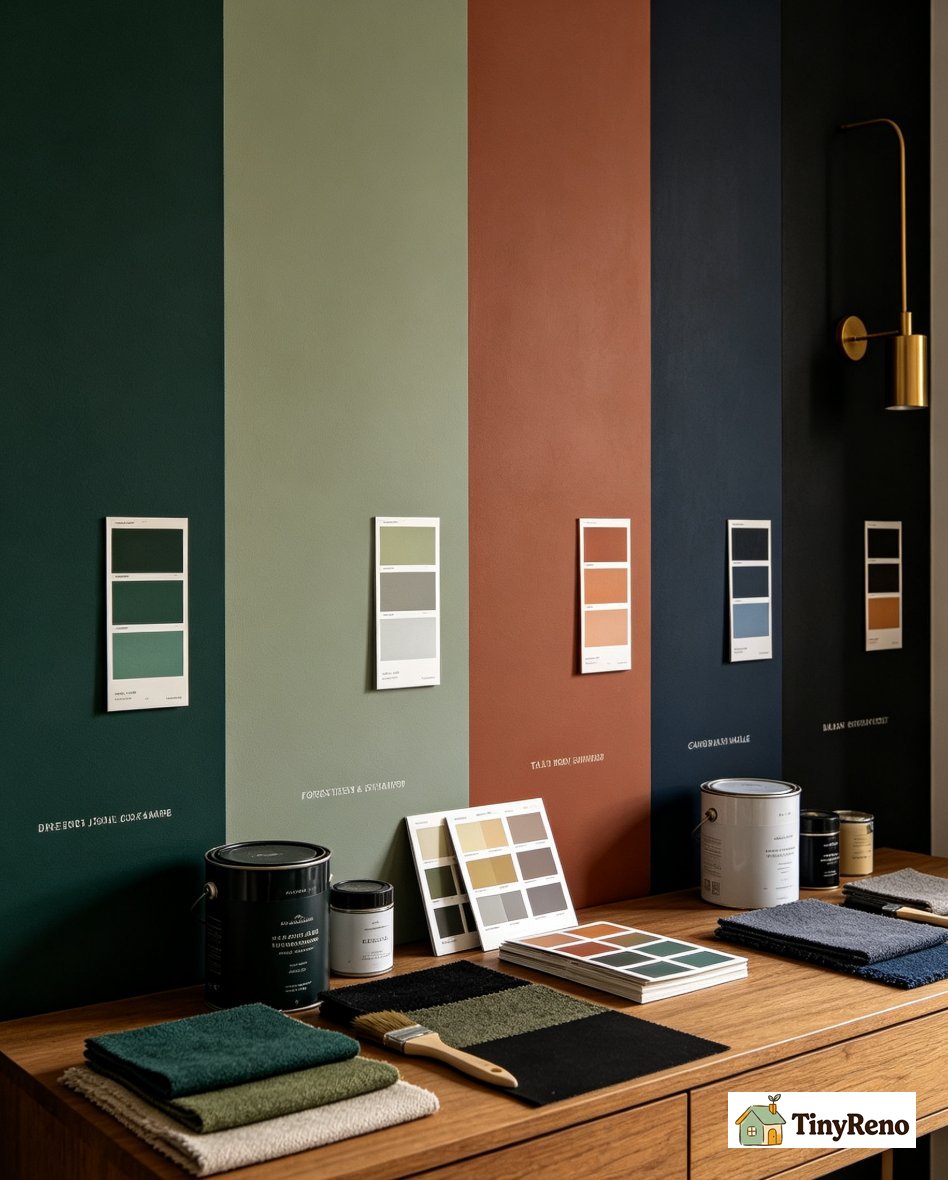
The first mistake I made with the Inchyra Blue wall was thinking "moody" meant "dark. "Dark is a value. Moody is a feeling. The feeling comes from the relationship between the dark color and what is around it, not from the darkness itself. Once I started paying attention, I realized there are at least five distinct moods hiding inside what people casually call moody, and each one creates a different room.
Dark and saturated. Deep emerald, midnight blue, oxblood, or aubergine walls. This is the "jewel box" look that is everywhere on Pinterest right now. It works when the room has good lighting, when the ceiling stays white, and when the furniture contrasts with the wall. It fails in windowless rooms, in north-facing rooms with no warm light, and when the entire room is saturated instead of one wall.
Dark and muted. Forest moss, slate, taupe-gray, or weathered teal. This is the moody version of a coastal palette. It reads as quiet and grown-up rather than dramatic. It is the most forgiving of the five because the muted quality softens the contrast between wall and trim. This is what I switched to in my bedroom, and it solved the cave problem.
Dark and warm. Terracotta, oxblood, deep amber, or tobacco brown. This is the moody version of Mediterranean and Spanish colonial. It reads as warm and enveloping even in winter. It does not work in rooms that already get strong afternoon sun because the room overheats visually.
Dark and cool. Charcoal, navy, slate gray, or pine green. This is the moody version of modern and Scandinavian. It reads as serious and architectural. The risk is that without enough warm light, the room feels cold rather than moody. Pair with warm bulbs and at least one wood element.
Dark and high-contrast. Black walls with bright pattern elements like brass, gold, or saturated color. This is the moody version of art deco and maximalist. It only works in large rooms with high ceilings. In small rooms, it overwhelms.
Five Moody Wallpaper Patterns That Actually Work
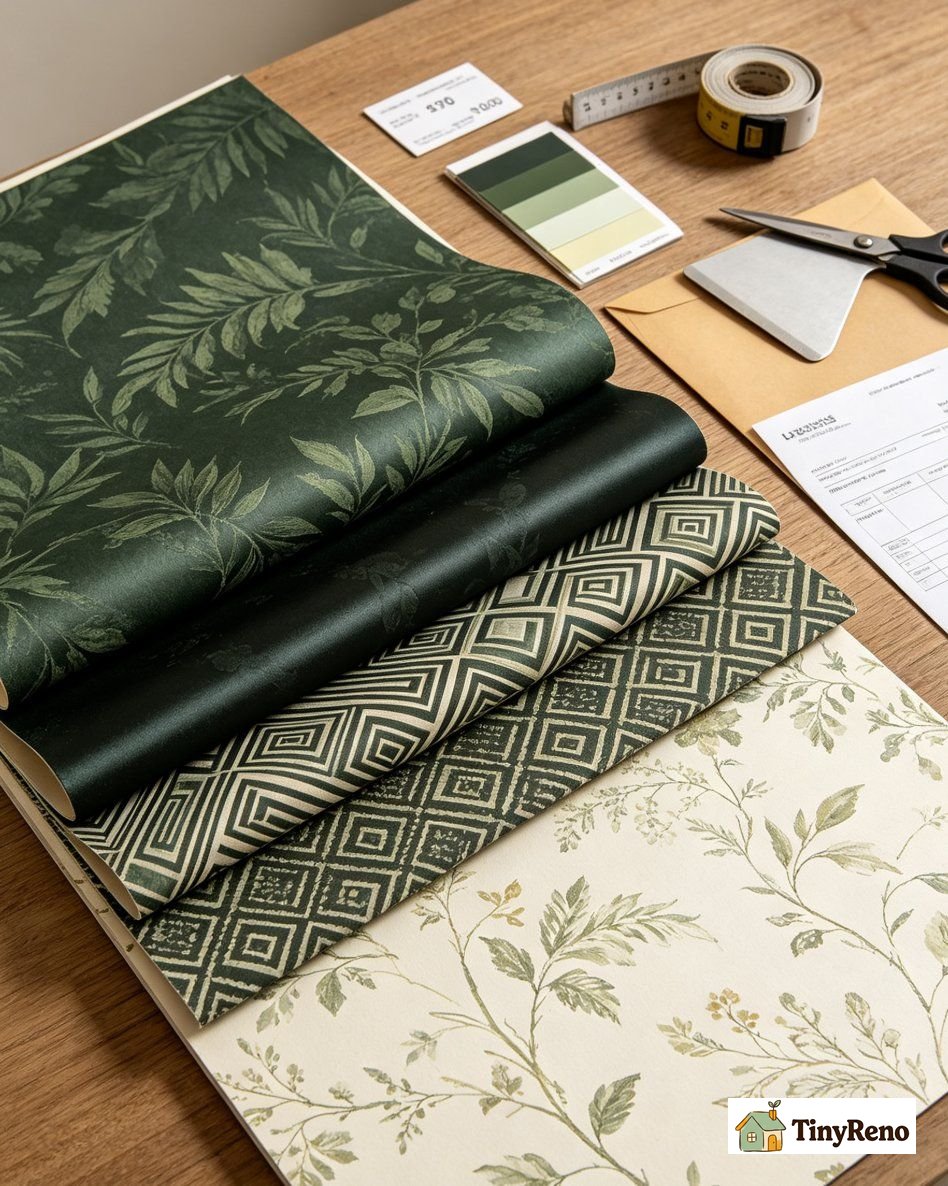
Once I understood the five moods, the patterns followed. Here are the five that survived a full year of living with them in my own place and watching them in other people's houses.
Large-scale botanical on a dark ground. Oversized palm, banana leaf, or monstera leaves in soft cream or sage on a deep emerald or forest green. This is the pattern that ended up on my bedroom accent wall, and it is the one I would recommend to anyone trying moody for the first time. The pattern gives the eye somewhere to rest, which is what prevents the wall from reading as a flat dark surface.
Damask on dark. Traditional scrolling damask in muted silver, dusty rose, or soft gold on a deep plum, navy, or charcoal background. This is the moody version of traditional and Victorian. It works in dining rooms, primary bedrooms, and formal living rooms. It does not work in casual spaces because the formality reads as uptight next to a couch with a throw blanket.
Art deco geometric. Symmetrical fan shapes, sunbursts, or chevrons in brass, gold, or soft cream on a deep emerald, navy, or black. This is the moody version of Gatsby. It works in powder rooms, dining rooms, and entryways. It does not work in kid's rooms or casual family rooms because the formality reads as costume.
Botanical mural. A full-wall mural peel-and-stick that depicts a single oversized garden scene, jungle, or floral arrangement on a dark background. This is the moody version of statement wallpaper. It works as one accent wall in a primary bedroom, dining room, or powder room. It does not work as a whole-room treatment because the image becomes repetitive when seen from multiple angles.
Tone-on-tone texture. A subtle damask, linen weave, or geometric pattern in a color only one or two shades darker than the background. This is the most sophisticated moody option because the pattern is felt more than seen. It works anywhere and ages beautifully because the pattern does not fight with future paint changes or furniture swaps.
Three Room Scenarios Where Moody Wallpaper Creates the Cave Trap
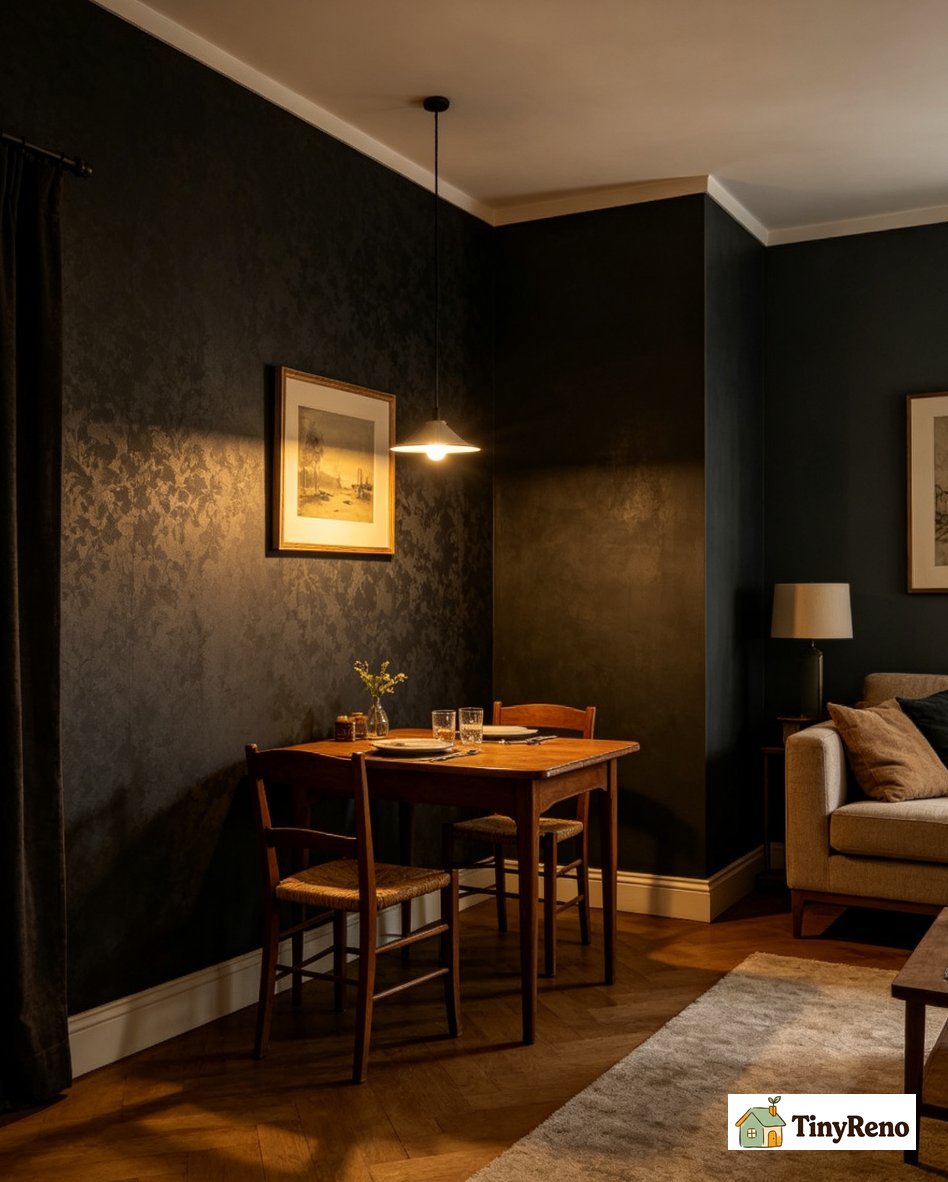
I watched three friends make the cave trap mistake in 2024, and each one taught me a different version of the same lesson. Moody is not just a color choice. It is a contract with the room's lighting, ceiling height, and furniture scale. Break the contract and you get a cave.
Cave one, the windowless room. My friend Priya put Tempaper Damask in oxblood on all four walls of her first-floor powder room. The room had no window and a single bulb. After two months she stopped using it if she could avoid it, and her guests stopped commenting on it. When she tried to remove the paper, she found the adhesive had fused to the unprimed drywall in the high humidity, and she ended up paying a handyman $400 to skim coat and repaint the room. The lesson: moody in a windowless room means you must commit to bright lighting, a white ceiling, and one accent wall only. Priya did all three wrong.
Cave two, the all-moody room. My cousin Renee painted all four walls of her living room in Farrow & Ball "Hague Blue" and loved it for exactly one week. By week three the room felt like it was closing in, by month three her furniture looked like it was sinking, and by month six she repainted three walls white and kept only the fireplace wall dark. The lesson: moody belongs on one wall, max two if they are adjacent. Whole-room moody is a magazine photo, not a lived-in room.
Cave three, the small-furniture cave. My neighbor Tom put dark green peel-and-stick on his dining room accent wall and then kept his small mid-century dining set against it. The dark wall made the small furniture look like it was shrinking. He ended up moving the dining set to the opposite wall and putting a larger buffet against the moody wall, which solved the visual problem. The lesson: moody walls make small furniture look smaller. Either scale up the furniture, change the wall, or move the furniture to a light wall.
One Tempaper Jungle Mural in Dark Forest Green with Four Supplier Comparisons
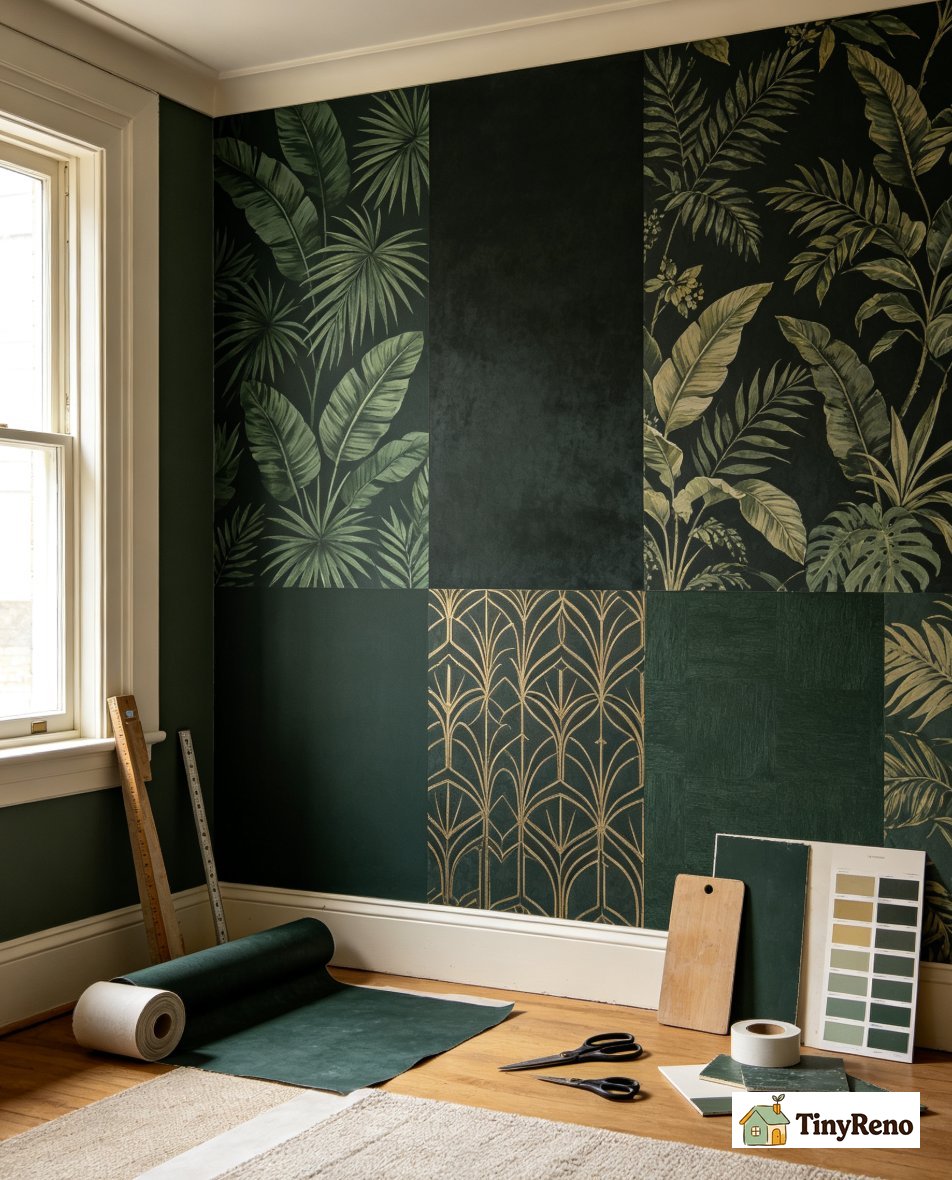
After all the testing, the pattern I ended up installing in my bedroom was the Tempaper "Dark Tropical" mural in forest green, at about $2.20 per square foot, on a single accent wall behind the bed. The wall is roughly 12 by 9 feet, so the total material cost was about $240 and install took about four hours. Here is how the four suppliers I considered stack up for moody peel and stick wallpaper specifically.
Tempaper ($1.89 to $2.40 per square foot, ships in three to five days). The widest selection of moody patterns across all five moods I described above. The Dark Tropical mural is one of their most popular designs, and the print quality holds up at close range. The adhesive is reliable for the first two years, which matters on a dark paper because lifting seams show more visibly than on a light paper.
Chasing Paper ($2.40 to $3.00 per square foot, ships in five to seven days). Higher-end with a more curated moody selection. The color palette skews darker and more sophisticated than Tempaper, and the substrate is thicker, which makes installation easier. Worth the premium if you find a pattern you love, but the selection is smaller.
Spoonflower ($25 per yard, ships in seven to ten days). The custom option. If you want a specific moody color combination that no mainstream brand offers, Spoonflower is the answer. There are hundreds of indie designers specializing in moody botanicals and murals. The price is roughly double the peel-and-stick alternatives, but the patterns are unique.
Etsy indie makers ($3 to $10 per square foot, ships in five to fourteen days). The boutique option for moody. Many small designers sell hand-printed or digitally-printed moody peel-and-stick with unique color palettes. Quality varies widely. Order samples from at least three makers and check reviews before committing to a full roll.
A Five-Minute Cave Trap Test and Seven Tips to Keep Moody Walls From Overwhelming the Room
Before any dark paper goes on any wall in my house now, I run a five-minute test. It has saved me from two more bad purchases in the past year, and it is what I would give anyone who is tempted by a moody pattern but unsure whether their room can carry it.
Step one, paint a 12 by 12 inch test swatch. Use a peel-and-stick sample sheet, or a sample pot of the actual paint color if you are still deciding between paper and paint. Tape it to the wall where the pattern will go. Do not skip this step. Photos and store samples lie about how dark a color will read in your specific room.
Step two, evaluate at three times of day. Photograph the swatch at morning, midday, and evening under the room's actual lighting. The room that looks moody and dramatic at night with warm bulbs will look cave-like at noon with cold daylight, or vice versa. The right pattern reads well at all three times. The wrong pattern looks great at one and oppressive at the others.
Step three, evaluate against ceiling, floor, and trim. If the ceiling is not white or very light, the room will close in regardless of which pattern you choose. If the floor is dark, the room will feel enclosed. Trim color matters. White trim on a moody wall reads as crisp. Wood trim on a moody wall reads as cozy. Painted trim in a similar dark color reads as cave.
Step four, evaluate the room's furniture scale. Small furniture against a moody wall shrinks visually. If your room has small-scale furniture, either move the furniture to a light wall or plan to add one or two larger pieces to anchor the moody wall.
Step five, decide on one wall or two adjacent walls only. Never all four walls. Never two opposite walls. One accent wall or two adjacent walls is the upper limit before the room tips into cave territory.
Seven tips for keeping moody walls from overwhelming the room, condensed from the test above. One, keep the ceiling white or very light. Two, keep at least one piece of furniture light-toned or wood-toned to break the dark. Three, install warm-tone bulbs (2700 Kelvin) to soften the dark. Four, if the room has no window, add a bright picture light or sconce that washes the moody wall with light. Five, keep the floor light or medium wood to balance the dark wall. Six, paint the inside of any open shelving on the moody wall white so the books and objects do not disappear into the dark. Seven, accept that moody paper looks darker in store photos than in your actual room, and order one shade lighter than your first instinct.
Moody peel and stick wallpaper is one of the most rewarding things you can do to a room, and it is also the easiest to get wrong. The difference between dramatic and cave is not the pattern or the brand. It is the lighting, the ceiling, the furniture scale, and whether you remembered to keep one wall white. Run the five-minute test. Order the sample. Tape it to the wall. Photograph it three times. If it still feels like the room you want, order the paper. If it feels like the room you want to leave, choose a different pattern or a different wall. The five minutes is the difference between a room that photographs well and a room you actually want to live in.
What My Bedroom Looks Like One Year After the Moody Accent Wall
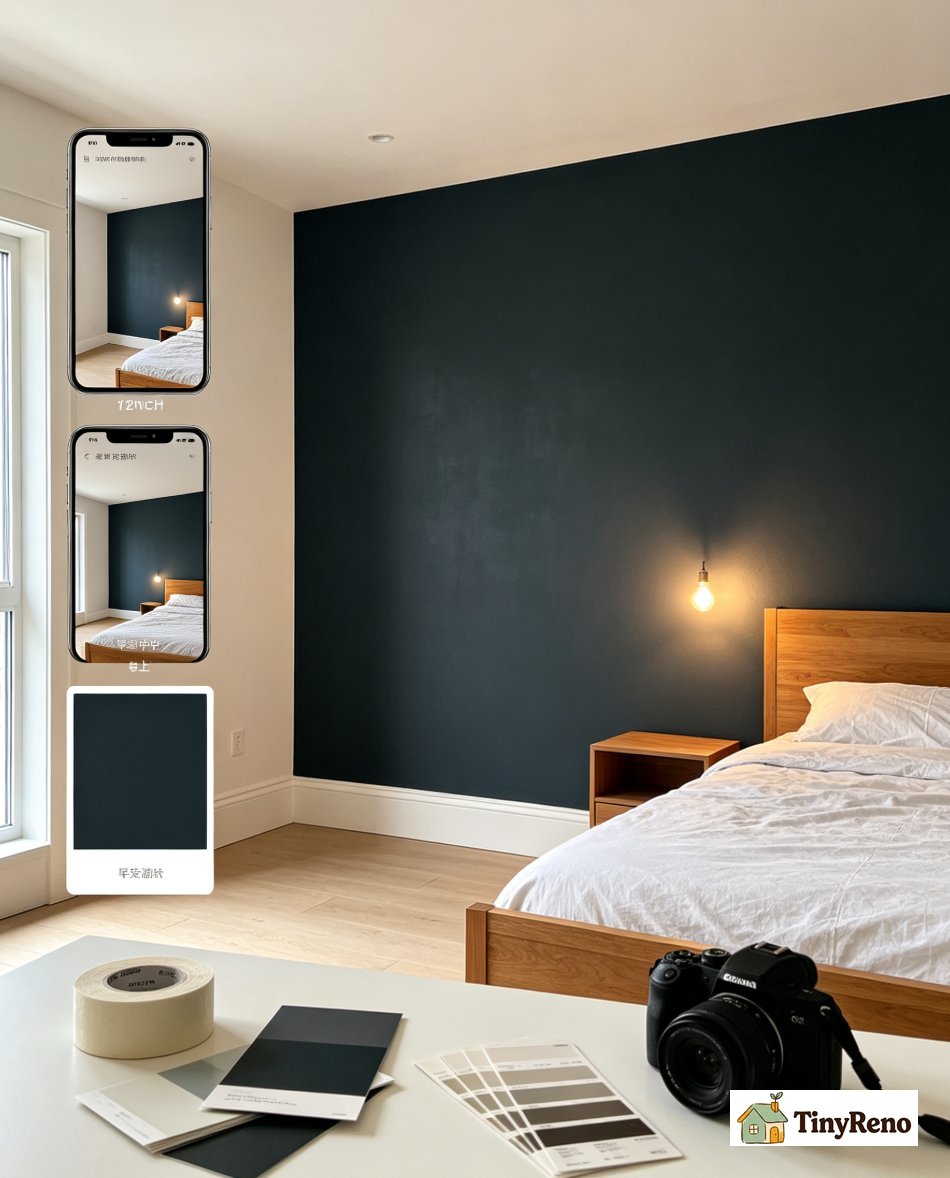
I get asked whether the moody accent wall was worth it. The honest answer is yes, with one asterisk. The bedroom wall behind the bed is now my favorite wall in the entire condo. The Tempaper Dark Tropical mural reads as a sophisticated green botanical scene rather than a flat dark color. The seams are still tight after a year because I check them every six months. The white ceiling, warm bulbs, and wood headboard keep the room from feeling cave-like. Guests regularly ask whether the wall is paint or paper and are surprised when I tell them peel-and-stick.
The asterisk is this. I almost gave up on moody entirely after the Inchyra Blue paint mistake, and I would have missed this wall if I had. The mistake was not the color. The mistake was the whole wall plus the wrong room. Once I switched to one accent wall plus a brighter room plus a botanical pattern that gave the eye somewhere to rest, moody started working for me instead of against me. If you are tempted by moody wallpaper but scared of the cave trap, the answer is not to avoid moody. The answer is to do what I did the second time. Run the test. Pick one wall. Keep the ceiling light. Balance with wood. That is the contract. Sign it and the room will reward you.


Discussion (0)
Sign in to join the discussion