

Last fall my friend Lena moved into a Brooklyn loft with twelve foot ceilings in the living room, original brick walls, and a south-facing window the size of a garage door. She wanted velvet curtains because every photo she pinned showed a room that looked twice as expensive as it was, and she figured the texture alone would do half the work of decorating. She ordered samples from four retailers, and we hung five different velvet colors in the same window for two weeks. Four colors worked beautifully in the loft. Three of her friends had already tried velvet curtains for living room in their own apartments and learned lessons the hard way about which colors go cave, which ones shed all over the cat, and which ones need a heavier rod than the one you already have. Here is the velvet fabric comparison every buyer needs to know, the color test we ran in the loft, the three velvet colors her friends regretted, the install SOP for high ceilings, and the one velvet color that made Lena's living room look like a spread in a real estate magazine.
Four Velvet Fabric Types and Which One Is Right for Renters With Pets or Kids
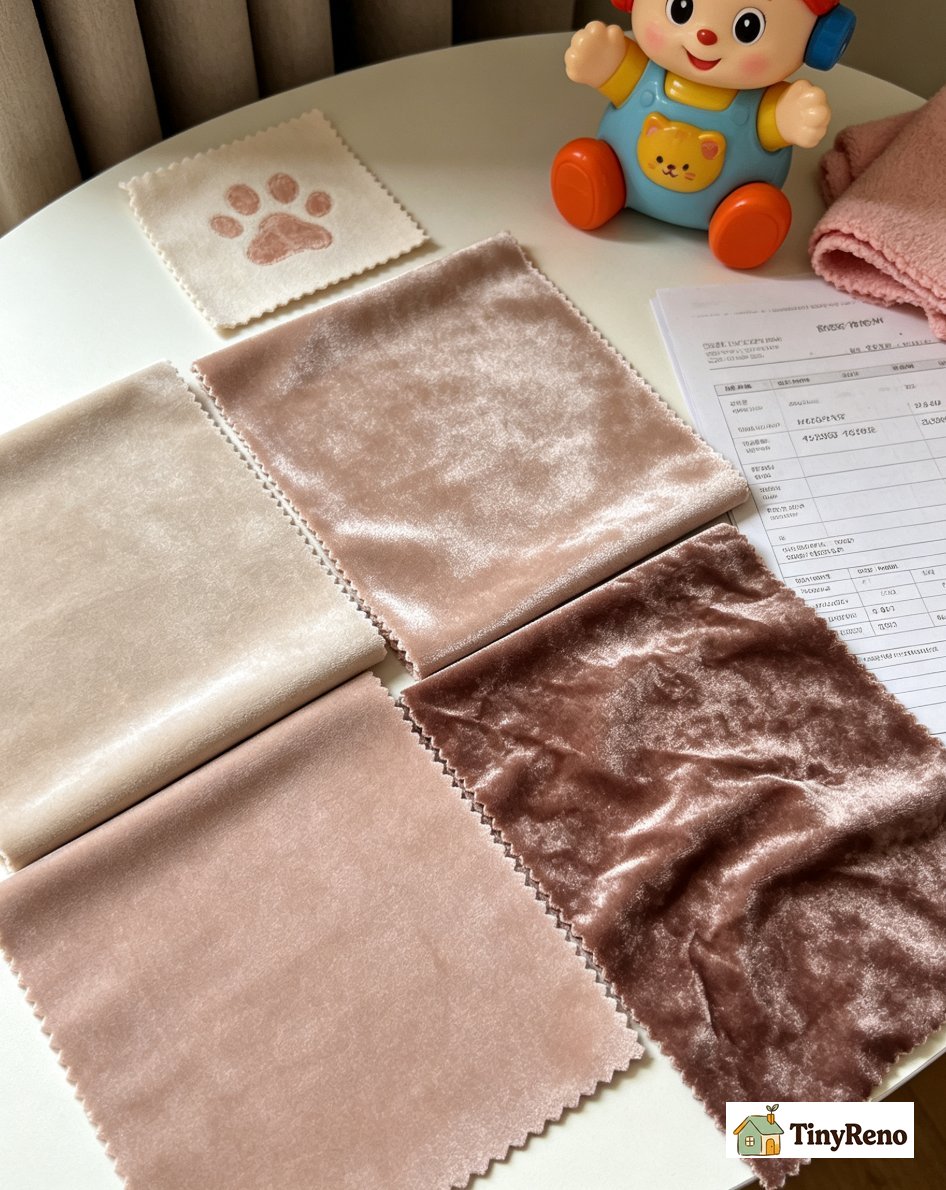
The first thing to know before you order any velvet curtain is that velvet is a family of fabrics, not a single material. The four most common types you will find online are cotton velvet, silk velvet, polyester velvet, and crushed velvet, and they behave very differently in a real living room. Picking the wrong one is what caused two of the three failures I watched in Lena's friends' apartments.
Cotton velvet. The most traditional velvet. Made from cotton with a short dense pile, cotton velvet has a matte finish that reads as classic and warm. It costs roughly $40 to $80 per panel for a standard 50 by 84 inch size. The catch with cotton velvet is that it crushes easily and the pile can flatten in high traffic spots, which means curtains that get touched or bumped will start to look worn within a year. Cotton velvet is also the heaviest of the four common types and needs a heavy duty curtain rod. For renters with cats, cotton velvet sheds visibly on dark clothing and furniture, which is one of the things Lena's friend Sam complained about.
Silk velvet. The most expensive and the most luxurious. Silk velvet has a luminous sheen that catches light differently from every angle, which is what gives velvet its signature expensive look in photographs. The price is roughly $120 to $300 per panel. The catch is that silk velvet requires dry cleaning, which most apartment leases do not cover, and direct sunlight will fade the color within a year. For a renter who plans to be in the apartment less than three years, silk velvet is a poor investment. Lena ruled it out within the first ten minutes of looking at the price tags.
Polyester velvet. The renter's best friend. Polyester velvet looks almost identical to cotton velvet at first glance, costs roughly $25 to $60 per panel, is machine washable on cold gentle cycle, and the pile is more resilient to crushing. For renters with cats or dogs, polyester velvet is also far more resistant to claw damage than cotton or silk. The trade-off is that polyester velvet does not have quite the same depth of color as silk, and the sheen is slightly more uniform. For Lena's loft with a cat, polyester velvet was the right answer. This is what I now recommend for any renter who wants velvet without the maintenance headaches.
Crushed velvet. The dramatic one. Crushed velvet has a permanently wrinkled texture that catches light in irregular patterns, which is what gives it a slightly theatrical look. Crushed velvet was popular in the 1990s and has come back as a maximalist statement in the 2020s. The risk is that it looks dated fast and the irregular pile shows every fingerprint and dust mote. Most interior designers I have talked to recommend against crushed velvet for primary living room curtains because it fights with the rest of the furniture rather than supporting it. Lena did not even consider it.
Five Velvet Curtain Colors Tested in Lena's Brooklyn Loft for Two Weeks
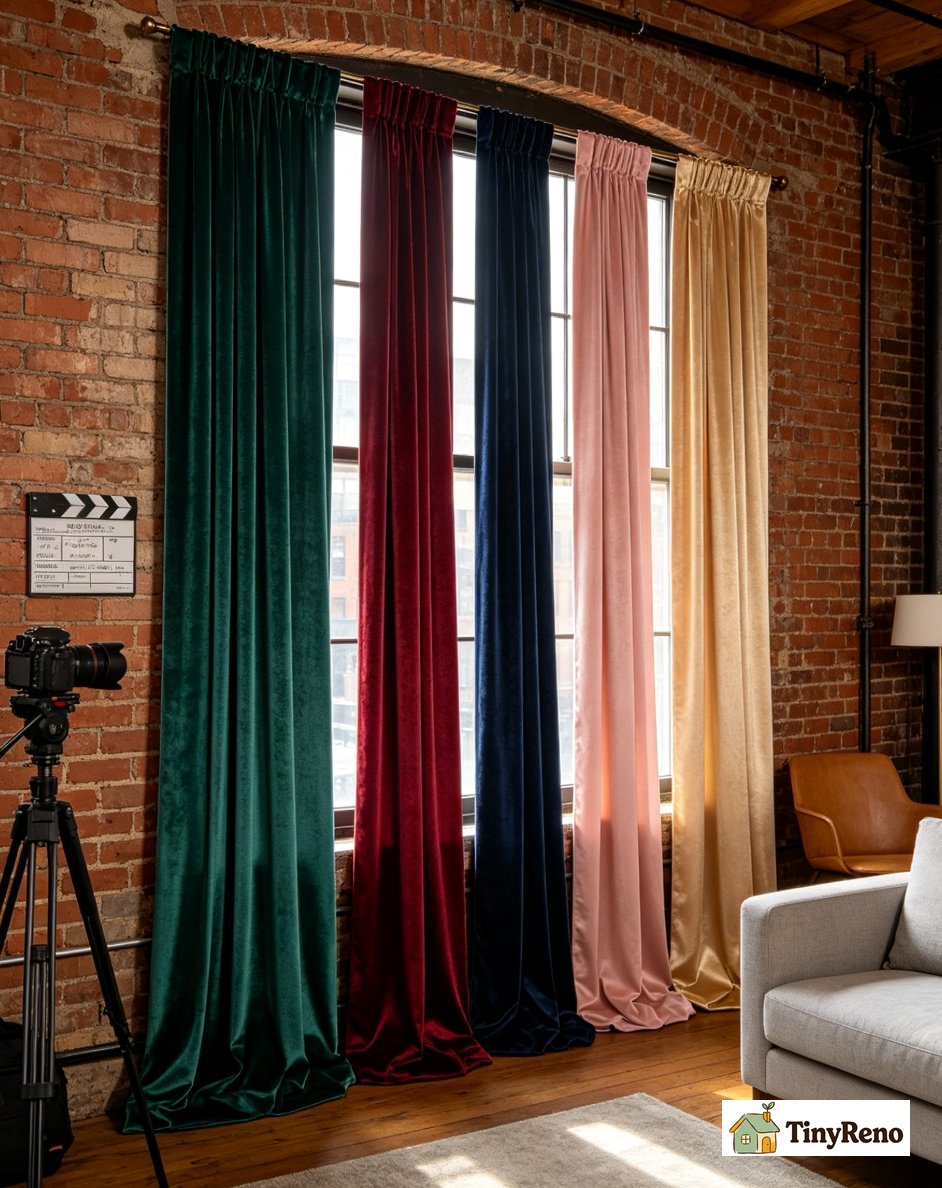
Once Lena picked polyester velvet as the fabric, the next decision was color. She ordered samples in five colors that interior design publications consistently recommend for living rooms, and we hung them in the loft for fourteen days. Each one was photographed at morning, midday, and evening. Three friends came by over the two weeks and voted without knowing the colors. Here is what each velvet curtain color looked like in a real Brooklyn loft with twelve foot ceilings and original brick.
Emerald green. The unanimous winner. Emerald velvet against the loft's brick and pale grey couch looked like the room had been photographed for a magazine. The velvet's sheen caught the south facing window light and made the green shift from deep forest in shadow to jewel tone in direct light, which is the visual magic velvet is famous for. All three friends voted emerald first. Lena ordered two panels in emerald on the day the test ended.
Burgundy or wine. A close second and Lena's backup choice. Burgundy velvet reads as formal and traditional, and against the loft's brick it gave the room a wine cellar feeling that two friends loved and one found heavy. Burgundy works particularly well in rooms with wood furniture and warm lighting. It loses points in modern or minimalist rooms where it can feel overdressed for the space.
Navy blue. Safe, versatile, and the most common velvet color you will find on retailer websites. Navy velvet in Lena's loft looked polished and professional but did not have the wow factor of emerald or burgundy. The sheen on navy velvet is more subtle than on jewel tones, which makes it a safe choice for rooms where the curtains are a backdrop rather than a statement. Lena considered navy as a fallback if emerald had failed the friend vote.
Blush pink. Romantic and unexpected, but a bit too sweet for Lena's industrial loft. Blush velvet reads as soft and feminine, which is perfect for a bedroom or a dressing area but felt out of place against exposed brick. The friend who voted blush first is the one who has a blush velvet sofa in her own apartment and wanted to validate her own choice. Blush velvet works in rooms with soft finishes and warm light. It loses points in rooms with hard industrial surfaces.
Champagne gold. The maximalist statement. Champagne velvet in Lena's loft was undeniably beautiful but felt like the room was trying too hard. Two friends said it looked expensive, one said it looked like a hotel lobby. Champagne velvet works in rooms that are already formal and want the curtains to amplify that formality. It fails in rooms that need the curtains to ground the space rather than elevate it.
Three Velvet Curtain Colors That Looked Cheap in Three Friends' Apartments
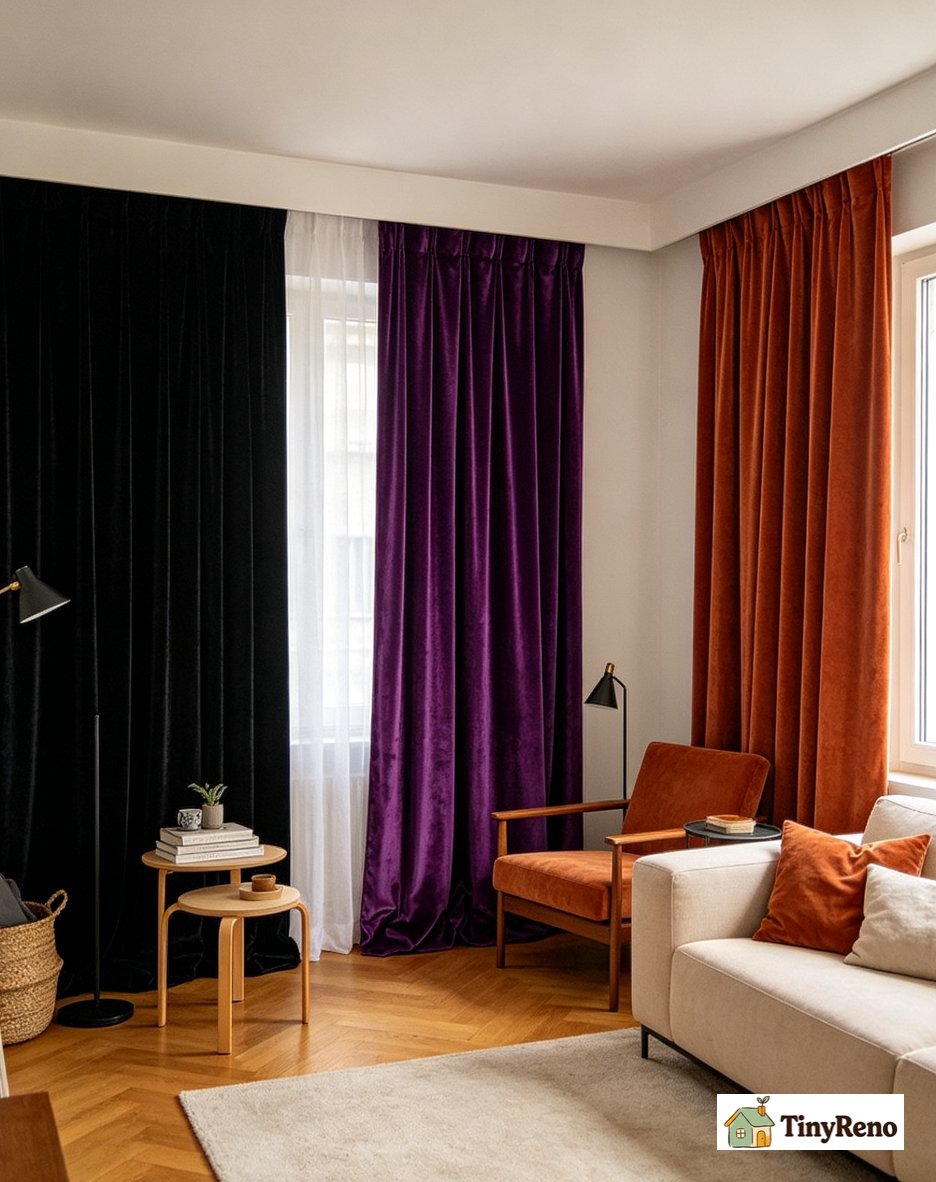
While Lena was running her color test, I called three friends who had already bought velvet curtains for living room in the past eighteen months to ask what they would do differently. Each one had a specific color they regretted, and each failure had a clear cause that goes beyond personal taste.
Black velvet failed in a small living room. My friend Sam bought black velvet curtains for her 180 square foot studio apartment last winter. The curtains blocked the morning light completely and looked dramatic in photos. The problem was that the velvet absorbed what little light the room had and turned the apartment into a cave by five p.m. every day. Sam ended up returning the curtains after two months because the room felt oppressive. Black velvet works in rooms with strong natural light and high ceilings. It fails in small or dim rooms because the velvet's light absorption is what creates the cave trap.
Royal purple velvet looked cheap in a rental. My coworker Priya bought royal purple velvet panels from a fast fashion retailer at a steep discount. The color was technically correct but the velvet pile was too short and too shiny, which gave the curtains a costume-like quality under her apartment's fluorescent lights. The lesson is that velvet quality varies dramatically by price point, and royal purple specifically looks cheap when the velvet pile is short because the color saturates unevenly. If you want jewel tone velvet, the price floor is around $40 per panel for polyester or $80 for cotton.
Rust orange velvet clashed with the existing decor. My cousin Renee ordered rust orange velvet on a sample deal and hung them in her living room before testing them with her existing furniture. The orange fought the green undertones in her hardwood floors and the warm beige of her sofa. She ended up donating the curtains and buying cream linen panels instead. The lesson is that velvet curtains are too dominant a fabric to leave to chance on color. Run a five day sample test like Lena did before committing, especially if you already have warm-toned furniture or flooring.
A Five Step Velvet Curtain Install SOP for High Ceilings Plus Anchor and Rod Choices

Lena's loft had twelve foot ceilings, which meant the install was more involved than a standard eight foot apartment. Velvet is also heavier than most curtain fabrics, which means the rod, anchors, and mounting have to support more weight than a regular curtain job. Here is the five step SOP that worked in her loft and that I now use for any velvet curtain install.
Step one, measure carefully and add ten percent to the length. Velvet curtains do not stretch the way some fabrics do, so the measurement has to be exact. Measure from the top of where the rod will mount down to the floor, then add two to four inches for hem flexibility and ten percent for the velvet's natural pile compression. For Lena's twelve foot ceilings, that meant ordering 120 inch panels rather than the standard 108 inch. Velvet panels can be expensive to return, so over-ordering slightly is safer than under-ordering and ending up with curtains that float an inch above the floor.
Step two, buy wider panels than the window. Velvet is a heavy fabric that hangs straight and does not billow the way cotton or linen does. To get the full luxurious look, the combined panel width should be at least two times the window width, three times if you want the curtains to stack fully open without blocking light. For Lena's six foot window, that meant ordering two 50 inch panels rather than one.
Step three, use a heavy duty curtain rod. Standard curtain rods are designed for lightweight fabrics and will sag under velvet. For Lena's two emerald panels at roughly three pounds per panel, I used a one inch diameter steel rod rated to 30 pounds with heavy duty brackets every three feet. The rod is what holds the velvet up so it can do its visual work. A saggy rod will make even the most expensive velvet look cheap.
Step four, anchor into studs. For high ceilings or heavy curtains, plastic anchors are not enough. Use wood screws that bite into a stud or use toggle bolts if no stud is available. Lena's loft had exposed brick, so we used masonry anchors that drilled directly into the brick and held the brackets solidly. A heavy velvet curtain pulling on a plastic anchor will eventually pull the anchor out of the drywall, which is both a wall repair and a curtain replacement you want to avoid.
Step five, steam before hanging and vacuum weekly. Velvet arrives from the retailer with compression wrinkles from the packaging. Steam the panels with a handheld steamer before hanging, working from the top down, and the velvet will hang smooth and full. After install, vacuum the panels weekly with an upholstery attachment to remove dust and prevent the pile from matting. Lena's cat added a layer of fur to the weekly vacuum routine. Skipping the vacuum for a month will make the velvet look dull and tired, which is the fastest way to undo the whole point of buying velvet.
What Lena's Loft Looks Like Two Weeks After the Emerald Velvet Went Up

Lena sent me a photo of the living room two weeks after the install. The emerald velvet against the brick wall made the room feel like a real Brooklyn loft rather than a rental with builder grade finishes. The south facing window now has a frame that looks intentional and the velvet's color shift from forest in shadow to jewel tone in direct light is the visual centerpiece of the room. Three of the friends who voted during the test have come back to ask where she got the curtains and what the color is called. One friend already ordered the same emerald velvet after seeing Lena's photo on Instagram.
The cat has not damaged the velvet. Polyester velvet is more claw resistant than cotton or silk, and Lena's cat mostly ignores the curtains in favor of the cat tree. The weekly vacuum is the only ongoing maintenance the velvet needs. If you have been thinking about velvet curtains for living room but worried about the upkeep, polyester velvet with a weekly vacuum is what I recommend. If you cannot drill holes in your rental, see our no-drill curtain guide for the four methods that work without damaging the wall, including a Kwik-Hang bracket option that holds rods up to 25 pounds, which is enough for most polyester velvet panels.
Lena's velvet will stay up as long as she lives in the loft. When she moves, she will take them down, fold them, and bring them to her next apartment. That is the value of investing in good curtains. The two weeks of testing, the five step install, and the $180 in materials bought a room that photographs like a magazine and feels like the loft she actually wanted to live in. If you are about to make the same decision for your living room, run the color test with two or three friends, pick polyester velvet unless you have a reason to spend more, use a heavy duty rod with real anchors, and steam the panels before you hang them. Velvet rewards care. The texture, the sheen, and the way it catches light are what make it the one fabric that consistently makes a room look more expensive than it is.
What the Emerald Velvet Looks Like Three Months Later and Which Friends Have Copied Her
Lena sent me a follow up photo last week, three months after the emerald velvet curtains for living room install. The panels still hang smooth and full, the color has not faded despite the south facing window, and the velvet still photographs like a magazine spread. The cat has fully accepted the curtains as part of the apartment and no longer tries to climb them. The weekly vacuum has become part of Lena's Saturday routine, which is the only ongoing time investment the curtains need.
The interesting update is that three of Lena's friends have now copied the look. One ordered the same emerald velvet from the same retailer for her own living room. One ordered navy velvet because her apartment has cooler tones. One ordered burgundy velvet because her furniture is all warm wood. All three ran the same color test Lena ran before buying. None of them has reported a regret. That is the highest compliment a velvet curtain decision can earn, and it is what happens when you test colors in the actual room, pick the right fabric for your situation, and install the panels with the rod and anchors they need to do their visual work.


Discussion (0)
Sign in to join the discussion