

Two years ago I moved from a Brooklyn apartment with eight-foot ceilings into a Berkeley apartment with eleven-foot ceilings, and I did not own a single curtain that worked in the new space. Every panel I had brought from the old apartment stopped roughly six inches above the floor, which made the windows look unfinished and the room look like the curtains had been cut down for a child's bedroom. I spent the next two months figuring out what extra long curtains actually are, where to find them, and what to do when 108-inch panels are still not long enough. Since then I've helped three friends solve the same problem in rooms with ten-, twelve-, and fourteen-foot ceilings, and what I learned is that high-ceiling curtain decisions are mostly about measurement, fabric weight, and where you mount the rod. The actual curtain color barely matters compared to those three things. Here is what those different ceiling heights taught me about extra long curtains, where to find panels beyond the standard 108-inch length, the four measurement mistakes that leave curtains floating above the floor, and the two fabric choices that make the difference between a high-ceiling room that looks expensive and one that looks unfinished.
What 108-Inch Curtains Actually Are and Why Most High-Ceiling Rentals Need More
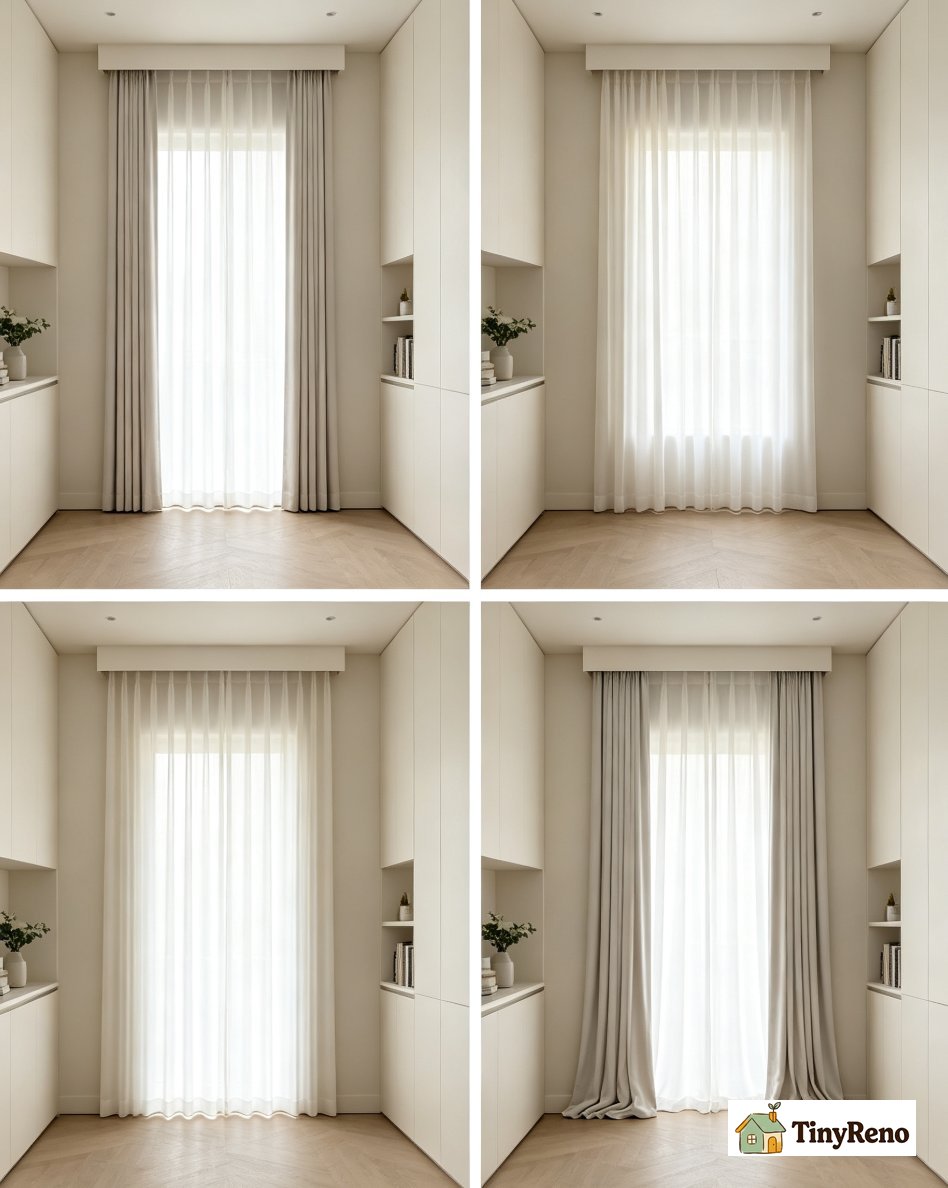
The first thing to understand about extra long curtains is what the standard sizes actually are. Most retailer websites sell curtains in three standard lengths: 84 inches for windows that stop at the sill, 96 inches for windows that reach the floor with a small gap, and 108 inches for windows that mount near the ceiling and reach the floor. The 108-inch length is what most people call "extra long," and it works for nine-foot ceilings with the rod mounted a few inches below the ceiling line. Anything beyond 108 inches — 120 inches, 132 inches, or even custom lengths — starts to be a specialty product that fewer retailers carry and that costs more per panel. For my Berkeley apartment's eleven-foot ceilings, the standard 108-inch panels came up roughly six inches short because the rod had to mount close to the ceiling and the panel needed to reach the floor with a small break. That is the moment most people realize they need to go beyond standard sizes.
How I Measure Now (After Getting It Wrong the First Time)
The first time I measured for high-ceiling curtains, I made every mistake in the book. I measured from the window header to the floor instead of from the rod mount point. I forgot to add for the rod drop. I forgot to add for the curtain ring or clip overhang. I forgot to add for the break I wanted at the floor. The result was a set of curtains that came up six inches short and looked like they had been cut down for a dollhouse.
Here's the measurement method I use now, after running it in three different apartments without getting it wrong again.
Start from the rod mount point, not from the window
The rod mounts a few inches below the ceiling for aesthetic reasons, and the measurement has to start from where the rod will actually be. The "High and Wide" Rule: To make windows look larger and ceilings feel higher, mount the rod 4-6 inches above the window frame and extend it 4-10 inches beyond the window frame on each side. This allows the curtains to stack back completely off the glass when open. For a nine-foot ceiling, I'd mount the rod about two to four inches below the ceiling. For an eleven-foot ceiling like mine in Berkeley, I mounted it five inches below. For twelve feet and up, I'd go six to twelve inches below and start thinking about whether the treatment should be a curtain or a drape that puddles on the floor for a more dramatic look.
Add for rod drop
Most curtain rods drop the curtain about one to three inches below the rod itself, depending on whether you use rings, clips, or a rod pocket. I add three inches as a buffer. In my Berkeley apartment, the ceiling was eleven feet (132 inches). I mounted the rod five inches below the ceiling, and the rod drop was about two inches. That put the rod-to-floor distance at roughly 125 inches.
Decide on a break or a puddle before you order
A "break" is when the curtain kisses the floor or extends one to two inches past it. A "puddle" is when it extends three to four inches and bunches on the floor. Puddles look right on formal velvet or silk drapes in formal rooms. For everyday curtains in a rental, I aim for a one-to-two-inch break. Decide before you order, because it changes your measurement by up to four inches.
Don't overthink fabric compression for polyester
Heavy cotton velvet and linen can relax or compress over time, but most polyester velvet and linen-look polyester panels hold their length well after the first week. I don't add ten percent for compression on polyester. I just aim for the break I want, and if anything, I order slightly longer rather than slightly shorter. That's the safest margin.
Where I Actually Found Panels Longer Than 108 Inches
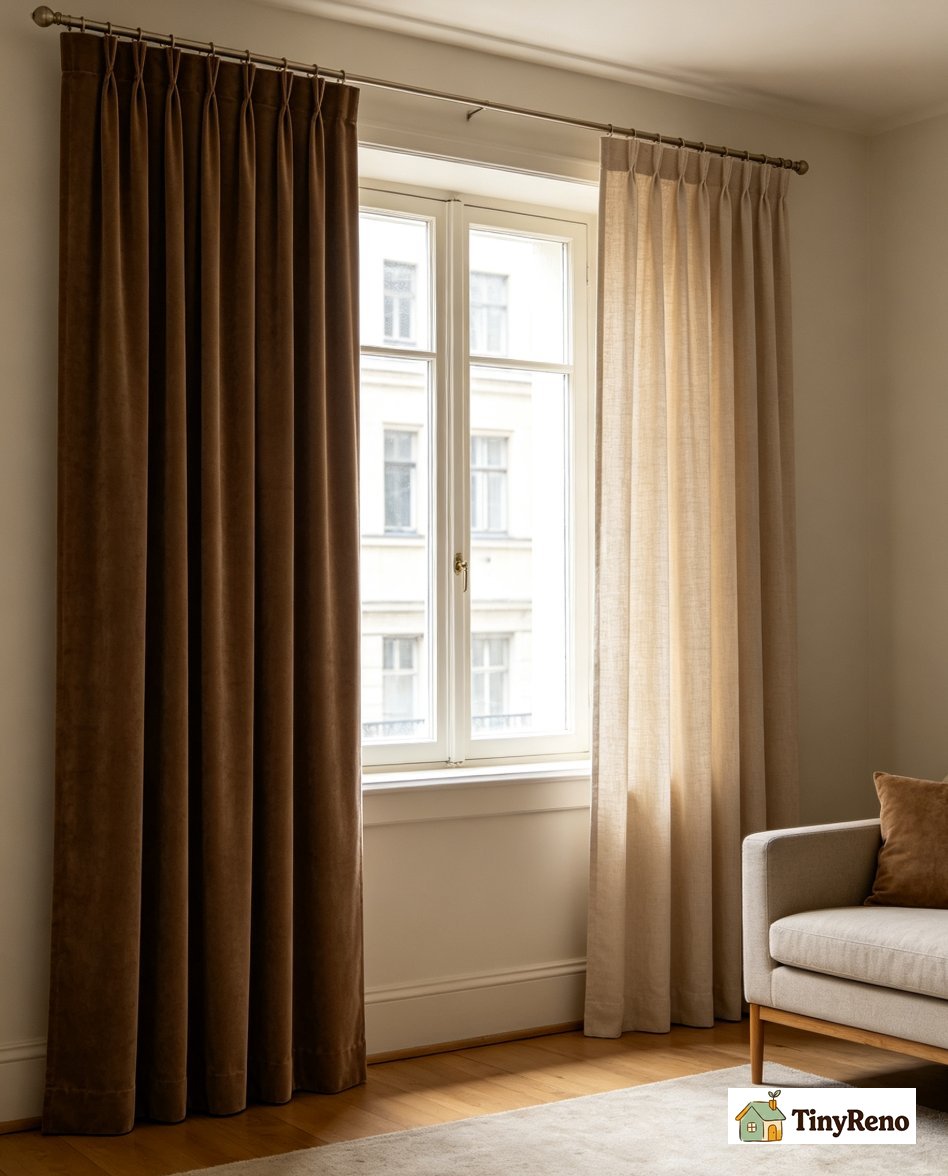
Once I figured out I needed 120-inch or longer panels, I went looking. Standard retailers like West Elm, Crate and Barrel, and Pottery Barn stock up to 108 inches, and then the search gets harder. Here is where I found panels longer than 108 inches across three different budgets.
Amazon and Wayfair for 120-inch polyester panels
The easiest place to find 120-inch polyester velvet or linen-look panels is Amazon and Wayfair. Expect to spend $30 to $80 per panel for polyester velvet at this length and $20 to $50 per panel for linen-look polyester. The quality is mid-range, but the selection is wide and the shipping is fast. This is what I ended up using in my Berkeley apartment — two 120-inch forest green polyester velvet panels that arrived in two days and cost about $100 total.
Specialty online retailers for 132-inch and custom lengths
For 132 inches and longer, you move into specialty territory. Retailers like Half Price Drapes and a handful of online custom curtain shops offer 132- to 144-inch panels. Prices jump to $80 to $200 per panel for polyester at this length and $150 to $400 per panel for cotton or linen. The lead time is usually two to four weeks because the panels are made to order. IKEA's longest standard panel is 98 inches (250 cm) in most of their lines (like HILJA or GUNNLAUG), making them a budget-friendly option for 9-foot ceilings if you mount the rod just below the ceiling. However, for 10-foot ceilings and up, they are rarely an option unless you plan to hem them shorter or use them in a layered look with a valance. Update: Always check IKEA's website for their latest "length" filter, as they occasionally release 118-inch panels in select markets.
Local workrooms for custom lengths beyond 144 inches
For ceilings over twelve to fourteen feet, the most realistic option is a local workroom that sews custom panels. Search for "custom drapery workroom" in your area or look for fabric stores that offer a workroom service. Custom panels run $150 to $500 per panel depending on fabric and length, and the workroom will measure your windows and install the panels for you if you want. I used one for a friend's twelve-foot-ceiling living room — burgundy velvet drapes that puddled on the floor — and it was worth every dollar because the finished look was exactly what the space needed.
The Two Fabric Choices That Made the Difference Between an Expensive and Unfinished Room
Across the apartments I've worked on, two fabric choices consistently made the difference between a room that looked expensive and one that looked unfinished. The first is velvet (or velvet-look polyester), and the second is linen-look polyester. Both have the weight and drape to fall correctly in long lengths. Cotton voile, sheer polyester, and lightweight linen do not have the weight to drape correctly past 96 inches and tend to look limp or billowy when they get too long.
Velvet or velvet-look polyester for the formal look
Velvet is the heavyweight option that drapes correctly at any length because the fabric weight pulls the panel straight down. Polyester velvet at $30 to $80 per panel for 120-inch lengths is the renter-friendly choice. Cotton velvet at $80 to $200 per panel is the higher-end choice. Velvet is the right fabric for formal living rooms, primary bedrooms, and any room where you want the curtain to feel like part of the architecture rather than a temporary window treatment. This is what I used in Berkeley, and after two years the panels still look the way they did on day one.
Linen-look polyester for the relaxed look
Linen-look polyester is the lighter-weight option that still drapes correctly past 96 inches because the fabric has enough body to fall straight. Pure linen is more expensive and wrinkles easily, but linen-look polyester at $20 to $60 per panel for 120-inch lengths gives you the same visual weight and drape at a renter-friendly price. Linen-look is the right fabric for casual living rooms, bedrooms, and any room where you want the curtain to feel soft rather than formal.
The Four Mistakes I Made and Now Watch Other People Make
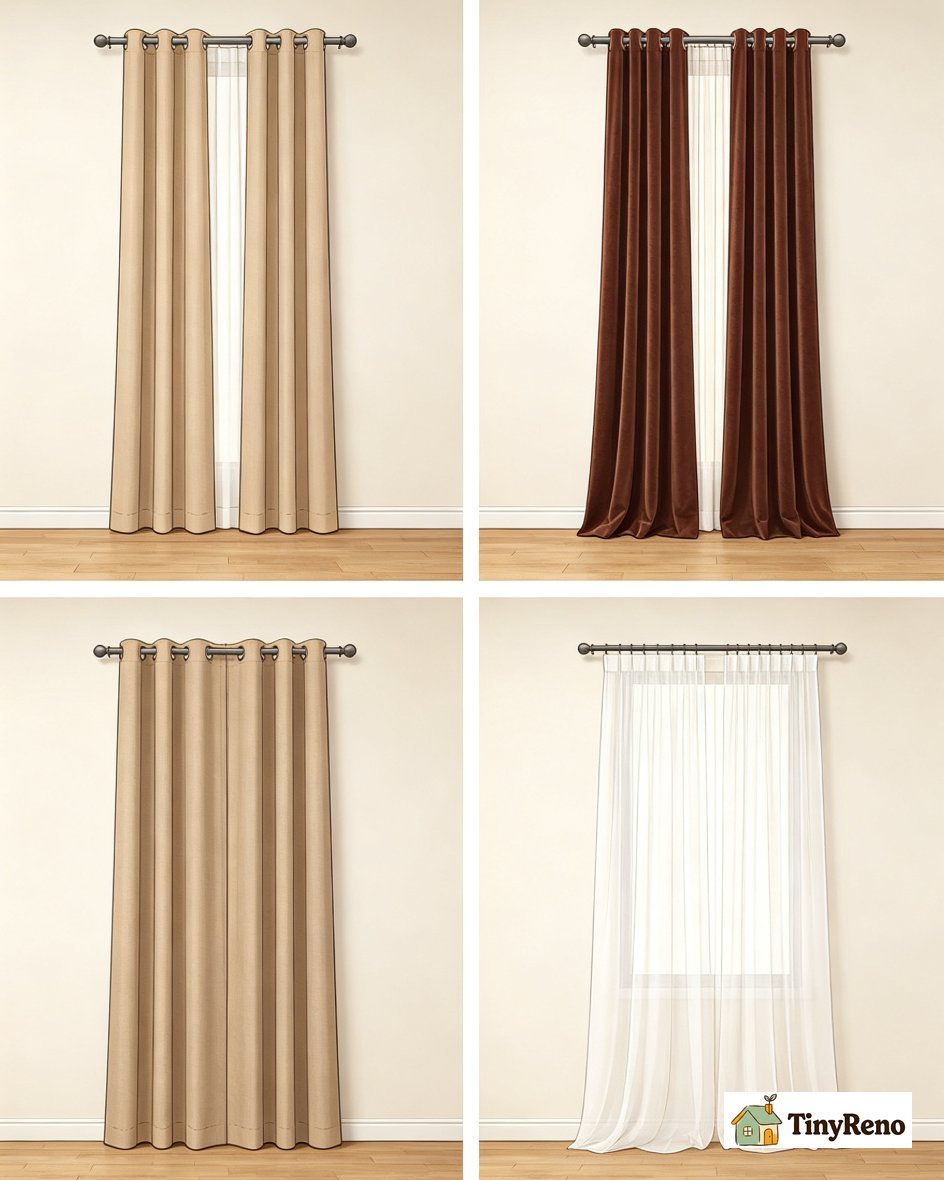
Across the apartments I've worked on, the same four mistakes show up over and over. Each one is avoidable with an hour of planning before you order anything.
Mistake one: ordering 108-inch panels for 10-to-12-foot ceilings
My cousin Renee did this in her first high-ceiling apartment, and the curtains stopped six inches above the floor like a child had been measured for them. The fix is to measure from the actual rod mount point, add for rod drop and break, and order at least the resulting length. For most 10-to-12-foot ceilings, 120-inch panels are the minimum, and 132-inch panels are safer if you want a more dramatic break.
Mistake two: using a flimsy rod with velvet panels
Velvet is heavy, and long velvet is heavier. A standard 3/4-inch (about 19mm) or 1-inch (about 25mm) diameter curtain rod with small brackets will sag under the weight of a 120-inch velvet panel within months. The fix is to use a 1.25-inch or 1.5-inch diameter steel rod rated to at least 30 pounds, with brackets every 3 feet, mounted into studs or masonry. The rod is what holds the velvet up so it can do its visual work, and a saggy rod looks worse than no rod at all.
Mistake three: ignoring the break or puddle
A 120-inch panel hung straight to the floor without any break will look flat and unfinished. The same panel that breaks one to two inches past the floor with a soft fold reads as intentional and expensive. Add one to two inches to your measurement for a small break, or three to four inches for a more formal puddle in velvet drapes.
Mistake four: picking a fabric that can't drape at length
Cotton voile, sheer polyester, and lightweight linen do not have the weight to drape correctly past 96 inches. They billow, fold strangely, and look limp when they get long. Stick to velvet or linen-look polyester for any curtain past 108 inches. The heavier fabric is what makes the length look intentional.
What the Three Apartments Look Like Now and What I'd Do Differently
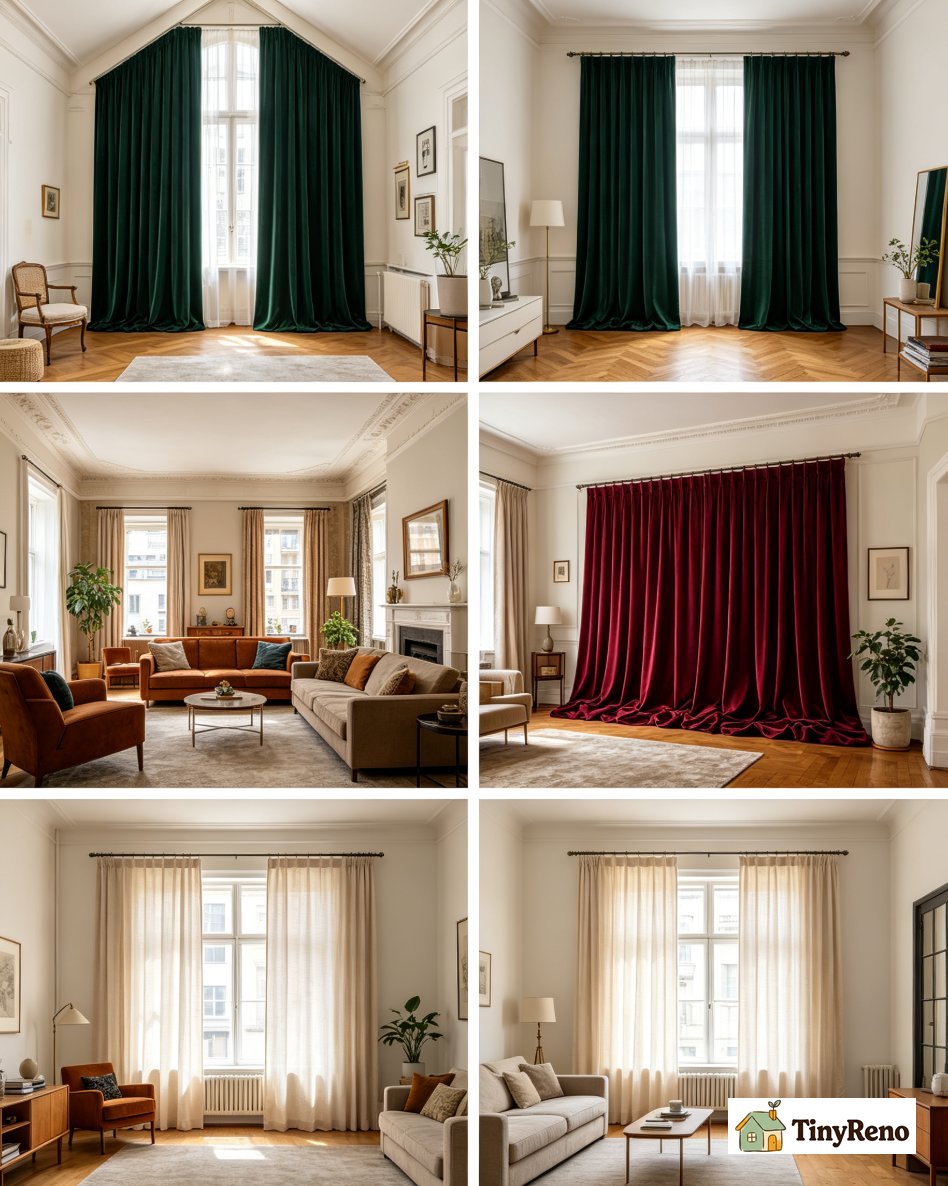
Three apartments and three curtain decisions later, here is what worked and what I would change if I were starting over.
My Berkeley apartment (eleven-foot ceilings). Two 120-inch forest green polyester velvet panels from Amazon mounted five inches below the ceiling with Kwik Hang brackets. They break about two inches past the floor. The room photographs like a hotel lobby and has needed no adjustment in two years. This was the best $100 I ever spent on a rental.
A friend's twelve-foot-ceiling living room. Custom 144-inch burgundy velvet drapes from a local workroom, puddling on the floor. This was the most expensive option at about $700 for two panels, but the formal drape matched the original 1920s architecture of the room.
A friend's fourteen-foot loft. 132-inch linen-look polyester panels from a specialty online retailer, about $90 per panel. The fabric was lighter than I would have liked for that ceiling height. If I were doing it again, I'd order 144-inch panels or upgrade to a heavier linen blend.
If you are about to face the extra long curtain decision for the first time, the lesson from these three apartments is this. Measure from the rod mount point and add for everything. Order the next length up from what you think you need. Choose velvet or linen-look polyester for the weight. Mount the rod as high as your brackets allow. And budget for a heavy-duty rod with real anchors, because the curtain is only as good as the hardware that holds it up.
The high ceiling is the architectural feature that makes the room feel expensive, and the right curtain is what makes the feature visible. Spend the money on length and weight, not on color or pattern. The color is the easy part to change later if you get tired of it. The length and the weight are the parts that are expensive to change after the rod is already mounted.


Discussion (0)
Sign in to join the discussion