

My friend Marissa got married last May at a converted warehouse in Brooklyn with the ballroom lined floor to ceiling in ivory satin drapes. The fabric caught the late afternoon light through the warehouse skylights, the panels broke two inches past the parquet floor, and the room looked like something out of a 1920s heirloom photograph. Two weeks later Marissa went to West Elm to buy the same satin for her bedroom windows and discovered that "satin drapes" and "satin curtains" are sold as two different products with two different price tags, even though both are made of the same fabric. A single satin drape panel was $180. A single satin curtain panel of the same width and almost the same length was $55. Marissa texted me a photo of the price tags and asked which one she should buy for her Brooklyn one bedroom. The answer turned out to be neither, because the differences between satin drapes and satin curtains go far beyond the price tag. There are six specific differences, and which one you need depends on which room, which window, and which look you are actually trying to get. Here is what the six differences actually are, what happened when Marissa tried both versions in her apartment, the four questions that decide which one you need, and the three alternative materials that might work better than either of them.
The Six Core Differences Between Satin Drapes and Satin Curtains
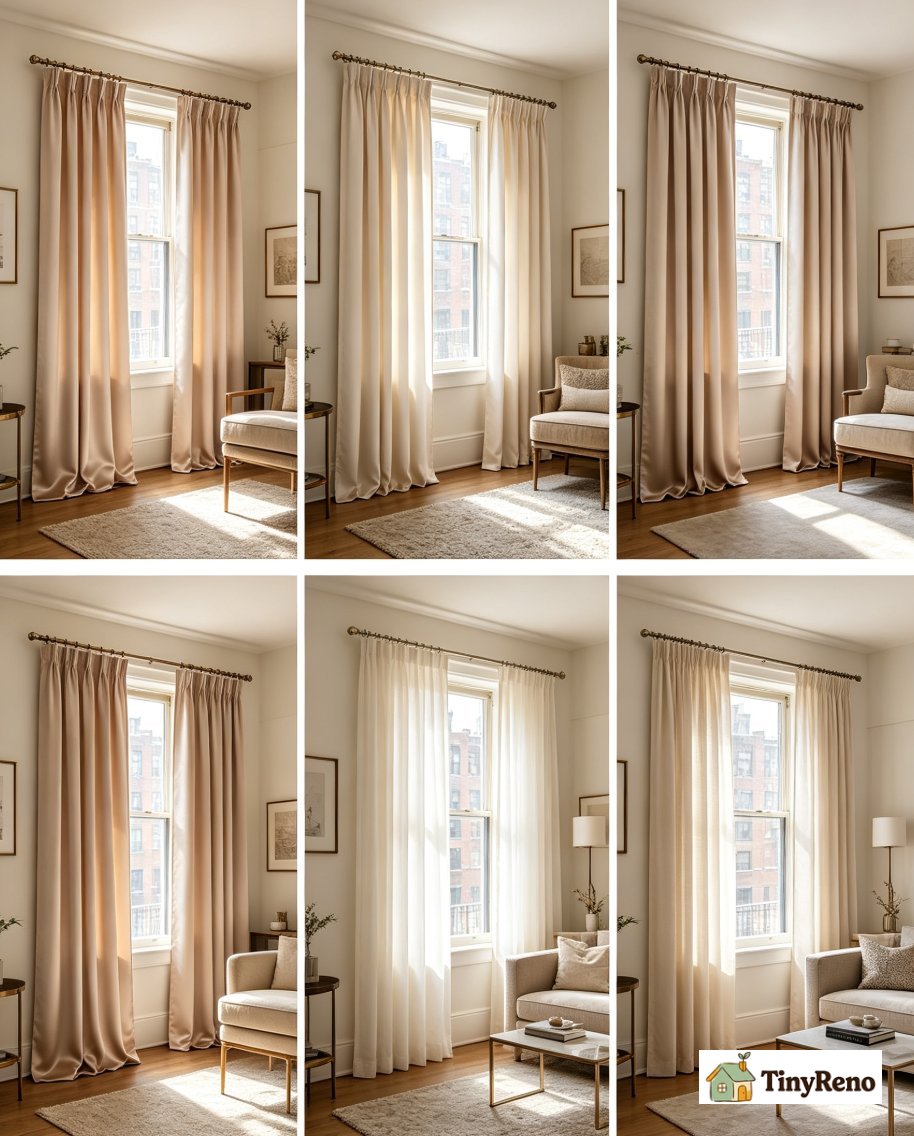
The word "satin" refers to the weave, not the construction. Both satin drapes and satin curtains are made from the same weave (a four thread float that gives the fabric its sheen), but the construction around that weave is what separates the two products. Here are the six differences that matter when you are choosing between them.
Difference one, length and puddle. Satin drapes are cut long enough to break past the floor by one to four inches, with some formal versions puddling three to four inches past the floor. Satin curtains are cut to either stop at the sill, kiss the floor, or break one inch past the floor. If you want the floor puddle look, drapes are the only option. If you want a clean modern line that just kisses the floor, curtains will do.
Difference two, lining. Satin drapes are almost always lined, either with cotton lining or with a separate blackout liner behind the satin face. Satin curtains are often unlined to keep the price down and the drape soft. The lining is what gives drapes their weight and structure. It is also what makes them hang correctly past 108 inches without looking limp. Unlined satin curtains are softer and lighter but they need a lining if you want them past 96 inches.
Difference three, header construction. Satin drapes use a pinch pleat, goblet pleat, or French pleat header that creates structured folds across the top of the panel. Satin curtains usually use a rod pocket, back tab, or simple clip ring that creates softer folds. The header is what makes drapes look formal and curtains look casual.
Difference four, fabric weight. Satin drapes use heavier satin weaves (usually 200 to 300 grams per square meter) that fall in long vertical lines. Satin curtains use lighter satin weaves (100 to 180 grams per square meter) that have more body and movement. The weight difference is what makes drapes photograph better in long lengths and curtains photograph better in shorter lengths.
Difference five, price. Satin drapes run $150 to $400 per panel for the fabric alone, plus another $50 to $150 for the lining and labor. Satin curtains run $40 to $120 per panel. The price difference comes from the lining labor, the longer length, and the more structured header.
Difference six, intended use. Satin drapes are designed for formal rooms, primary bedrooms, dining rooms, and any space where the window treatment is meant to be a piece of the architecture. Satin curtains are designed for casual rooms, secondary bedrooms, and any space where the window treatment is meant to be a soft layer rather than a feature. The same fabric is used for both, but the construction matches the use case.
What Happened When Marissa Hung Satin Drapes in Her Wedding Ballroom
Marissa's wedding satin drapes were sourced from a custom workroom in the Bronx that specializes in formal events. The workroom measured the ballroom windows and cut each panel 50 inches wide by 144 inches long, with three inches of extra fabric at the top for a French pleat header and four inches of extra fabric at the bottom for the puddle. The fabric was a 280 gram ivory satin with a separate cotton lining behind it, which gave each panel a total weight of about 4 pounds. Two of us spent about six hours hanging them with rings on a heavy duty ceiling mounted track, and the room transformed the moment the last panel was in place.
The ballroom satin drapes performed beautifully for the one day of the wedding. The fabric caught the afternoon light through the skylights, the panels broke exactly two inches past the parquet floor, and the pleats at the top created the structured formal look Marissa wanted. The day after the wedding, the workroom came back and took the drapes down, and Marissa stored them in garment bags in her basement. The total rental cost was $1,800 for the install and takedown. If she had bought the panels new, the same satin drapes would have cost about $2,400. The lesson from the wedding is that satin drapes at full formal construction are a beautiful one day solution for an event, but the cost only makes sense if you are renting them, not buying them for a permanent window treatment.
What Happened When Marissa Hung Satin Curtains in Her Bedroom Six Months Later
Two weeks after the wedding Marissa went back to West Elm and bought two ivory satin curtain panels at $55 each, total $110. The panels were 50 inches wide by 96 inches long, with a rod pocket header and no lining. She hung them on a standard 1 inch diameter brass rod with simple clip rings, and the curtains fell to just below the window sill. The bedroom looked softer than it had with the old linen panels, and the satin caught the morning light in a way that made the room feel warmer. That was month one.
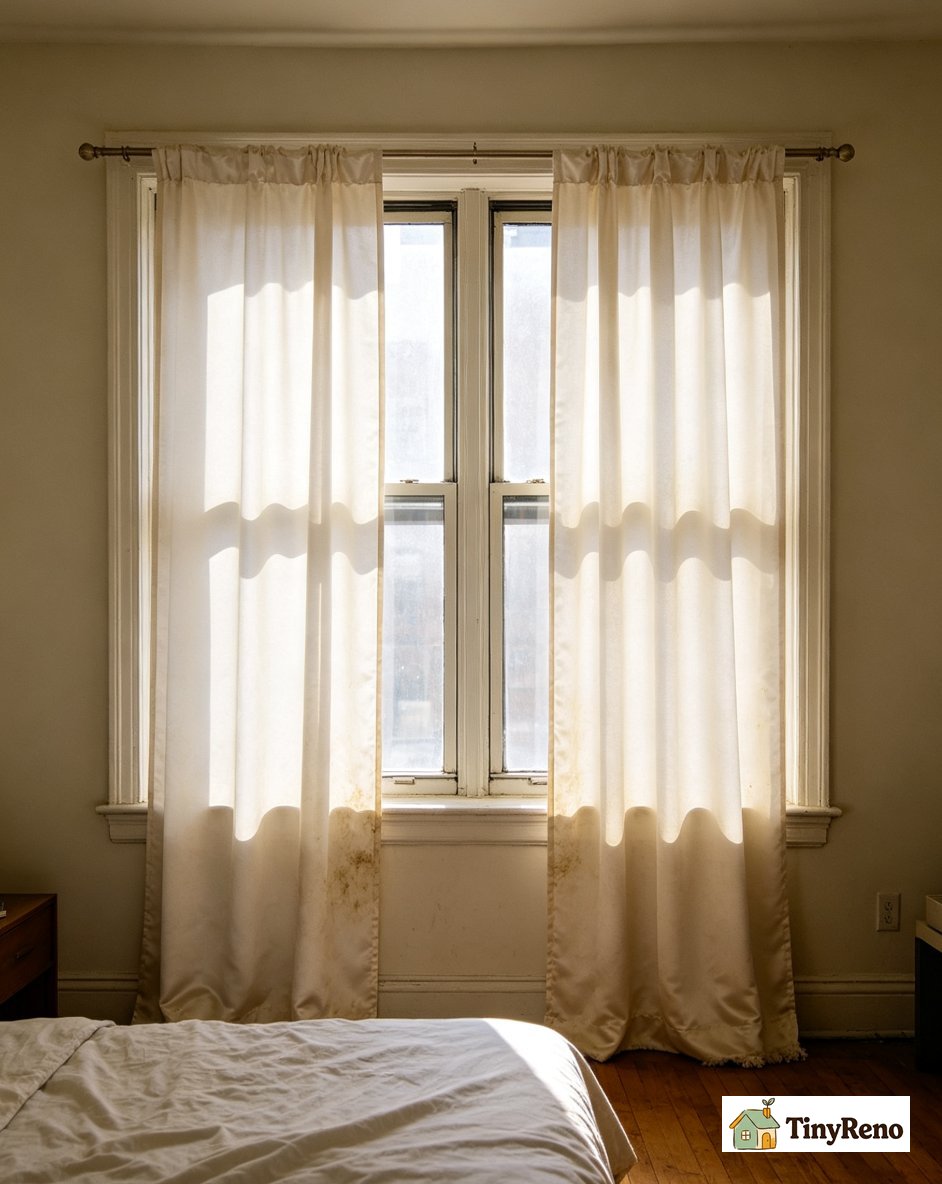
By month three the curtains had begun to show wear. The unlined satin had started to fade on the south facing side where the morning sun hit directly. The fabric had begun to pill slightly in the spots where the curtain rubbed against the window frame when the breeze came through. By month six the bottom edge had begun to fray where the satin touched the hardwood floor every night. Marissa ended up replacing the satin curtains with a heavier lined satin panel from a different retailer at $130 per panel, which held up much better. The lesson from the bedroom is that the cheaper unlined satin curtains work for a season or two, but if you want satin to last five years or more you need to either spend more on a lined version or accept that you will replace them every couple of years.
Four Questions That Decide Whether You Need Satin Drapes or Only Satin Curtains
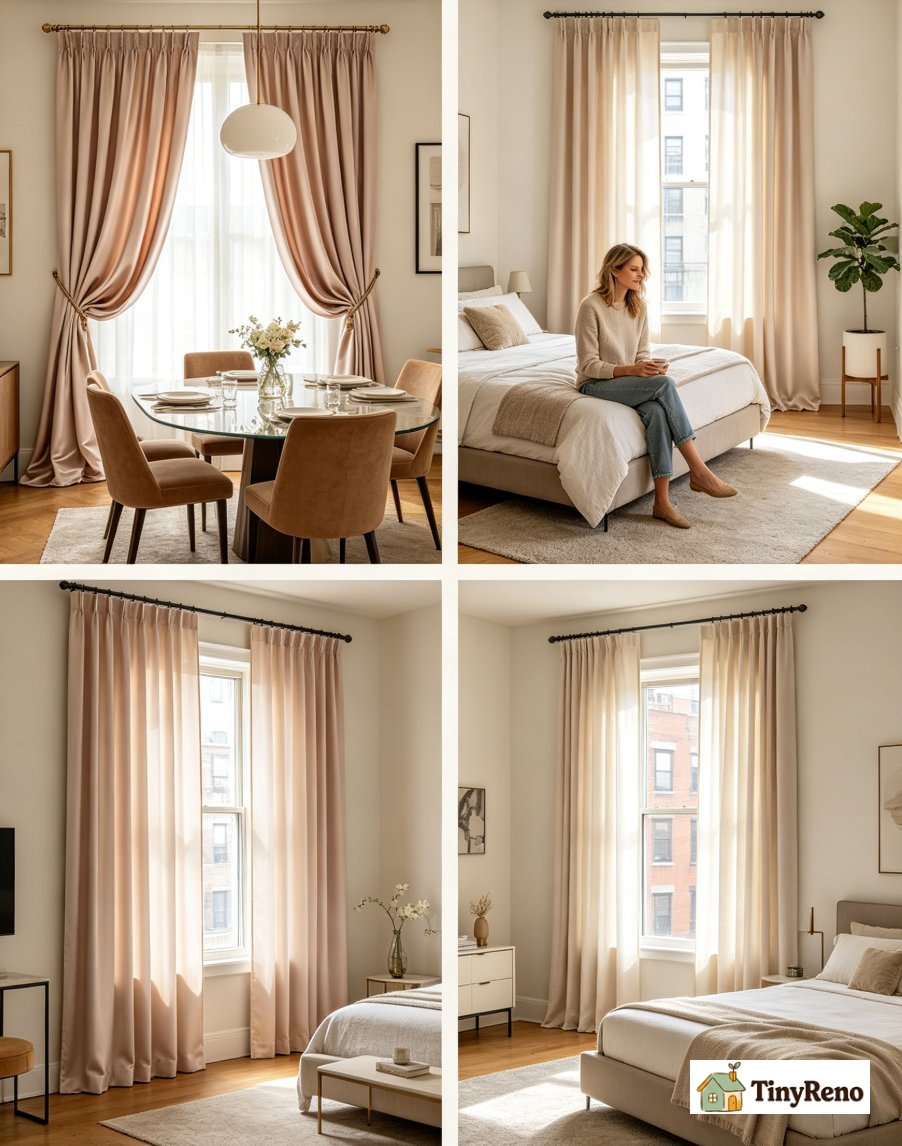
Across the two experiences, Marissa and I worked out four questions that decide which one you need. Run through these before you order anything, because the price difference between the two products is real and you do not want to overpay for a construction you do not actually need.
Question one, is the window in a formal or casual room? Formal rooms (primary bedroom, dining room, formal living room) want satin drapes with the structured header and the puddle. Casual rooms (secondary bedroom, kids room, TV room) want satin curtains with the soft header and the cleaner line. The room type is the biggest predictor of which product to buy.
Question two, how tall is the window? Windows under 8 feet can use either product because the satin does not have to drape past a critical length. Windows between 8 and 10 feet want drapes because the extra length and lining are what makes the fabric fall correctly. Windows over 10 feet almost always want drapes, because curtains at that length look limp without lining.
Question three, do you want a puddle on the floor? If yes, you need drapes because curtains are not cut long enough to puddle. If you want a clean line that just kisses the floor or breaks one inch past it, curtains will work and you can save $100 to $200 per panel.
Question four, how long do you want them to last? Satin curtains at $40 to $120 per panel will last two to four years before fading and wear become obvious. Satin drapes at $150 to $400 per panel will last five to ten years because the lining protects the face fabric from sun and friction. If you are renting and will move within two years, curtains are the better buy. If you own or plan to stay long term, drapes are worth the upfront cost.
Three Satin Alternatives for Windows Where Pure Satin Does Not Work
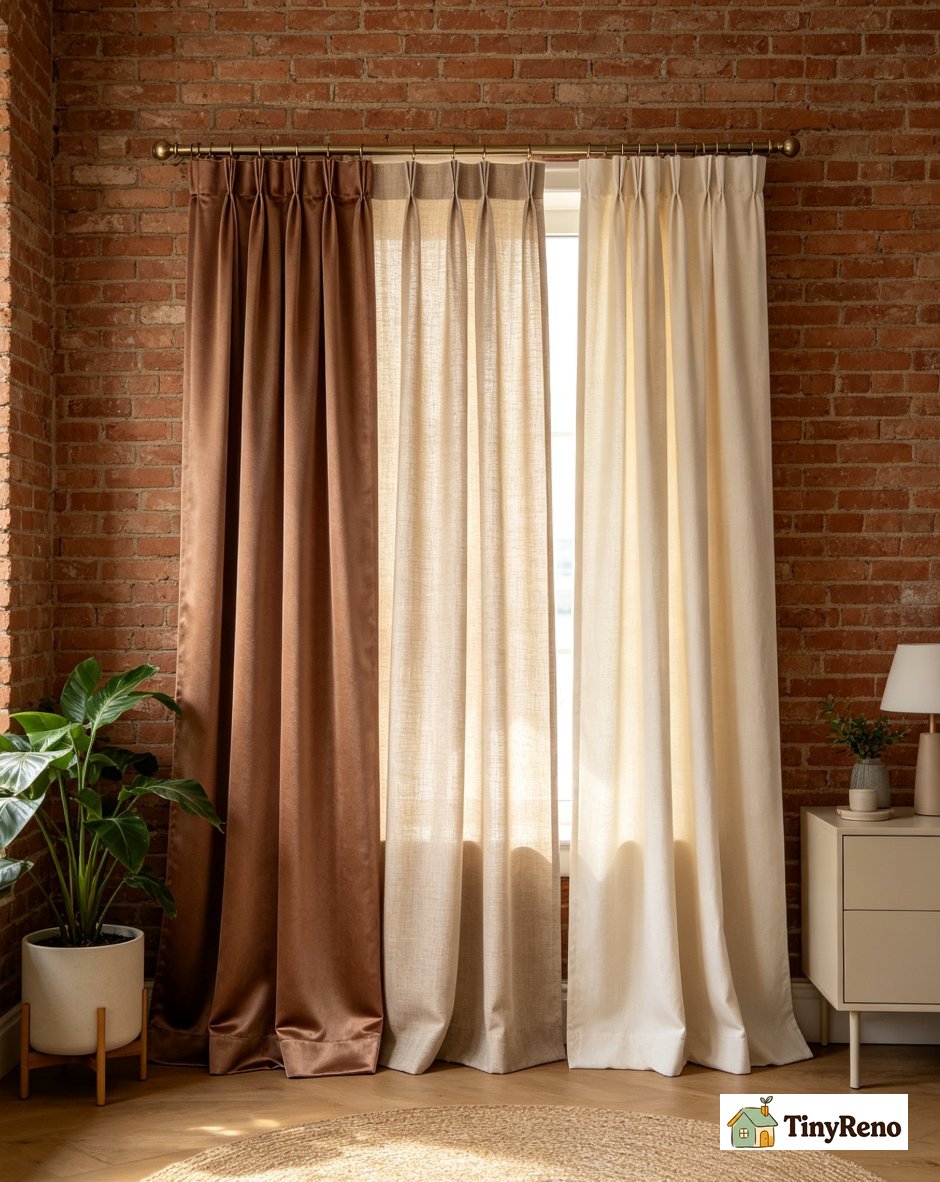
If the price of satin drapes is too high or the maintenance of satin curtains is too much, three alternative materials give you the same elegant sheen and drape without the satin specific drawbacks. Each one has a specific room where it works better than satin.
Velvet for rooms with low light. Velvet catches light the same way satin does but the fabric is more forgiving of sun fading and more resilient to wear. Polyester velvet at $30 to $80 per panel is also cheaper than satin curtains and lasts longer. Velvet is the right alternative for living rooms and dining rooms where the room is dark and you want the curtain to absorb light rather than reflect it. See our velvet curtain guide for the fabric comparison and install SOP.
Linen look polyester for casual rooms. Linen look polyester at $20 to $60 per panel gives you the soft drape of real linen without the wrinkles and the high cost. It does not have the satin sheen but it has a more relaxed look that fits casual rooms better than satin would. Linen look is the right alternative for bedrooms, kids rooms, and any room where the curtain is a soft layer rather than a feature.
Cotton for sunny windows. Cotton at $25 to $70 per panel holds up to direct sun better than satin and is easier to wash. Cotton does not have the sheen but it has a clean look that fits modern and coastal rooms. Cotton is the right alternative for south and west facing windows where satin would fade within a year.
If you are about to make the satin decision for the first time, the lesson from Marissa's two experiences is this. Decide first whether you want the formal draped look or the casual soft look, because that decision will tell you whether you need drapes or curtains. Decide second whether the window is sunny enough to fade satin within a year, because that decision will tell you whether satin is even the right fabric for your room. Decide third whether you are willing to spend $150 to $400 per panel on drapes or if you would rather spend $40 to $120 per panel on curtains and replace them every few years. Run through those three decisions in order and the right product will be obvious. Satin is beautiful but it is also the highest maintenance window fabric in common use, and the cheapest satin curtains are the most likely to disappoint within a year. Spend the right amount for your room or pick a different material that will hold up better. Marissa ended up with lined satin panels in her primary bedroom, unlined satin curtains in her guest room, velvet in the living room, and linen look in the office. Each room got the right fabric for its specific conditions, and four years later every set still looks the way it did the day it was hung.
What Marissa's Apartment Looks Like Four Years After the Wedding Satin Experiment
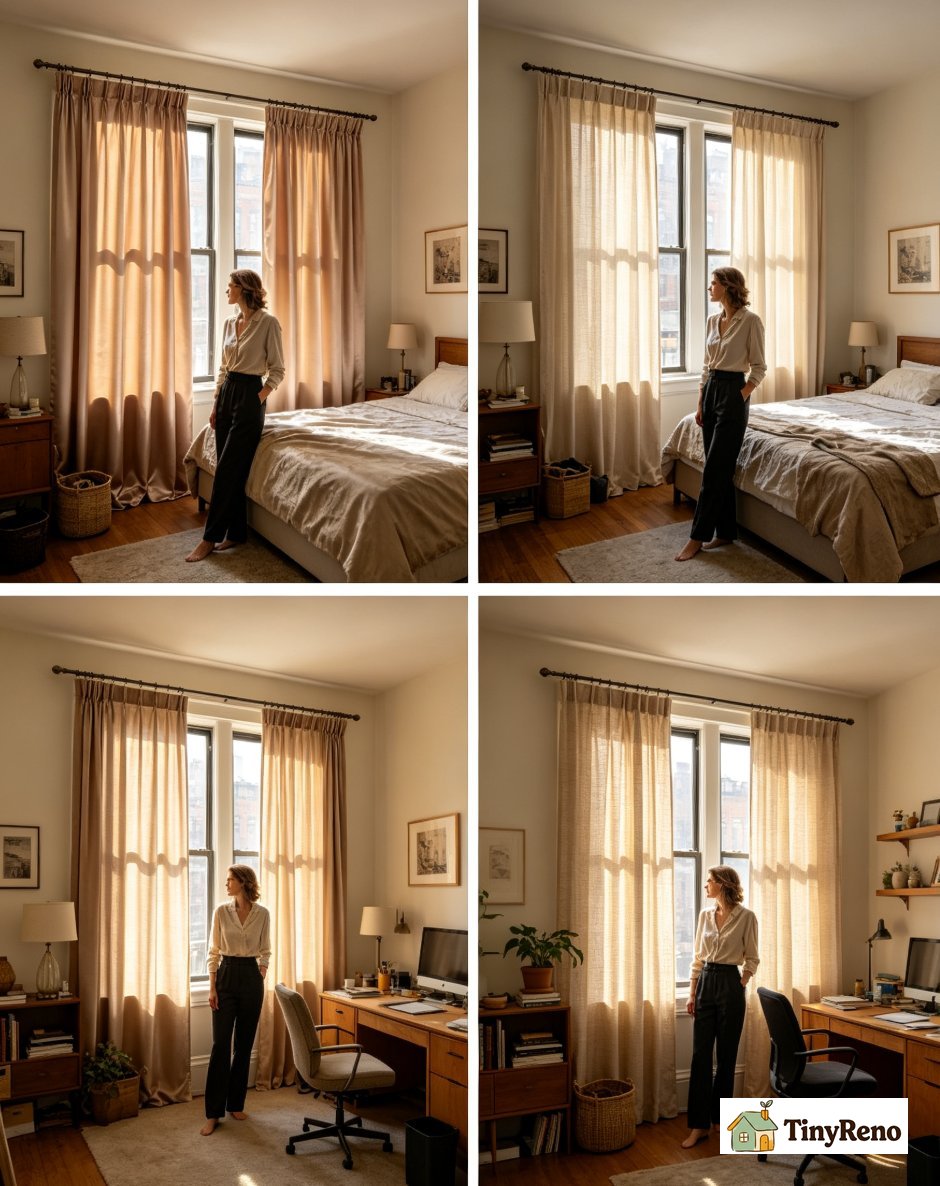
Marissa sent me a photo of her apartment last month, four years after the wedding satin experiment that started this whole conversation. The bedroom lined satin panels are still in place and have not faded, even on the south facing wall. The guest room unlined satin curtains were replaced last year after the south facing sun finally made them look tired. The living room velvet is still pristine after four years because polyester velvet does not fade the way satin does. The office linen look is unchanged because linen look polyester does not wear the way real linen does. Each room got the right fabric for its conditions, which is the whole point of the comparison.
The bigger lesson from Marissa's four year experiment is that the word "satin" is less important than the word "right." The right fabric for a south facing living room is velvet or cotton, not satin. The right fabric for a primary bedroom is lined satin or velvet, depending on whether you want the formal sheen or the matte depth. The right fabric for a guest room is unlined satin or linen, depending on whether you want the sheen or the soft drape. Satin is one option among several, and the question is not "satin drapes vs satin curtains" but rather "which fabric is right for this specific room, this specific window, and this specific budget." Marissa learned it the slow way by trying both, but you can skip the experiment by using the four questions in the section above before you order anything. The right fabric in the right room will look expensive and last five years. The wrong fabric in the wrong room will look tired within a year and cost you twice as much in the long run.


Discussion (0)
Sign in to join the discussion