

A burnt outlet in a house usually shows up as a brown or black smudge around one of the plug slots, sometimes with a faint smell of hot plastic that you only notice when you stand close. I had one in a rental last year where the tenant texted me a photo of a kitchen receptacle that looked like someone had held a match under it. The plug was still working — barely — and the breaker hadn't tripped. That's the most dangerous combination.
A burnt receptacle is one of those problems where if you ignore it long enough, it stops being a problem by becoming a fire. Most cases are caught in the early stages when the discoloration is minor and the outlet still functions. By the time the face is visibly charred, the underlying damage has been accumulating for months. The fix is to replace the outlet before the next time something plugs into it.
A burnt outlet almost always traces back to one of five things. Two of them—a loose wire and a worn receptacle—are fixable in under an hour with a screwdriver and a $3 replacement receptacle. The others may require an electrician. The fifth one means calling an electrician to inspect the wiring upstream. Here's the order to check.The five causes are: a loose wire connection (including backstab and builder-grade), a worn-out receptacle, an overloaded circuit, a failed splice inside the box, and a failed GFCI mechanism. The 60-second check below narrows down the first four; a burnt GFCI is a separate visual check covered at the end.
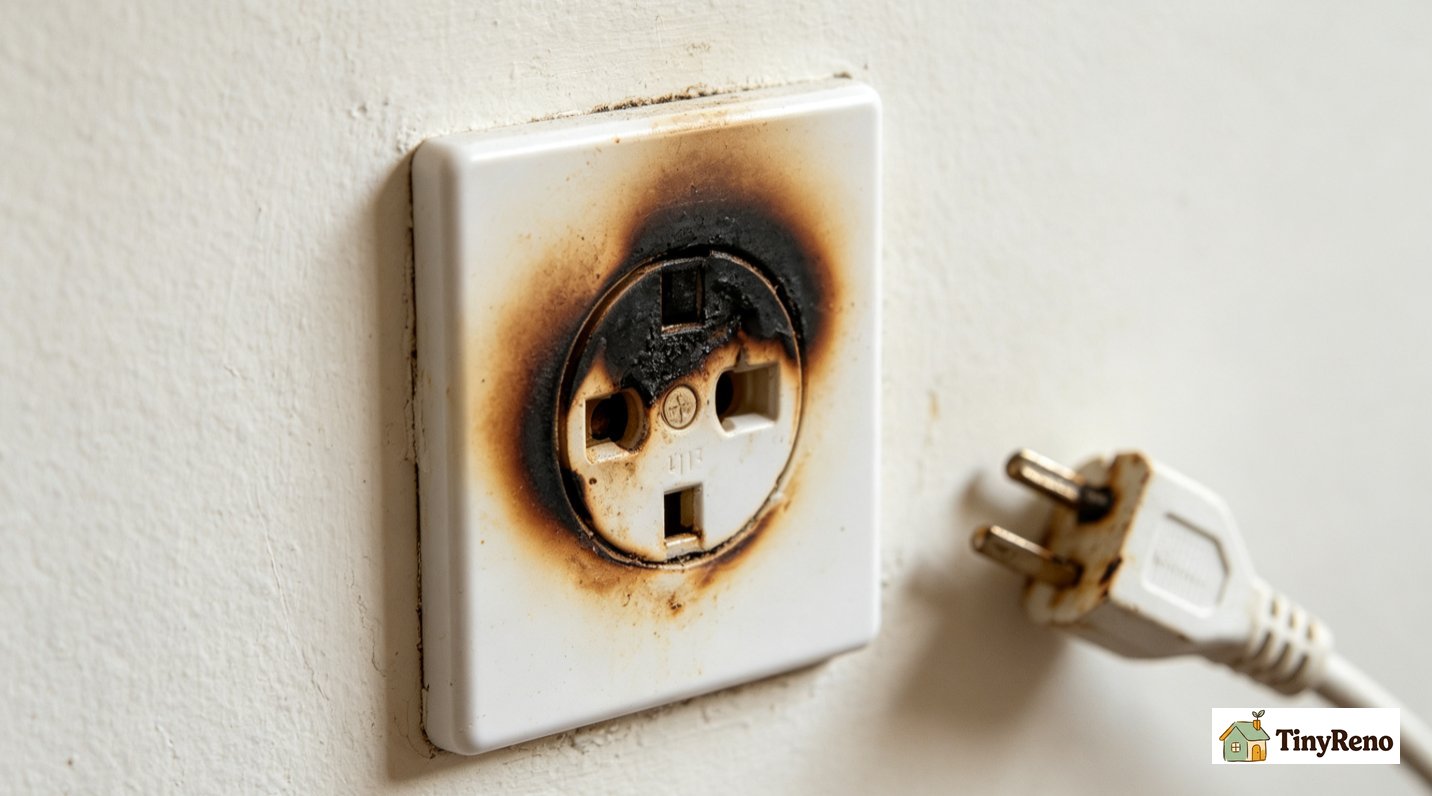
How to tell which of the five causes you're dealing with in 60 seconds
Look at the receptacle. Look at the face of the plug that was just pulled out (if you can find it). Look at the wall around the receptacle for any discoloration, melting, or smell.
- If the receptacle face is brown but the plug prongs are clean, the heat came from inside the outlet itself — usually a loose wire connection.
- If the receptacle face is brown and the plug prongs are discolored, the heat came from the plug fitting too loosely in the outlet — usually a worn-out receptacle.
- If the receptacle is brown and the wall around it is yellow, the heat has spread beyond the outlet box — call an electrician.
- If the receptacle is brown and you can smell hot plastic from more than a foot away, the heat is ongoing — turn off the breaker to that circuit and call an electrician. If more than one outlet on the same circuit shows discoloration, the problem is likely a failed splice inside a junction box rather than the outlet itself.
The check is the same regardless of whether the discolored receptacle is in a kitchen, bedroom, bathroom, or garage. The location matters for figuring out the cause (kitchens and bathrooms have higher loads and GFCI requirements), but the diagnostic sequence is identical.
A loose wire under the screw terminal (most common, easiest to fix)
Every outlet has two ways to attach wires: screw terminals on the side, or "backstab" holes in the back. Backstab connections are fast for the installer but they loosen over time as the small spring relaxes. A loose connection creates resistance, resistance creates heat, heat browns the plastic face of the outlet.
I've opened up dozens of discolored outlets, and most of the time the cause is a backstabbed wire that has loosened. Before you touch any wiring, turn off the breaker and use a non-contact voltage tester to confirm the outlet is dead. If you're not comfortable working with electrical wiring, call an electrician. The fix is to cut the power to that circuit at the breaker, pull the outlet out, cut the wire at the point where it was backstabbed (the part that was inside the spring is now deformed and won't make a good connection), strip a fresh quarter inch of insulation, wrap the wire clockwise around the screw terminal, and tighten the screw firmly.
Wire direction matters: clockwise means the wire wraps in the same direction the screw tightens. If you wrap it counterclockwise, the wire pushes out from under the screw head as you tighten it, and you get a loose connection that's worse than the original.
The outlet itself is worn out (the one that affects older homes most)
Outlet receptacles are spring-metal contacts inside a plastic housing. Every time you plug something in, the springs spread slightly. After a few thousand insertions, the springs lose their grip. A plug that used to slide in snugly now wiggles. The reduced contact area creates resistance, the resistance creates heat, and the heat discolors the outlet face.
This is most common in kitchens, where the same receptacles get used every day for years with high-draw appliances like toasters, coffee makers, and microwaves. The fix is the same as for a loose wire — replace the outlet. But you should also check the plug on the appliance that was most often used in that outlet. A worn plug on a high-draw appliance can cause the same problem even with a fresh outlet.
If you're renting, document this with photos and tell the landlord. A worn receptacle in a rental is a maintenance issue, not a tenant issue. Most landlords will replace it within a day or two of getting the photo. If they don't, the next step is the local housing authority.
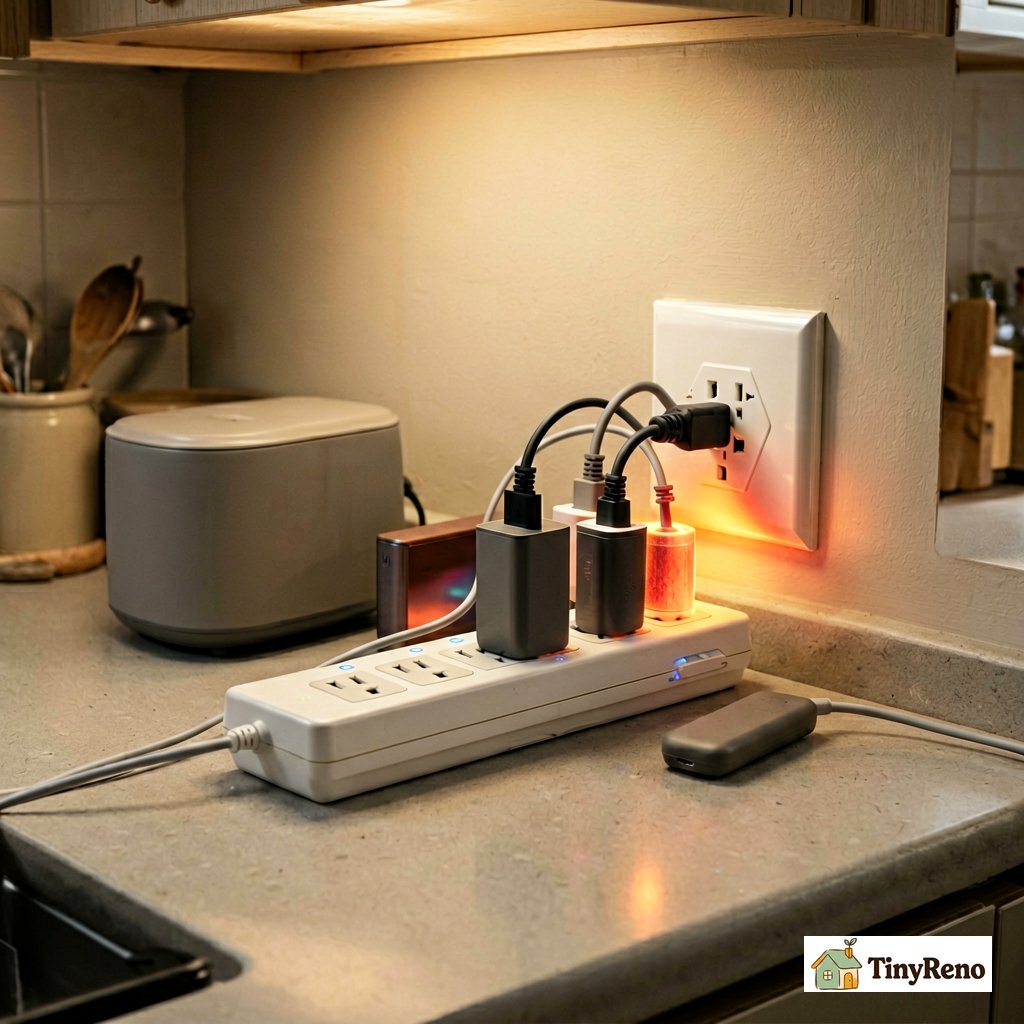
Overloaded circuit (the one that hides until someone plugs in a space heater)
Outlets are rated for 15 amps in most circuits (20 amps for kitchen counter outlets in newer homes). The rating assumes the outlet is on a circuit with other outlets and the total load is shared. In practice, people plug extension cords and power strips into a single outlet and run multiple high-draw appliances. The outlet itself isn't overloaded, but the wires behind it are.
The tell is that the discolored receptacle is in a location where someone runs a space heater, window AC, or other high-draw appliance. The heat builds up over months of repeated high-draw use, and eventually the outlet discolors.
The fix is twofold: replace the charred outlet, and address the underlying load. If the outlet is on a 15-amp circuit, don't run anything over 1500 watts from it continuously. If you need more capacity, have an electrician run a new 20-amp circuit to that location.
A splice in the box has failed (the one an electrician should look at)
If the wires coming into the receptacle box are joined with wire nuts — meaning there's a splice inside the box that continues to another outlet downstream — and that splice has loosened, the heat from the loose splice can travel up the wire and discolor the outlet face even though the outlet itself is fine.
This is more common in older homes where daisy-chained outlets were wired with splices in every box rather than passing through. The fix is to open the box, inspect the splices, re-twist and re-cap any loose ones. If the wire insulation inside the box is discolored or melted, that's a more serious problem and an electrician should look at how far the damage extends into the wall.
The sign that this is your problem rather than a simple outlet replacement is that other outlets on the same circuit are also showing discoloration, or the burnt outlet keeps coming back after you replace it.
The outlet was never properly tightened during installation (the builder-grade problem)
New construction outlets are often installed quickly with the minimum tightening on the screw terminals. The outlet works fine during the initial inspection, but over the first year of use the wire settles slightly and the connection loosens. By year two, there's enough resistance to start browning the outlet face.
If you've moved into a newer home and noticed a burnt outlet within the first two years, this is often the cause. The fix is the same as the loose-wire fix — re-tension the screws or replace the outlet — but you should also check every other outlet in the house. Builder-grade outlets often have the same problem in multiple locations, and you can prevent future burnt outlets by going through and tightening every outlet before they fail.
The fifth cause—a failed GFCI mechanism—doesn't show up in the 60-second check unless the outlet itself is a GFCI. If the discoloration is around the TEST and RESET buttons rather than the plug slots, the GFCI has failed. If the burnt outlet is also a GFCI outlet (with the TEST and RESET buttons), and the discoloration is around the buttons rather than the slots, the GFCI mechanism itself has failed (with the TEST and RESET buttons), and the discoloration is around the buttons rather than the slots, the GFCI mechanism itself has failed. This is more dangerous than a regular outlet failure because the GFCI is supposed to protect you from ground faults. Replace a burnt GFCI immediately, even if it still seems to work, and don't use the outlet until the replacement is in place.


Discussion (0)
Sign in to join the discussion