

A dedicated refrigerator circuit would have saved me eight hours of warm food and a call to the electrician. The breaker for my refrigerator tripped on a Wednesday afternoon, and I almost didn't notice. The fridge was warm by the time I got home — eight hours of food warming past 40°F, all of it into the trash. I reset the breaker, the fridge started cooling, and I assumed the problem was solved. Then it tripped again the next day. And the day after that. By the end of the week I had a refrigerator that would run for an hour and trip the breaker, and I was about to call an electrician.
The electrician came out, looked at the breaker, looked at the fridge, and asked one question: "Is this on a dedicated refrigerator circuit?" I had no idea what that meant. He explained that a refrigerator is supposed to be on its own circuit — meaning nothing else in the house shares that breaker. Mine wasn't. The kitchen counter outlets were on the same circuit as the fridge, and when my roommate ran the toaster and the coffee maker at the same time, the combined draw exceeded what the 15-amp breaker could handle. The breaker did its job by tripping. The fridge didn't have a wiring problem; the wiring had a planning problem.
A dedicated refrigerator circuit is one of those things modern kitchen design recommends but most older homes don't have. The refrigerator pulls 3-6 amps continuously while the compressor runs, and surges to 10-15 amps when the compressor kicks on. That's not a lot by itself, but it's unpredictable — the compressor cycles on and off based on the thermostat, not on what you're doing in the kitchen. If other appliances share the circuit, the timing overlap can push the total draw over the breaker's rating, and the breaker trips to protect the wiring from overheating.
If your refrigerator keeps tripping the breaker, a common cause is that it isn't on a dedicated circuit—but the fridge itself can also be the problem. Check the circuit first because it's cheaper to diagnose. If the circuit is the problem, the fix is a $300-500 electrician visit—not a new fridge. Here's how to confirm whether your setup is the problem, what a proper dedicated circuit looks like, and what to do if running a new circuit isn't practical right now.
How to tell if your refrigerator is on a dedicated circuit
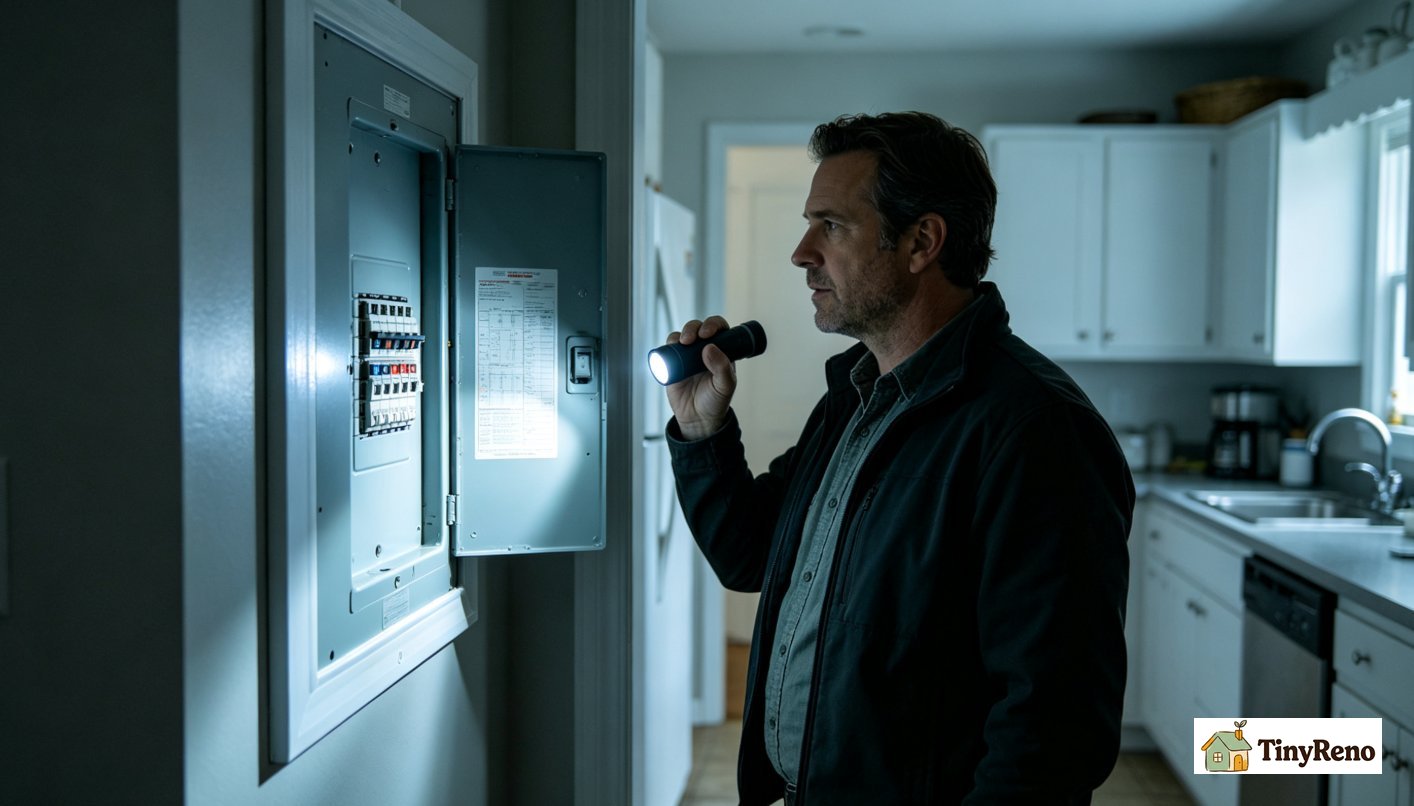
Find the breaker labeled "kitchen," "refrigerator," or "fridge." Flip it off. Then walk through your kitchen and see what else lost power. The outlets that go dark should only be the one behind the fridge — usually nothing else. If the counter outlets, the dishwasher, the microwave, or the kitchen lights also went dark, the fridge is sharing a circuit.
You can verify this by checking the other breakers. With the fridge breaker off, find which other breakers control the dead outlets. If any of those breakers also serve other outlets or appliances, you have a shared circuit situation.
The other diagnostic is to run a high-draw appliance on what you think is a separate circuit and see if the fridge's compressor trips the breaker when both run. If the toaster and the fridge compressor running at the same time trips the breaker, they're definitely on the same circuit.
Some homes have a fridge circuit that's technically separate but undersized — 15 amps where the fridge really needs 20. That's not a code violation in older installations, but it can cause the same tripping symptoms. The fix there is to upgrade the breaker and the wire gauge, which is an electrician's job.
The reason dedicated circuits became required
The National Electrical Code does not specifically require a dedicated circuit for a refrigerator, but modern kitchen design usually gives the fridge its own 20-amp circuit to prevent nuisance tripping. Older homes often share the fridge with counter outlets, which was legal when they were built. If your home was built before 1990 and hasn't had a kitchen remodel, your fridge may still be sharing a circuit with other kitchen outlets — which was legal when the home was built but is no longer up to current code.
A dedicated circuit has two main benefits. First, a refrigerator on a shared circuit can lose power when someone else in the kitchen uses too much current. Even a brief power loss can cause the compressor to fail to restart properly, or trigger a defrost malfunction, leading to food spoilage and expensive repairs.
Second, a shared circuit means the wiring carries more total current than it would for a single appliance. Wiring is rated for a maximum continuous load, and exceeding that load over time degrades insulation and creates a fire risk. The breaker is supposed to prevent this by tripping, but breakers can be slow to respond to sustained moderate overloads. A dedicated circuit keeps the load on each wire run within its design rating.
If you're buying a home or doing a kitchen remodel, check the electrical plan to confirm the fridge has its own 20-amp dedicated refrigerator circuit. If it doesn't, ask the seller or electrician to add one. It's a $300-500 job that prevents both nuisance tripping and the more serious risk of fire from overloaded wiring.
What the proper dedicated circuit looks like
A dedicated refrigerator circuit is a 20-amp breaker in the main panel running 12-gauge wire to a single outlet behind the refrigerator. That's it. Nothing else on that circuit — no counter outlets, no lights, no other appliances.
The outlet should be a standard 15- or 20-amp receptacle mounted in the wall behind where the fridge sits. Some newer installations use a recessed outlet box so the fridge can sit flush against the wall without crushing the plug.
The wire run should be as short as practical — directly from the panel to the outlet, with no unnecessary junction boxes or splices along the way. Long wire runs create more resistance, which means more voltage drop under load, which makes the compressor work harder and can shorten its life.
If your fridge is in a garage or a basement, the dedicated circuit requirement still applies. Garage refrigerators are especially prone to nuisance tripping because the garage electrical is often shared with power tools, freezers, and other high-draw devices. A dedicated 20-amp circuit for the garage fridge prevents the power tool trips from causing food loss in the freezer.
What to do if your fridge is on a shared circuit
The fix is to run a new 20-amp circuit from the main panel to a new outlet behind the fridge. This is an electrician's job — it involves opening the panel, running new wire through the walls, installing a new outlet, and connecting it to a new breaker. The job takes 2-4 hours and costs $300-500 in most markets.
If you're renting, this isn't a fix you can do yourself. Ask your landlord to either install a dedicated circuit or accept that the fridge will occasionally trip. Most landlords will agree to the dedicated circuit if you frame it as a food-safety issue rather than a convenience issue.
If a dedicated circuit isn't possible in the short term, you can reduce the nuisance tripping by managing what else runs on the shared circuit. Move the toaster to a different outlet if you can. Don't run the coffee maker and the microwave at the same time as the fridge compressor kicks on. Be aware of the fridge's cycling — most fridges cycle on for 15-20 minutes every hour or two, so you can time your high-draw appliance use around it.
This isn't a permanent fix — you're working around a wiring problem rather than solving it — but it can prevent food loss until you can get the dedicated circuit installed.
Other electrical reasons a fridge breaker might trip
Even on a properly dedicated circuit, a fridge breaker can trip for reasons unrelated to the circuit design. A failing compressor draws more current than normal as it struggles to start. A failing defrost heater can short to ground. A wiring problem inside the fridge — a chafed wire, a loose connection — can create a short that the breaker sees as a fault.
The diagnostic for these is to unplug the fridge and try the breaker. If the breaker holds with nothing plugged into the circuit, the problem is in the fridge, not the wiring. Call an appliance repair tech, not an electrician.
If the breaker trips immediately even with the fridge unplugged, the problem is in the circuit — usually a short in the wiring between the panel and the outlet. That's an electrician's job. The most common cause is a nail or screw driven into the wire during a renovation, or a junction box that got wet and corroded.
If your fridge is more than 15 years old and you've been having intermittent tripping problems, it might be worth replacing the fridge outright. New refrigerators are typically 15-30% more efficient than 15-year-old models, which can help offset the cost of a new fridge over several years. The cost of a dedicated circuit plus a new fridge is roughly the same as a major repair on an old fridge, and you end up with both an efficient appliance and a properly wired kitchen.


Discussion (0)
Sign in to join the discussion