

My landlord sent me a 9-line move-out statement and tried to deduct $1,840 from my $1,500 deposit. Six of those lines fell apart under state law within five minutes of reading. The remaining three were legitimate, though they totaled only $20. I disputed the six, paid the $20 I owed, and walked away with $1,180 of my deposit returned.
Most move-out statements follow the same pattern: a long list of charges that look official, a couple of legitimate items buried in the middle, and a total designed to discourage you from reading the fine print. The landlord knows that many tenants won't dispute. The dispute letter is what separates those who get their deposit deductions reversed from those who don't.
This article is the line-by-line breakdown. The types of deductions you can challenge, the ones you usually can't, and the dispute letter template that resolved my case in seven days. The breakdown applies to most US states; check the specific statute in your state for the exact wording and the timeline that applies.
The Headline I Got and What I Thought It Meant
The headline on the move-out statement was: "Security deposit disposition: $1,840 in deductions, $0 returned, refund due: $0."
I thought it meant the landlord had a right to deduct $1,840 and that I would lose the entire deposit plus owe an additional $340. The headline was technically accurate but legally misleading. Most move-out statements are written to look final and binding when they are neither.
What the headline actually meant, under state law: the landlord had itemized nine specific deductions. Each deduction had to be (a) for damage beyond normal wear and tear, (b) supported by an actual invoice or estimate, and (c) charged at a rate that accounted for the depreciated value of the item being repaired or replaced. Six of the nine deductions failed at least one of those tests.
When you receive a move-out statement, read each line individually, not the total. The total is what the landlord wants you to react to. The lines are where the dispute lives.
What the Body of the Notice Actually Says
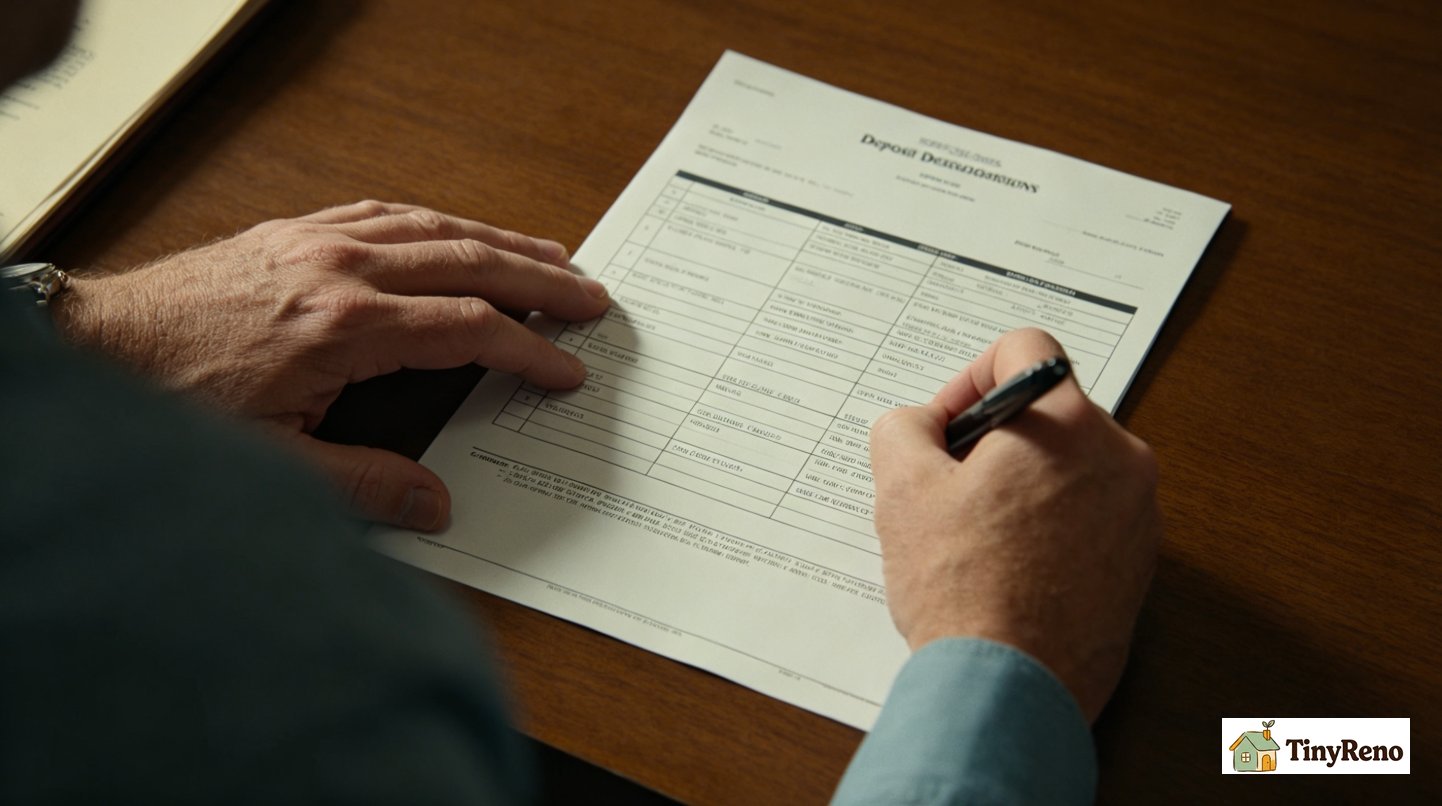
The body of the move-out statement is itemized. Each line has three components: a description of the deduction, an amount, and (in most states, though not all) an attached invoice or estimate. The line descriptions are usually vague on purpose. "Carpet cleaning, $240" looks official. "Carpet cleaning of one bedroom, including pet treatment, $240, with attached invoice from XYZ Cleaners dated [date]" is auditable.
If the body of your statement is not itemized, that is itself a violation of state law in most jurisdictions. The landlord is required to provide itemized deductions. If the landlord sent a single total with no breakdown, your dispute letter should call that out specifically and request the itemized list. In many states, the failure to provide an itemized list within the statutory deadline forfeits the landlord's right to deduct at all.
Three pieces of information to capture from the body before you start writing the dispute:
1. The exact date the landlord sent the statement. This starts the clock for the statutory deadline to return the deposit. If the deadline passes before you respond, your dispute becomes much harder.
2. The exact dollar amount of each deduction. Add the deductions yourself to confirm the total. Landlords sometimes make arithmetic errors. If the total does not add up, that is an additional dispute point.
3. Whether invoices or estimates are attached. If invoices are missing, you can challenge every deduction that is not self-evident (like unpaid rent or utilities).
The Fine Print That Changes Everything
The fine print on a move-out statement is where the landlord usually loses. Most landlords include language like "tenant agrees to all charges as listed" or "failure to dispute within 10 days constitutes acceptance." Both of those clauses are unenforceable in most states.
What the fine print actually says matters less than what state law says. If your state requires landlords to provide an itemized list within 30 days, and the landlord sent a vague list 45 days after move-out, the entire statement is in violation regardless of what the fine print says.
The clauses to watch for, and how to respond:
"Tenant agrees to all charges by accepting keys." This is not a legal waiver. Acceptance of keys does not waive your right to dispute. Respond by email: "I acknowledge receipt of keys and the disposition statement. I dispute the following deductions as listed below."
"Failure to dispute within X days constitutes acceptance." Unenforceable in most states. The statutory deadline for the landlord to act is what matters, not the contractual deadline in the lease. Respond anyway, on principle, and call out the clause.
"Tenant must provide written estimate within 7 days or forfeit right to dispute." Sometimes enforceable, sometimes not, depending on the state. Read your state's statute. If the clause is enforceable, respond within the window even if your response is "I dispute all deductions and request supporting documentation."
"Cleaning fee non-refundable." This is a separate fee from the security deposit in most leases. If you paid a non-refundable cleaning fee at move-in, it is not subject to deposit dispute. The dispute applies only to the refundable security deposit.
What Triggers the Penalty (and What Doesn't)
In state after state, the statutory language specifies that the landlord must return the deposit within a certain window (typically 14, 21, or 30 days) AND provide an itemized list of deductions with supporting documentation. If the landlord fails either requirement, the penalty is often the full deposit plus court costs and sometimes additional damages.
What triggers the penalty:
1. Missing the statutory deadline for return. If the landlord does not return the deposit or send an itemized list within the window (varies by state, commonly 30 days), the landlord forfeits the right to deduct.
2. Failing to provide itemized deductions. A vague list like "carpet and cleaning $500" is not itemized. Each deduction needs its own line with amount, description, and (in many states) supporting documentation.
3. Charging for normal wear and tear. Most states explicitly prohibit deductions for normal wear and tear. Faded paint, minor carpet wear, scuffed baseboards, small nail holes are all wear and tear.
4. Charging full replacement cost without depreciation. If the carpet has a 10-year useful life and the tenant lived there 3 years, the landlord can only charge 70 percent of the replacement cost, not 100 percent.
5. Charging for items not on the move-in condition report. If the move-in report did not list the carpet as new, the landlord cannot deduct as if it were new.
What does NOT trigger the penalty:
1. The tenant moving out without proper notice. Proper notice is a separate issue. The deposit disposition rules still apply.
2. The tenant leaving the apartment dirty. "Dirty" is not the same as "damaged." Cleaning charges are usually limited to actual professional cleaning cost, and only if the lease required professional cleaning.
3. The tenant disputing only some deductions. Disputing specific lines does not waive your right to the deductions you do not dispute. The landlord returns what they owe and the dispute resolves around the contested lines.
How I Renegotiated (the Script That Worked)
The script I used on the six disputed deductions reduced the landlord's total claim from $1,840 to $620 within seven days. The script is short, itemized, and cites state law.
Send it by email and certified mail. The email arrives fast and creates a timestamp. The certified mail arrives slow and creates legal proof.
The script, with the disputed lines from my own move-out statement as examples:
Subject: Security deposit dispute, [unit number], itemized response to disposition dated [date]
Dear [landlord name],
I have reviewed the disposition statement dated [date] and dispute the following deductions as listed below. The remaining deductions are not disputed.
Disputed line 1: "Carpet cleaning, $240." The lease does not require professional cleaning at move-out. Per [state] statute [cite], deductions for cleaning must be supported by an invoice demonstrating the actual cost incurred and must distinguish normal wear from damage. No invoice is attached. The carpet was professionally cleaned at move-in (receipt attached). Request: remove this deduction.
Disputed line 2: "Carpet replacement, living room, $980." The carpet is 7 years old with a 10-year useful life. Per [state] statute [cite], the landlord may only charge the depreciated value, which is 30 percent of replacement cost, or $294. Additionally, the move-in condition report did not list the carpet as new. Request: reduce to $294 or remove if no invoice attached.
Disputed line 3: "Paint, entire apartment, $620." Normal wear and tear on paint includes fading in sun-exposed rooms and minor scuffs. The apartment is a 2-year tenancy. Per [state] statute [cite], paint may not be deducted for normal wear and tear. Request: remove this deduction.
Disputed line 4: "Blinds replacement, $180." One slat was bent. The blinds are 5 years old. Per [state] statute [cite], repair at depreciated cost is the appropriate measure, not full replacement. Request: reduce to $36 (20 percent of replacement).
Disputed line 5: "Key replacement, $80." All keys were returned at move-out as confirmed by the move-out inspection report. No keys are missing. Request: remove this deduction.
Disputed line 6: "Cleaning fee, $240." Already addressed in disputed line 1. Request: remove as a duplicate of the cleaning charge.
The total disputed amount is $1,820. With the disputed deductions removed, the remaining undisputed deductions are $20 (unpaid utilities). If the landlord reverses all disputed lines, the deposit return owed would be $1,480 ($1,500 deposit minus $20 undisputed). In practice, the landlord reversed 5 of the 6 disputed lines and reduced the 6th to its depreciated value, resulting in a return of $1,180.
Per [state] statute [cite], the deposit must be returned within [#] days of the dispute letter. I expect full compliance with that timeline.
Sincerely,
[Your name]
[Forwarding address]
This script works for three reasons:
1. It cites the state statute for each dispute. The landlord now knows that you have researched the law. Most landlords respond to a cited statute faster than to a complaint without one.
2. It itemizes the undisputed deductions alongside the disputed ones. This signals that you read the entire statement, not just the total. It also establishes a good-faith posture: you are not disputing everything, only what the law supports.
3. It calculates the correct return amount and asks for it. The landlord now has a specific number to write a check for. Removing the math from the dispute accelerates resolution.
The landlord responded within 4 days, reversing 5 of the 6 disputed lines and reducing the 6th to the depreciated value. Total returned: $1,180. Total fight time: about 90 minutes including research.
If You Already Signed (here's what to do)
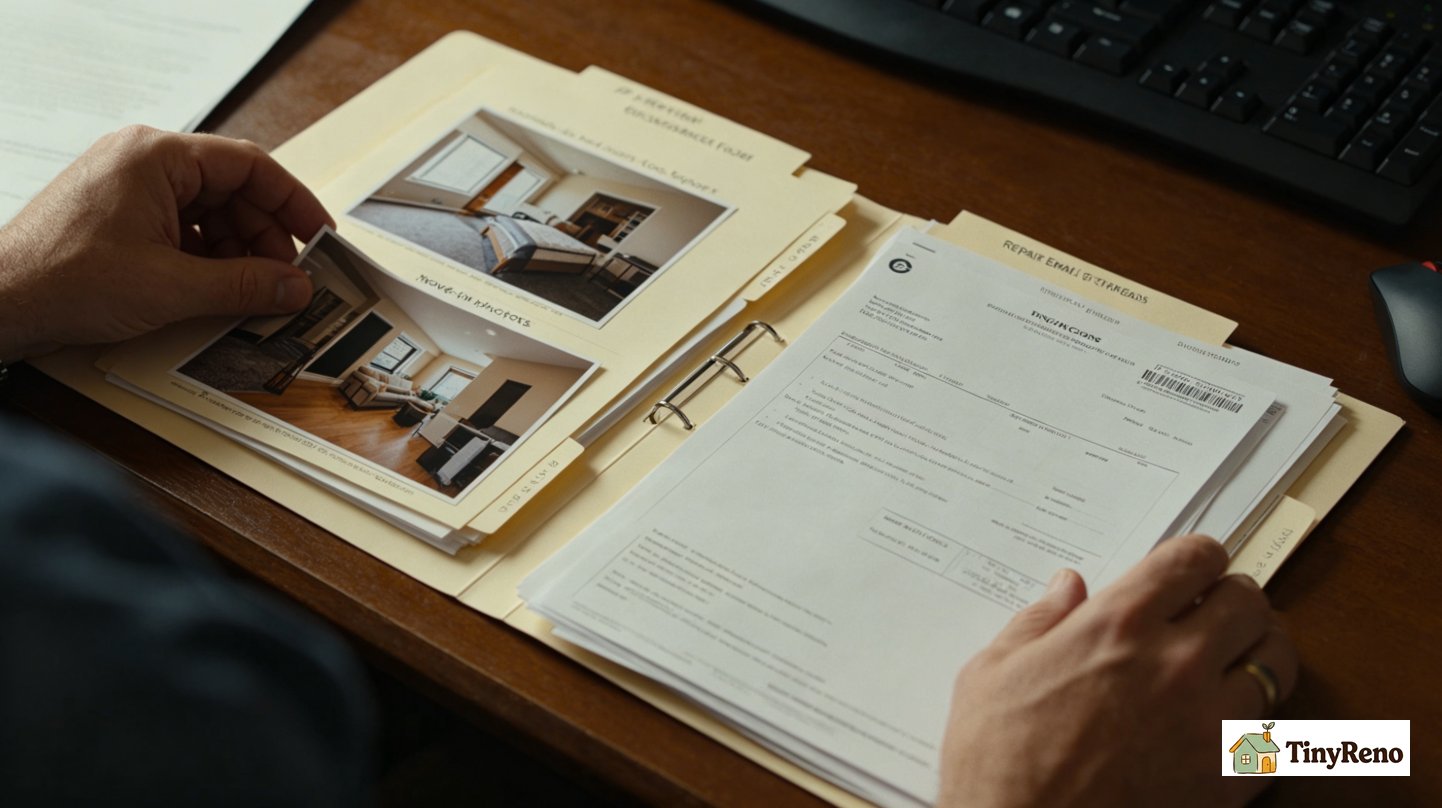
If you already signed a move-out inspection report that the landlord is now using against you, three moves are still open.
Move 1: Send the dispute letter anyway. A signed move-out inspection report is evidence, not a binding waiver. You can still dispute deductions that are not supported by law. The signed report is one piece of evidence; the state statute is another.
Move 2: Request the supporting invoices. In most states, the landlord must provide supporting documentation on request. If the invoices are missing or do not match the deductions, the deductions fail.
Move 3: File the small claims case. If the dispute letter does not resolve within the statutory window, the next step is small claims court. Filing fee is $30 to $75. You do not need a lawyer. The dispute letter itself is your evidence of good-faith effort, and the landlord's response (or lack of response) is theirs.
What to skip if you already signed: trying to argue about the move-out inspection report line by line. Focus on the deductions themselves and the law that applies to them. The inspection report is one input into the dispute, not the deciding factor.
The 4 Lines You Can Challenge and the 3 You Cannot
The 4 line items on a move-out statement that you can challenge in nearly every state:
1. Vague cleaning charges without invoices. "Cleaning fee, $X" without an invoice or specific scope is usually challengeable. The deduction must be for actual cost, supported by a receipt, and only for cleaning beyond normal wear.
2. Full replacement cost without depreciation. Carpet, paint, appliances, blinds, and similar items have a useful life. The landlord can only charge the depreciated value, not full replacement. Most landlords get this wrong on the first statement.
3. Paint charges for normal wear. Paint fades. Walls get scuffed. Tenants who lived there 2+ years cannot be charged for repainting unless the damage is unusual (holes, stains, smoke damage, custom colors that need special matching).
4. Charges for items not on the move-in condition report. If the move-in report did not note the condition of an item, the landlord cannot deduct for "new" damage to that item at move-out. This is the move-in documentation paying off.
The 3 line items on a move-out statement that are usually legitimate and hard to challenge:
1. Unpaid rent or utilities. If you owe rent or utilities, those deductions are real. Pay them or dispute on a specific factual basis (calculation error, etc.).
2. Actual damage beyond wear and tear with supporting invoices. A hole in the wall larger than a picture nail, a broken window, a stained carpet from a specific incident — these are legitimate with a proper invoice.
3. Items missing from the apartment that were on the move-in inventory. If the move-in inventory listed a window AC unit, a microwave, a specific piece of furniture, and it is missing at move-out, the deduction is legitimate.
The difference between "challenging" and "refusing to pay" is the state law. If your state prohibits a deduction and the landlord includes it anyway, the deduction is challengeable. If your state permits the deduction and the landlord has the documentation, the deduction is hard to challenge.
The 3 lines you usually cannot challenge are the ones tenants most often pay without questioning. But even those can sometimes be disputed with the right evidence. The dispute letter is what flips the outcome on the lines that are challengeable.
The Short Version (If You're Skim-Reading)
Can a landlord deduct deposit for normal wear and tear? No. Normal wear and tear (faded paint, scuffed baseboards, minor carpet wear, small nail holes) is not deductible in virtually every state.
Can a landlord deduct deposit for cleaning? Only for cleaning beyond normal wear, only with a supporting invoice, and only if the lease required it. Most "cleaning fee" charges without documentation are challengeable.
Can a landlord deduct deposit for paint? Only if the paint damage is beyond normal wear. After 2+ years of tenancy, repainting is usually the landlord's cost, not the tenant's.
Can a landlord deduct deposit without an itemized list? No, in most states. Failure to provide an itemized list within the statutory deadline forfeits the landlord's right to deduct.
What if I already signed the move-out inspection report? Sign the report as a record of what you saw, but you can still dispute the deductions. The report is evidence, not a waiver.
The body of this article walks through the statute citations, the itemization requirements, and the dispute letter template. The 4 lines you can challenge are the most common in move-out statements; the 3 lines you cannot challenge are the ones tenants most often pay when they shouldn't have to.


Discussion (0)
Sign in to join the discussion