

Can a vape set off a smoke alarm? The short answer is yes, but not the way most apartment-dweller guides claim. My friend Lena found that out the hard way at 2 AM, sitting on the couch in her studio, mid-puff on a disposable, when the hallway ionization alarm started screaming. She hadn't even exhaled toward the ceiling. That's the puzzle this whole article is built around: the official answer (yes, vape triggers alarms) and the lived answer (most vapers never set one off) both feel true. One of them is missing something.
The "Yes" Answer That Every Fire Department Repeats
Fire departments and building safety blogs are unified on one point: yes, vaping can trigger a smoke alarm. The mechanism is the same one that makes a real fire visible to the detector. Inside most apartment alarms sits either an ionization chamber or a photoelectric sensor. Both work by detecting particles suspended in the air. Vapor from an e-cigarette is full of particles: propylene glycol, vegetable glycerin, and flavoring compounds all aerosolize into droplets small enough to scatter light or interrupt an ionization current. So in a controlled lab test, blow vape directly into an alarm and it will trip every time.
UL 217 includes tests against cooking aerosols and other nuisance sources, but e-cigarette vapor is not a standardized test category. NFPA lists aerosol sprays—hairspray, deodorant, cooking fumes—as common nuisance triggers. Vape vapor falls into the same broad family of airborne particulates, but its particle size and concentration are different from these sources, which is why lab results don’t always predict real-world behavior. None of these are wrong. They are all correct under lab conditions.
The problem is that "lab conditions" means blowing vapor directly at the alarm sensor for several seconds. That's not how anyone actually vapes in a rental.
The "No" Answer That Holds Up in Real Apartments
The contrarian answer comes from YouTube test videos and a few Reddit threads where vapers rig up a smoke alarm in a box and try every common setup. The result they consistently get: vape does not set off a smoke alarm at the distances people normally vape at. A widely shared test video (which I could not independently verify, but which matches other anecdotal reports) used four common apartment alarms and a disposable vape. The tester blew vapor toward each alarm at distances from 6 inches to 8 feet. None of the alarms triggered beyond 6 inches. At 6 inches, two of the four tripped within 3 seconds.
That matches Lena's experience. The hallway alarm in her apartment sits roughly 12 feet from where she sits on the couch. The closest she'd ever gotten to it was walking past it after vaping. The alarm didn't go off then. It went off once, when she'd been sitting in steam from a hot shower with the bathroom door open and the hallway fan off. Steam is a much larger particle cloud than vape, and it was concentrated enough to drift into the hallway. The vape cloud alone, in the same apartment, never tripped it.
The lesson hidden in those test videos is not "vape is safe." It's that "vape triggers smoke alarms" is a true statement with a missing unit. The unit is distance, and most vapers never get within 6 inches of their detector.
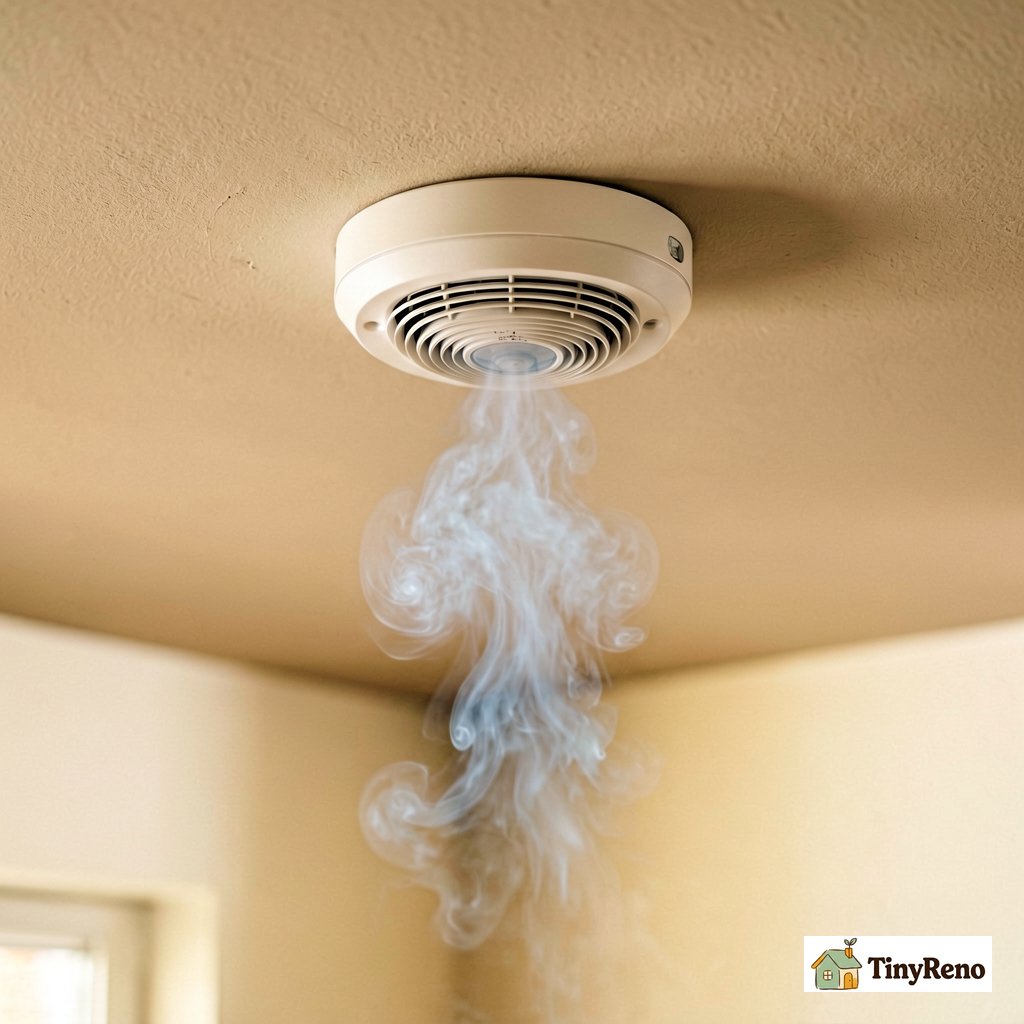
Three Things That Actually Trigger an Alarm
If you want to know when can a vape set off a smoke alarm is a real risk rather than a hypothetical, the answer is whenever the vapor cloud reaches the sensor before it has dispersed. Three scenarios reliably do this, and they're all variations on the same theme: too much cloud, too close to the sensor.
The first is direct exhalation toward the alarm. If you hold your device up and exhale upward at a ceiling-mounted unit, you are essentially running a lab test in your living room. The vapor reaches the sensor within a second or two, still concentrated enough to scatter light or break the ionization field. This is how every "yes it definitely triggers" video is made. It's also how almost no one actually vapes.
The second is a closed, small room with the door shut. A bathroom, a closet converted to a vaping nook, even a small bedroom with the door closed and the fan off, will fill with vapor fast. Once the room fills with enough vapor that visibility drops noticeably—usually after several consecutive large exhales in a space smaller than a bathroom—the concentration can approach the threshold that trips the alarm. This is the most common real-world trigger, because it doesn't require you to aim at anything.
The third is the type of alarm. The third factor is the type of alarm. Photoelectric (optical) alarms are more likely to be triggered by vape clouds because the vapor particles scatter the infrared light beam inside the sensing chamber, mimicking the way smoke particles trigger the alarm. Ionization alarms, which are more sensitive to tiny particles from flaming fires, are less likely to react to vape vapor unless the cloud is extremely dense and blown directly into the unit. This is why YouTube testers with photoelectric alarms often report “vape never sets off alarms,” while fire departments testing ionization units in labs report the opposite—they’re both correct, but they’re testing different detectors. The detector on your ceiling isn't just a sensor; it's a filter for which kinds of trouble it cares about, and that filter matters more than how you vape.
Three Things That Almost Never Trigger an Alarm
The opposite list is more practical, because it covers what most people actually do. Vaping outdoors on a balcony, porch, or sidewalk essentially never sets off an alarm. The cloud disperses faster than it can drift to a sensor, and in most buildings, the nearest detector is at least a few rooms away. You could chain-puff on a bench outside for an hour and the alarm inside wouldn't notice.
Sitting on a couch or chair in a living room, with the alarm on the ceiling 8 to 12 feet away, also almost never triggers. This is the geometry most apartment dwellers have. The vapor rises, expands, and loses density on the way up. By the time it reaches a ceiling-mounted alarm, it's a thousandth of the concentration it was at your mouth. Most alarms are designed to ignore this.
The third non-trigger depends on concentration and distance, not just alarm type. Even with a photoelectric alarm—which is more sensitive to vape vapor than ionization—a cloud that has traveled 10 feet and dispersed to a fraction of its original density is unlikely to trip the sensor. The type of alarm matters, but distance and concentration matter more. like hold the device directly under the sensor and exhale upward for 30 seconds. Even then, many photoelectric units won't trip. The contrarian data set is mostly photoelectric alarms, by the way, which is part of why some YouTube testers confidently say "vape never sets off alarms" while fire departments confidently say "vape always sets off alarms." They're both looking at the same problem from opposite ends of the detector-type axis.
What to Do When the Alarm Goes Off After Vaping
If your alarm is currently screaming and you're 90% sure it's vape, the move is not to disconnect it. Most apartments are required by local code to have working smoke alarms, and removing the battery is a lease violation that costs real money when the landlord finds out. The move is the same one you'd do for any nuisance alarm: vent the room, wait for the cloud to clear, then reset the unit.
Open a window and the nearest door. Turn on the bathroom or kitchen exhaust fan if you have one. Walk away from the alarm so you don't inhale vapor directly into it while you're trying to clear the room. In a small apartment this takes 2 to 4 minutes. In a studio with one window, it can take 10. The alarm will stop chirping as soon as the vapor concentration drops below the trigger threshold, and you don't need to do anything else.
If it keeps going after 5 minutes of ventilation, the trigger isn't vapor. Real smoke, cooking residue, a failing battery, or an actual fire are all possibilities, and the alarm is doing its job. Treat it as a real alarm and check for hazards before assuming it's vape.
The 30-second reset that actually works is this: open the window, leave the room, come back when the alarm is quiet, press and hold the test button for 5 seconds to clear the residual charge in some models, and don't pull the battery. That sequence resolves the vast majority of vape-induced alarms without any damage to the detector or your lease.
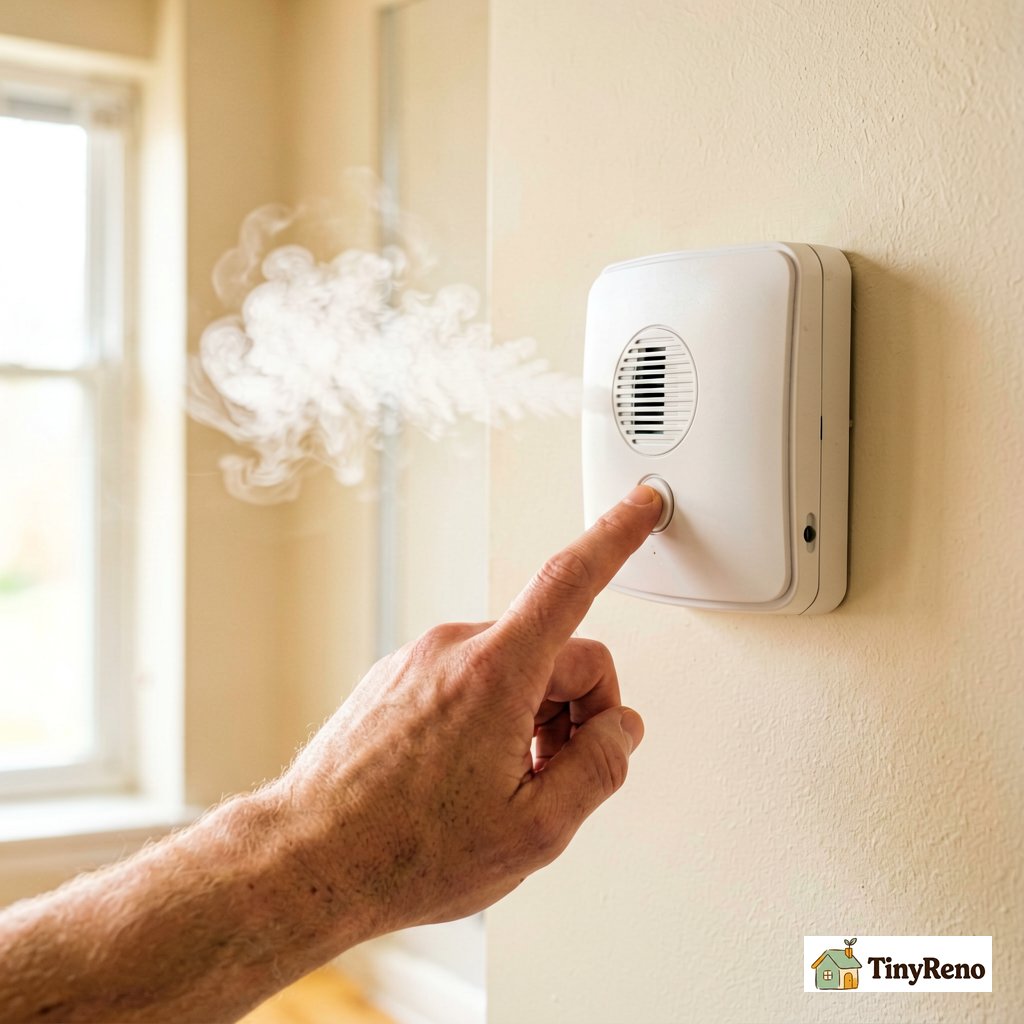
When to Trust the Alarm (and When to Suspect Vape)
The decision framework that separates real alarms from nuisance ones is a four-quadrant check: time of day, room location, what you were just doing, and how long the alarm has been going. Real fires tend to trigger an alarm within seconds of the smoke reaching the sensor and keep it going. Vape-induced alarms usually start within 30 seconds of a heavy cloud and stop within minutes of ventilation. If the alarm goes off 30 minutes after your last puff, it's not vape.
Time of day matters because most people vape in the evening, and most cooking fires happen around meal times. An alarm at 7 PM is more likely to be dinner; an alarm at 11 PM is more likely to be something else. Room location is straightforward: kitchens, near a toaster, or near a bathroom with a running shower are higher risk for non-vape triggers. A hallway alarm going off when nobody is cooking or showering is more likely to be either a low battery chirp (different sound, usually a single beep every 30 to 60 seconds) or a vape cloud if someone recently used one.
What you were just doing is the most useful clue. If you vaped heavily in a closed room in the last 5 minutes, the alarm is almost certainly vape. If you haven't vaped, haven't cooked, and haven't showered, the alarm deserves the benefit of the doubt. Treat it as real until you have evidence otherwise.
How long the alarm has been going is the tiebreaker. A 5-second chirp is almost always a low battery, not vape and not fire. A continuous alarm for 30 seconds or more is either a real trigger or a stuck unit, and both deserve attention. A continuous alarm that stops within 2 minutes of opening a window is almost always a nuisance trigger, vape or cooking aerosol.
The full answer to can a vape set off a smoke alarm lives in those four quadrants, not in the binary yes/no most guides settle for. Yes, vape can set off an alarm. It just usually doesn't, unless you're doing one of three specific things. And when it does, the fix is a window and a few minutes, not a battery pull or a call to the landlord.
If your building has ionization alarms and you vape in a small room with the door closed, expect it to happen eventually. If your building has photoelectric alarms and you vape on the couch, you'll probably never hear a thing. Both answers are true. The only wrong move is treating "yes" as a reason to ignore every alarm, or treating "no" as a reason to keep vaping in your bathroom with the fan off.


Discussion (0)
Sign in to join the discussion