

Can you shower when the power is out is the question I asked my downstairs neighbor Maya at 8:45 PM last August, when a tree fell on a power line two blocks over and our whole block went dark. She had three kids who needed baths before school the next morning, and I had a meeting at 9 AM that required me to look like I'd slept. The power was out for an estimated 6 hours per the utility's text alert. We had a real decision to make: shower now and risk it, wait for power and risk the morning chaos, or skip showers entirely. The answer turned out to be the kind that requires more than a yes or no. It requires knowing what type of water heater you have, because gas water heaters, electric water heaters, and tankless water heaters each behave differently during a power outage. Some keep working. Some don't. Some work only with caveats that turn a 10-minute shower into a 30-minute problem. The framework below gives you the 30-second test that tells you which kind you have, the 3 answers by water heater type, and the safety rule that applies to all three regardless of what your specific unit allows.
How to Tell What Kind of Water Heater You Have
Before you step into a dark bathroom, run this 30-second test. It tells you which of the three answers below applies to your specific situation, and it tells you whether showering during a power outage is safe or just possible.
Step 1: Locate your water heater. In most apartments, it's in a closet, basement utility room, or sometimes a hallway cabinet. In some newer apartments, it's hidden behind an access panel.
Step 2: Look at the exhaust or ventilation. Gas water heaters have a metal exhaust flue or vent pipe on top. Electric water heaters have no flue but have a large electrical junction box at the top. Tankless water heaters on gas have a flue; tankless electric units have no flue but may have a small display panel.
Step 3: Look at the nameplate. The front of the water heater has a sticker or metal plate that says "Gas," "Electric," "Natural Gas," "Propane," "Electric," or the brand name with the type. The label is usually near the bottom of the unit, on the front access panel.
Step 4: Look at the controls. Gas units have a gas control valve with a knob (often red) for setting temperature. Electric units have a thermostat with a numbered dial or digital display. Tankless gas units have a small igniter button. Tankless electric units have a digital control panel.
That test takes under 30 seconds and tells you which of the three answers below applies to your unit. The safety rule that applies regardless is: if the water is cold when you turn the faucet on, don't try to "wait it out" for hot water. The heater isn't working, and standing in cold water waiting for it to warm up wastes your remaining stored hot water.
Answer 1: Gas Water Heaters (Usually Yes, With Caveats)
If you have a traditional gas water heater with a tank, the answer is usually yes, you can shower during a power outage. The unit heats water using a gas burner that doesn't require electricity to operate. The pilot light or electronic ignition may need a small amount of power to start, but most modern gas water heaters with a standing pilot light work without any electricity at all.
A traditional gas tank water heater stores 30 to 80 gallons of pre-heated water at any time. Once the tank is full of hot water, you can shower, run a bath, do laundry, or wash dishes for as long as the tank holds out. In most households, that means 15 to 25 minutes of hot water before the tank starts running cold, regardless of whether the power is on or off. The power outage doesn't change the tank capacity.
The caveat is the ignition source. Newer gas water heaters (built after 2010 or so) often use electronic ignition rather than a standing pilot light. Electronic ignition requires a small amount of electricity to spark the burner. If your gas water heater uses electronic ignition and the power is out, the burner won't light, and you won't get hot water even though the gas is available. Most apartments in the US still have standing-pilot gas water heaters, but newer construction has electronic ignition. Check the burner area: a small blue flame burning continuously means standing pilot (works without power). No visible flame and a push-button igniter means electronic ignition (requires power).
If your gas unit has a standing pilot, showering during the outage works the same as during normal operation. If your gas unit has electronic ignition, the unit is effectively a brick during the outage, and you get no hot water until power returns.
The safety note: gas water heaters have a flue that exhausts combustion gases. During normal operation, those gases vent safely. During a power outage, bathroom ventilation fans may also be off, which means any flue leakage could accumulate in the bathroom. If you smell anything unusual (rotten egg from gas, or a metallic smell from combustion byproducts), stop the shower and ventilate the bathroom immediately. In practice, this scenario is rare in modern apartments with properly installed gas water heaters, but the rule of "smell anything, stop" applies regardless.
Answer 2: Electric Water Heaters (Usually No)
If you have a traditional electric water heater with a tank, the answer is usually no, you cannot shower with hot water during a power outage. The unit requires electricity to heat water; without power, the heating element doesn't work, and you get cold water only.
An electric tank water heater stores 30 to 80 gallons of pre-heated water, and that stored water will stay hot for hours after the power goes out. The tank is well-insulated, so the heat loss over 6 to 12 hours is minimal. If the power went out within the last 6 hours and your hot water was at full temperature before the outage, you have stored hot water available. You can shower with hot water during the outage as long as you use the stored supply before it cools down.
The phrase "stored supply" is the key. An electric water heater doesn't heat water on demand. It keeps a tank of water hot and ready. Once you use that stored hot water (through a shower, bath, or laundry), the tank needs to reheat the next batch, and that reheat requires electricity. During a power outage, the tank can't reheat, so the stored hot water is your only hot supply.
If you have an electric water heater and want to maximize your hot water during an outage, the strategy is conservation. Take shorter showers (5 minutes instead of 10). Use less hot water for dishwashing. Skip laundry entirely. With conservation, a 50-gallon tank can support 2 to 3 short showers during a 6-hour outage. Without conservation, one long shower can drain the tank and leave the next person cold.
The answer for electric tank units is technically yes, with stored hot water and conservation. The answer for people whose hot water has already been used (because someone showered 30 minutes before the outage) is no.
If you have an electric water heater and the power has been out for more than 12 hours, the stored hot water has likely cooled below shower temperature. The shower water will be lukewarm at best. In this case, the answer is no for hot showers but yes for cold showers, which are safe but not always comfortable.
Answer 3: Tankless Water Heaters (It Depends)
Tankless water heaters are the trickiest category because the answer depends entirely on the ignition type and the specific model. Some tankless units work during power outages. Most don't.
Gas tankless water heaters with standing pilot ignition or with battery backup ignition work during power outages. The unit heats water on demand using a gas burner, and if it doesn't need electricity to spark, it functions normally. Some gas tankless units have a small battery that powers the ignition during outages; the battery lasts 2 to 4 hours, after which the unit stops heating.
Gas tankless water heaters with electronic ignition (the most common type) require electricity to spark the burner. During a power outage, the unit won't heat water, and you get cold water only. This is the same problem as electronic-ignition gas tank units above.
Electric tankless water heaters (less common in apartments but increasingly popular) require significant electricity to heat water on demand. They don't work during power outages at all. They don't have stored hot water to fall back on. If you have an electric tankless unit, the answer is no, period.
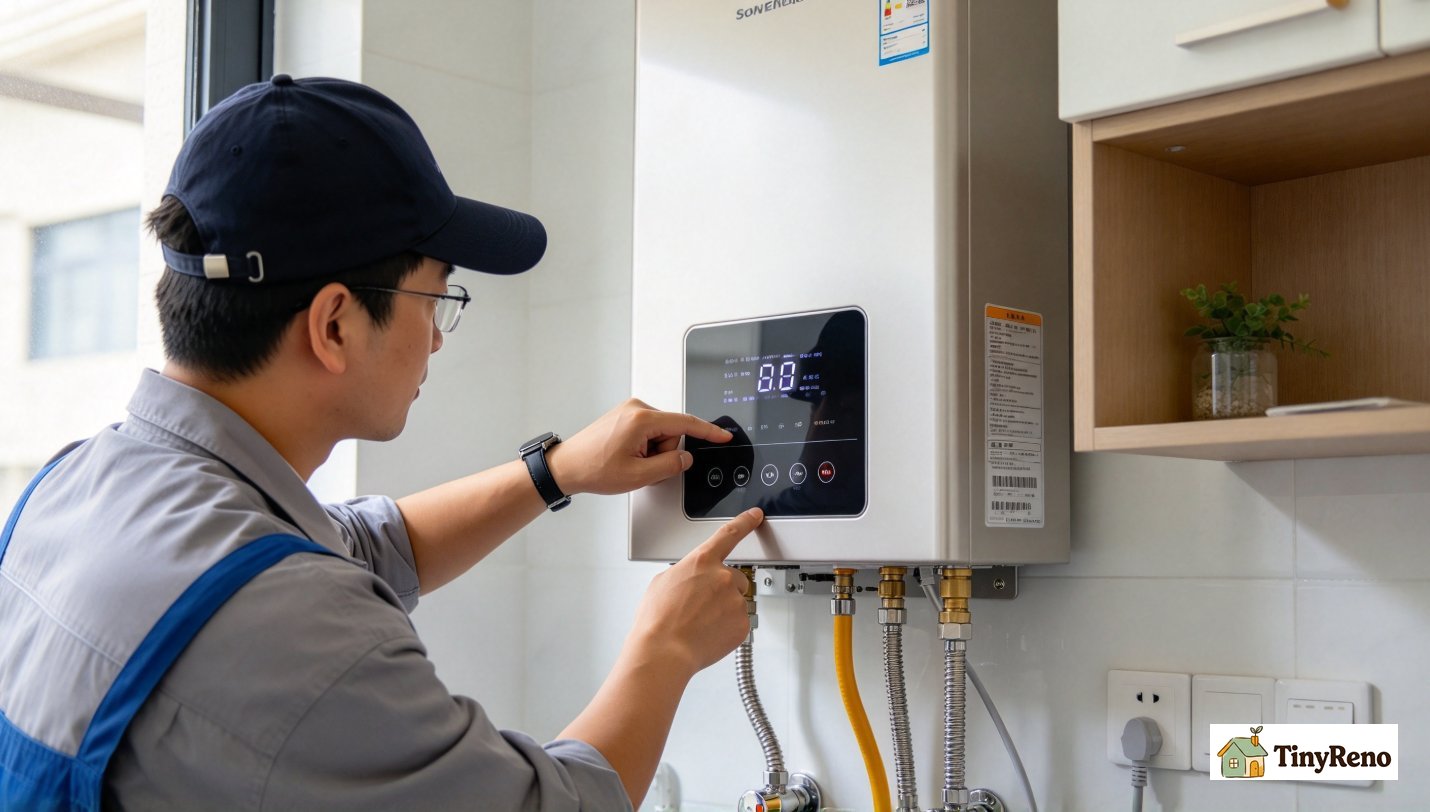
The way to identify which tankless category you have is to look at the unit's control panel. Tankless units almost always have a digital display showing the set temperature. If the display is on (powered by either electricity or battery), the unit may have power. If the display is off, the unit is unpowered. A unit that needs electricity but has lost it cannot heat water. A unit with battery backup can heat water for as long as the battery lasts.
For most renters with tankless units, the practical answer during a power outage is no. The exception is renters with battery-backup or standing-pilot tankless units, which are a minority.
The Safety Rule That Applies to All Three
Regardless of your water heater type, the safety rule during a power outage is the same: take a faster, cooler shower than usual, and don't try to extend hot water beyond what the unit can supply.
Fast shower rule: aim for 5 minutes or less. The faster shower uses less stored hot water and leaves more for the next person. This rule applies whether your heater is gas, electric, or tankless.
Cool shower rule: don't try to compensate for cold water by turning the temperature up to maximum. The water heater can't exceed its set temperature regardless of how you adjust the faucet. Turning the faucet to maximum hot just delivers the same temperature water faster, draining the tank faster. A cooler shower uses less total hot water.
Ventilation rule: if you have a gas water heater of any type and the bathroom ventilation fan isn't running (because the power is out), keep the bathroom door cracked open during the shower. This allows fresh air to circulate and prevents any combustion gas buildup in case of flue leakage. The door crack costs nothing in terms of heat retention but provides a critical safety margin.
Cold shower rule: if the water is genuinely cold and the tank is depleted, just take the cold shower. A 3-minute cold shower is better than a 15-minute attempt to wait for hot water that won't come. Cold showers are safe for healthy adults, and the time you save goes into morning prep that benefits everyone in the household.
These four rules apply to all three water heater types and prevent the most common showering mistakes during power outages.
When to Skip the Shower Entirely
There are four cases where the right answer to can you shower when the power is out is no, regardless of your water heater type.
Case 1: The outage has lasted more than 24 hours. By this point, even well-insulated tanks have cooled significantly, and the cold shower is genuinely uncomfortable for most people. If the outage is extending, skip the shower and use dry shampoo, body wipes, or sponge baths instead.
Case 2: The cold water in your unit is also out. Some power outages are accompanied by water main breaks or water service interruptions. If you turn on the faucet and nothing comes out, the question isn't about hot water at all. Use bottled water, wet wipes, or skip the cleanup.
Case 3: The bathroom has no natural light and you can't see safely. Showers in dark bathrooms are a slip hazard. If your bathroom has no window and no battery-powered light, wait for daylight or use a different bathroom in a building with power.
Case 4: The building has issued a "no water" order. Some buildings with shared boiler systems issue a do-not-use-water order during outages. Respect this; the building's plumbing may be damaged even if individual unit water heaters are functional.
For Maya and her three kids, the answer was a partial yes. Her gas water heater had a standing pilot, so the unit was working normally. The 30-gallon tank supported three quick showers back-to-back with conservation, and the kids got baths before bed. The power came back 5 hours later, well before the morning meeting. For renters with electric units or who used their stored hot water before the outage, the answer is different.
The 30-second test at the top of this article tells you which category you have. The three answers above tell you what to do in each case. The safety rules apply to all three. Whether you can shower during a power outage depends on your water heater type, how much stored hot water is left, and whether the safety conditions above are met. Once you know those three things, the answer is mechanical.


Discussion (0)
Sign in to join the discussion