

The first winter in my current apartment I ran the gas furnace for three days straight, woke up with a nosebleed, and called my landlord to ask if the heating was broken. He laughed and said it was working fine. He was right. The furnace was working perfectly. It was also turning my apartment into a desert without me noticing, because gas heat and electric heat do very different things to indoor humidity, and almost nobody explains this when you move in.
Heating and humidity are linked in a way that surprises most renters. Every combustion furnace, every gas fireplace, every propane heater, and every vented gas dryer pulls oxygen from the room and burns it. The byproducts are carbon dioxide, a little water vapor, and a lot of heat. The water vapor goes up the flue. The heat stays. The result is air that is warm and getting drier every minute the heater runs. This is the opposite of what most people assume.
If you have ever wondered why your skin cracks, your lips bleed, your wood furniture shrinks, or your static shocks triple the moment the heat kicks on, this is why. It is not a draft. It is not bad luck. It is physics. The fix is either to add moisture back on purpose with a humidifier, to switch to a heat source that does not dry the air, or to accept the dryness and learn to manage the symptoms. Here's what I tried, what worked, and what I'd skip next time.
1. Gas Heat vs Electric Heat Changes Everything
Gas furnaces, propane wall heaters, and vented gas fireplaces send combustion byproducts—including water vapor—up the flue. Older units may pull combustion air from the room, while modern high-efficiency units typically draw it from outside. In both cases, the heated air that goes up the flue takes moisture with it. Over a heating season, that ventilation can remove hundreds of gallons of water vapor from your home. Each cubic foot of natural gas burned produces about two cubic feet of water vapor that goes up the chimney instead of staying in your living room. Over a heating season that adds up to several hundred gallons of water your home would have had if you had heated it some other way.
Electric heat, including baseboard heaters, electric furnaces, heat pumps, and electric fireplaces, does not burn anything. It just turns electricity into heat. No oxygen is consumed. No water vapor leaves. Your indoor humidity stays exactly where it was. The air feels dry because cold winter air holding 10% relative humidity outdoors gets warmed up to 70 degrees indoors, and 10% relative humidity at 20 degrees becomes roughly 1.5% relative humidity at 70 degrees. The moisture did not leave. The temperature went up, and warm air at the same moisture content feels much drier.
If you are on gas heat and your skin is cracking, the fuel is not the only factor. Any heating system that brings in cold outdoor air—whether through a flue, a fresh-air intake, or a ventilation system—will lower indoor humidity. Gas furnaces often do this more than electric baseboard heaters because they need combustion air and flue ventilation. But the underlying issue is ventilation rate, not the fuel itself.
2. The 30-45% Rule Nobody Told You On Move-In Day
The EPA, the American Society of Heating and Air-Conditioning Engineers, and most building scientists agree that indoor relative humidity should sit between 30% and 50% during heating season for comfort and health. Below 30%, you start seeing dry sinuses, nosebleeds, cracked wood, and static shocks. Above 60%, you start feeding dust mites and inviting mold growth on the coldest surfaces, which are usually the windows and the outside corners of exterior walls.
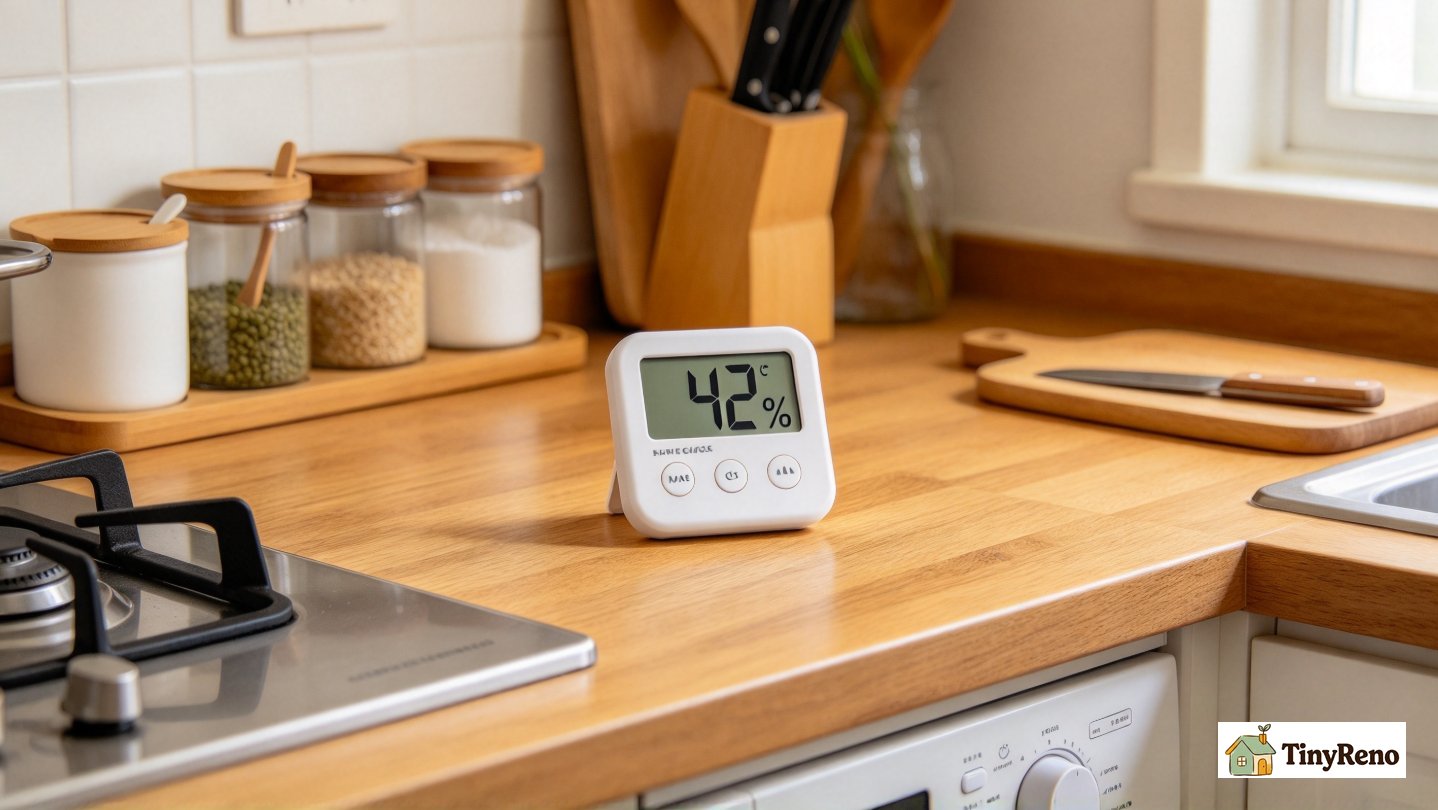
For most renters, the sweet spot is 40 to 45 percent. This is humid enough that your sinuses feel normal, your piano stays in tune, and your plants do not need daily watering. It is dry enough that you will not see condensation on the windows or smell the start of mildew in the closets. The number is easy to measure. The $10 hygrometer on the kitchen counter is enough.
I keep mine set to 42 percent from November through March. That is one number, one cheap gadget, and a 30-second glance every morning. It has done more for my winter comfort than any other single purchase I have made in this apartment.
3. The Humidifier Decision: Evaporative vs Steam vs Ultrasonic
Once you know your baseline indoor humidity is too low for comfort, the next question is what kind of humidifier to buy. There are three families, and the cost and maintenance are very different.
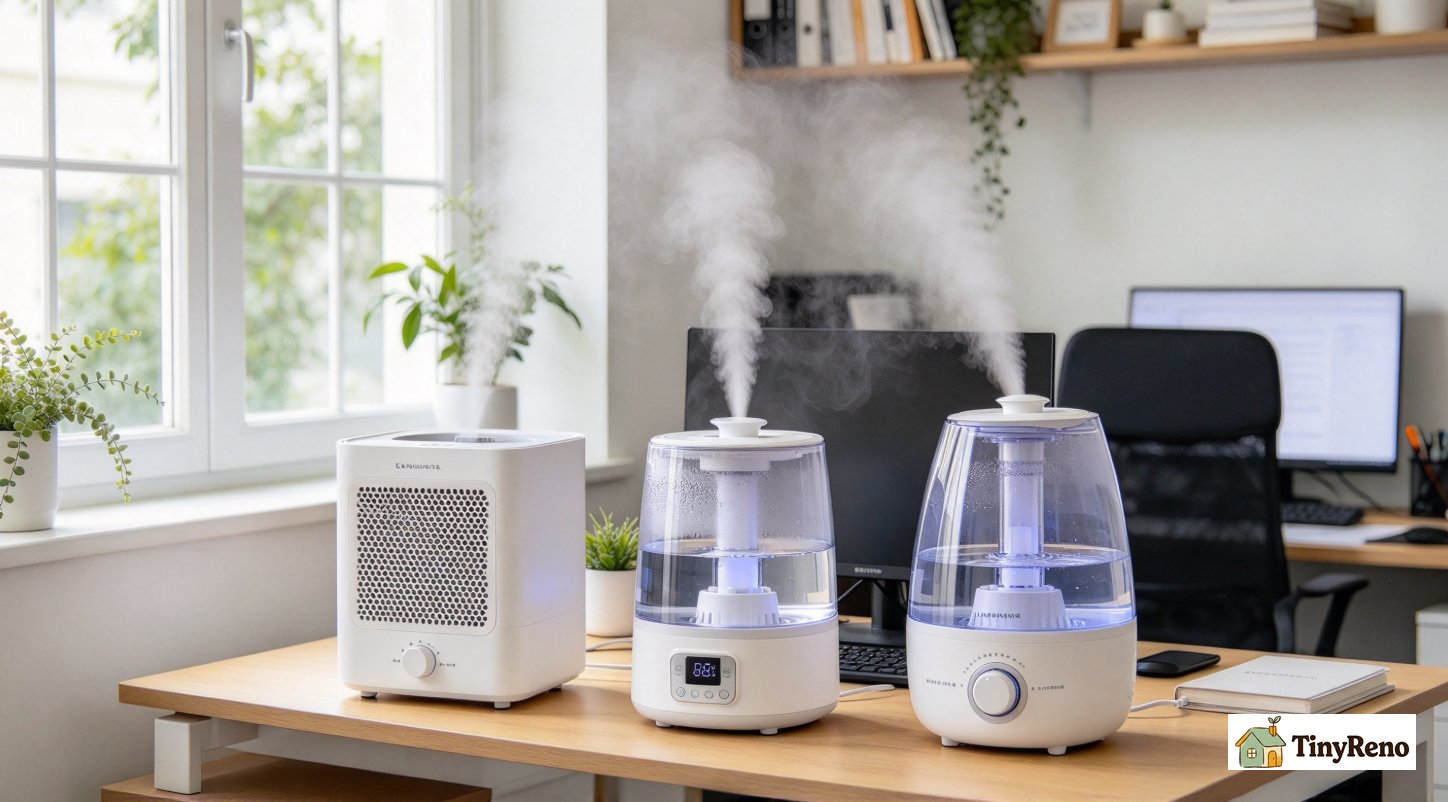
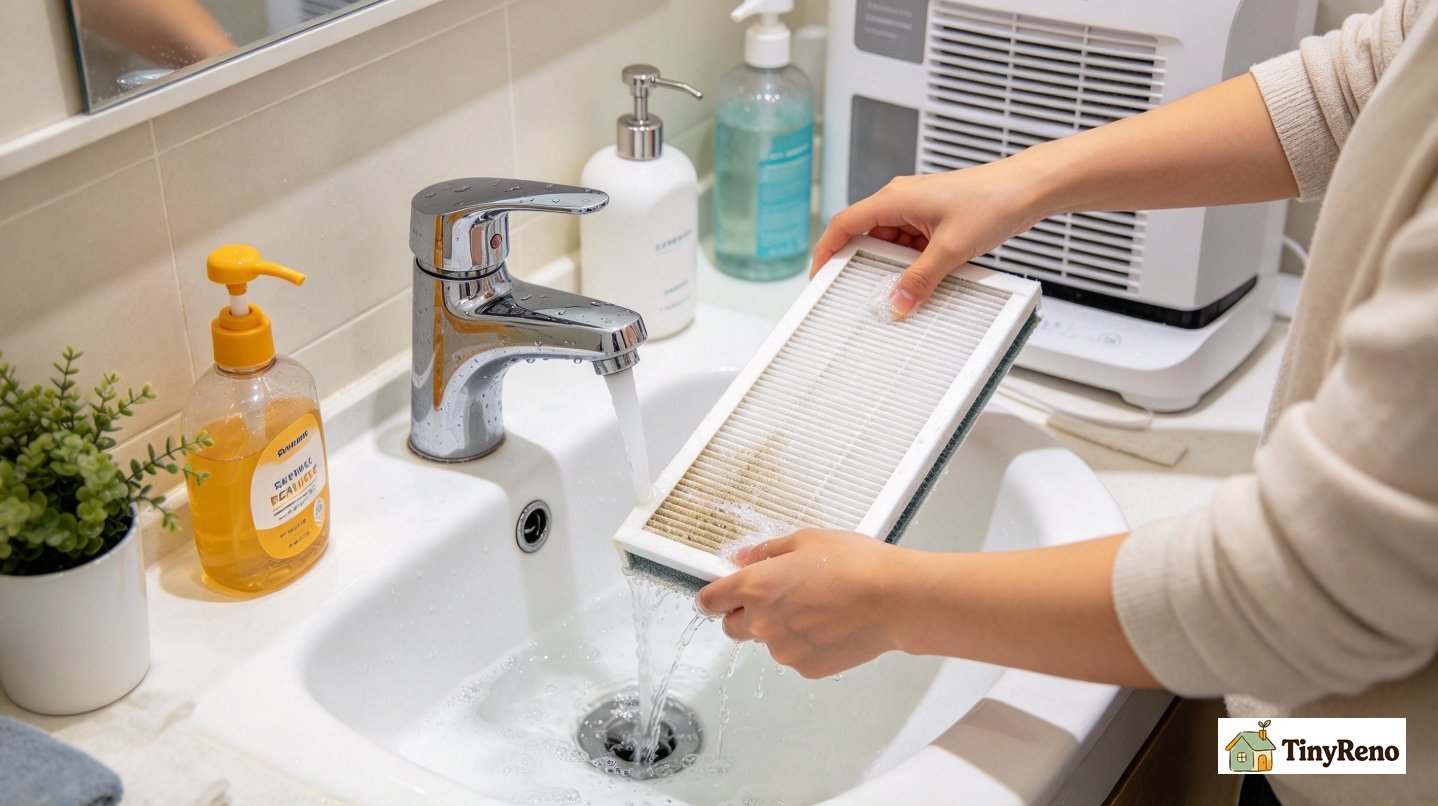
Evaporative humidifiers blow air through a wet wick filter. They are cheap, self-regulating because more humid air means slower evaporation, and they cost about $50 to buy and $15 a month in wick replacements and electricity. The downside is that they make a soft fan noise, they need cleaning once a week to prevent mineral dust, and they only work well in a single room. Good for bedrooms, not for open-plan apartments.
Steam humidifiers boil water and blow the steam into the room. They are the fastest at raising humidity, the cleanest in terms of mineral output, and the most expensive to run because boiling water uses a lot of electricity. About $80 to buy, $8 to $12 a month in electricity, no filters to replace. The downside is the hot plate inside them, so you have to keep them out of reach of kids and pets.
Ultrasonic humidifiers vibrate water into a cold mist with a metal diaphragm. They are quiet, cheap to run, and very effective, but they put any minerals in your water straight into the air as a fine white dust that settles on everything. If you have hard water, use distilled or you will be wiping furniture every day. About $40 to buy and $4 a month in electricity and water.
I run a steam humidifier in the bedroom and an evaporative unit in the home office. The total cost is about $20 a month during heating season, and my baseline humidity stays between 40 and 45 percent without me touching the dials.
4. The Three Things That Make Humidity Worse That Nobody Talks About
There are three common renter habits that make winter air feel drier than it has to be, and none of them are about heating. The first is running the bathroom exhaust fan longer than needed. The fan pulls warm moist air out and replaces it with cold dry air from outside. In summer this is a feature. In winter, running it for 20 minutes after a short shower pulls more moisture out than necessary. Try 10 minutes for a normal shower—enough to clear the moisture without over-drying the apartment. If you see condensation on the bathroom mirror after 10 minutes, run it longer.
The second is leaving the kitchen hood running after dinner is done. Same logic. The hood is pulling 200 cubic feet per minute out of the kitchen and replacing it with dry outdoor air. Run the hood while you cook and for 5 minutes after. Then turn it off. Anything beyond that is a waste of moisture and money.
The third is opening the windows for fresh air in the middle of January. I get the impulse. The air inside feels stale. The air outside is cold and dry. If you open the window for 10 minutes on a 20-degree day, you will replace a significant fraction of your indoor air with cold, dry outdoor air. The larger the window and the greater the temperature difference, the faster the exchange. Even a brief opening can drop your indoor humidity by several points. You will not recover that humidity for hours even with a humidifier running. Open the windows on the spring and fall shoulder days when outdoor humidity is above 40 percent. Skip it in deep winter.
5. What I Stopped Buying Because It Did Nothing
Before I figured this out, I spent money on things that did not fix the problem. A $30 air purifier with a humidifier function that was really just a tiny evaporative wick in a HEPA shell. The HEPA was fine for dust. The humidifier part raised the room humidity by maybe 2 percentage points before the wick dried out. Worthless for whole-room humidity.
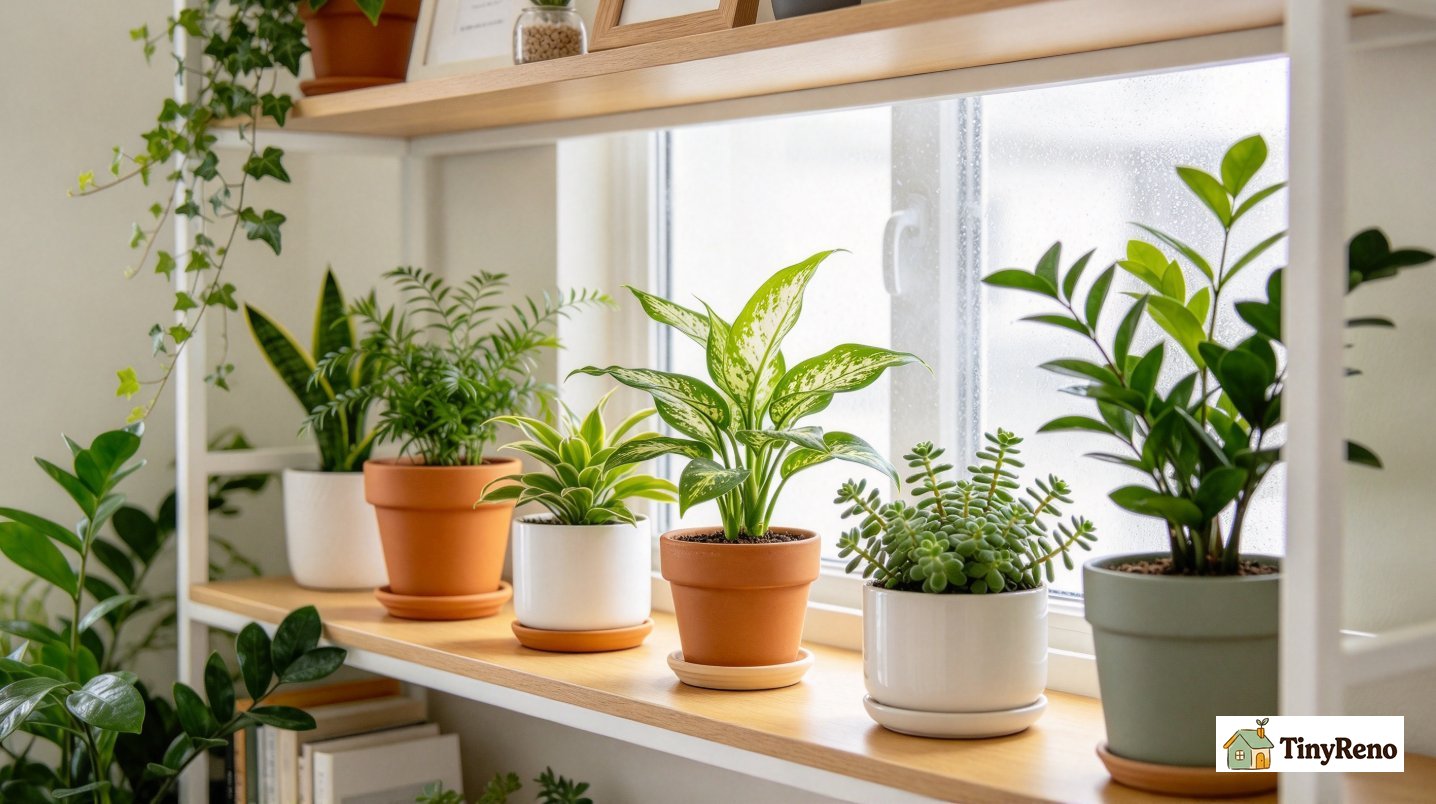
A set of $25 indoor plants marketed as natural humidifiers. Each plant adds about a cup of water a day to the room. A large houseplant adds maybe half a pint of water per day to the air. A 35-pint dehumidifier can remove 35 pints per day. You would need roughly 70 large plants to match that output—and even then, the comparison is imperfect because dehumidifiers run continuously while plants transpire on their own schedule. I tried 6. They were nice to look at. They did not move the needle on my hygrometer.
A $40 essential oil diffuser that was really just a tiny ultrasonic mister with no real humidistat. It ran out of water in 4 hours and left the desk damp but did nothing for the rest of the apartment. Decorative, not functional.
If the humidity reading on your hygrometer does not move when you turn a device on, the device is not humidifying. Save the money.
6. A Winter Humidity Plan That Costs About $110 a Year
Here is the plan that has worked for me for three winters running. Get a $10 hygrometer. Measure your baseline indoor humidity for one week. If it sits below 30 percent, add a humidifier sized to your main living space. If it sits between 30 and 50 percent, you are fine and you do not need a humidifier at all. If it sits above 55 percent, your problem is too much humidity, and you need a dehumidifier instead.
Run the humidifier with a built-in humidistat set to 42 percent. Refill it every morning or hook it to a hose if your model supports it. Clean it once a week according to the manual. Replace the wick every two months or as the manufacturer recommends. Use distilled water if you have hard water and an ultrasonic unit. Skip the boutique essential oils unless you actually want them for the smell, because they do not improve humidity, only add scent.
The total annual cost of this plan, including the hygrometer, the humidifier paid back over 5 years, the electricity, and the distilled water, is about $110. That is less than two takeout dinners. It is also less than the cost of one visit to an ENT doctor for the nosebleeds I used to get every February.
Once you start tracking indoor humidity alongside your heating habits, the dry winter air stops being a mystery. A $10 hygrometer and a humidifier set to 42% solved it for me.


Discussion (0)
Sign in to join the discussion