

How to get your landlord to make repairs is the question every renter eventually asks, usually while standing in a kitchen with a broken appliance and a stack of unanswered texts. The garbage disposal in my friend Jordan's apartment had been dead for six weeks. He had texted the landlord twice. He had called once. He had knocked on the property manager's office door once. The landlord kept saying he would get to it. Jordan is a renter in Texas. He had three options that did not involve lawyers. He had one option that did. He chose the option that did not. The garbage disposal was fixed in 21 days. The total cost to Jordan was one stamp and 40 minutes of typing.
The reason most renters get stuck on repairs is that they assume the landlord is on their side and will act in the right way at the right time. Most landlords want to act in the right way at the right time. Some landlords do not. For the landlords who do not, the renter has a series of escalating options that go from a polite email to a phone call to a certified letter to a code enforcement complaint to a rent escrow to a legal action. Each step has a specific document, a specific timeline, and a specific outcome. The path is the same in most states. The deadlines and the remedies are different.
Getting a landlord to make repairs is not one big move. It is a sequence of small steps, each with its own document and deadline, in writing, with the right paper trail, escalating only when the previous step fails. Here is the seven-step path that works in most states, with the actual documents, the actual deadlines, and the actual outcomes.
Step 1: Send the Repair Request in Writing First
Even if you have already called, texted, or knocked on the door, the formal process starts with a written email. Verbal requests are not evidence. Put the request in writing now—it becomes the legal starting point for everything that follows. The request is short, specific, and dated. It describes the problem. It asks for a specific resolution. It gives a specific deadline. It asks for a written reply. This email is your paper trail for everything that follows. Without it, the landlord can claim they never heard from you and you have no case.
A good repair request looks like this. Subject line: repair request for unit number, brief description. Dear landlord name, I am writing to request a repair in my apartment at address. The specific issue is description of problem, including where it is, when it started, and what you have already tried. The issue is affecting daily use of the apartment. Please confirm receipt of this request within 3 business days and provide a timeline for the repair. I would prefer to handle this directly with you and avoid any escalation. Your name, unit number, phone and email, date.
The first request is not a legal document. It is a customer service email that any reasonable person would respond to within 48 hours. Most landlords reply within 24 hours. Most repairs happen within 7 to 14 days of the first email. If your repair is in this category, you do not need steps 2 through 7. The email is enough.
Jordan sent his first email on day 1. The landlord replied on day 2 saying he would get a plumber out within the week. The plumber did not come. Jordan waited 9 more days and moved to step 2.
Step 2: Send the Second Request With a Citation to the Lease
If the first email is ignored, the second email cites the relevant lease clause, the relevant habitability law, or the relevant local code. The email becomes a legal record. The landlord's signature on the lease, which you both signed, makes the lease a contract. The contract usually contains a clause that requires the landlord to maintain the property in habitable condition. The clause is the legal hook for everything that follows.
The second email looks like this. Subject: second request for repair, unit number. Dear landlord name, this is my second written request regarding the issue described in my email dated date. As of today, the issue has not been addressed. Our lease agreement, signed on date, contains the following clause exact quote of the maintenance or habitability clause. I am also aware that state name requires landlords to maintain rental property in compliance with local habitability codes. Please confirm receipt of this request and provide a specific date for the repair within 5 business days. If I do not hear from you, I will be pursuing the remedies available to me under the lease and state law. Your name, unit number, phone and email, date.
The second request does not threaten. It informs. It tells the landlord that you know the lease, you know the law, and you know the timeline. Most landlords respond to the second request within 48 hours because the alternative is the next step.
Jordan sent his second request on day 11. The landlord replied on day 12 with a new plumber date 7 days out. The plumber came on day 19. The disposal was fixed by day 21. The whole thing took 21 days from the first email.
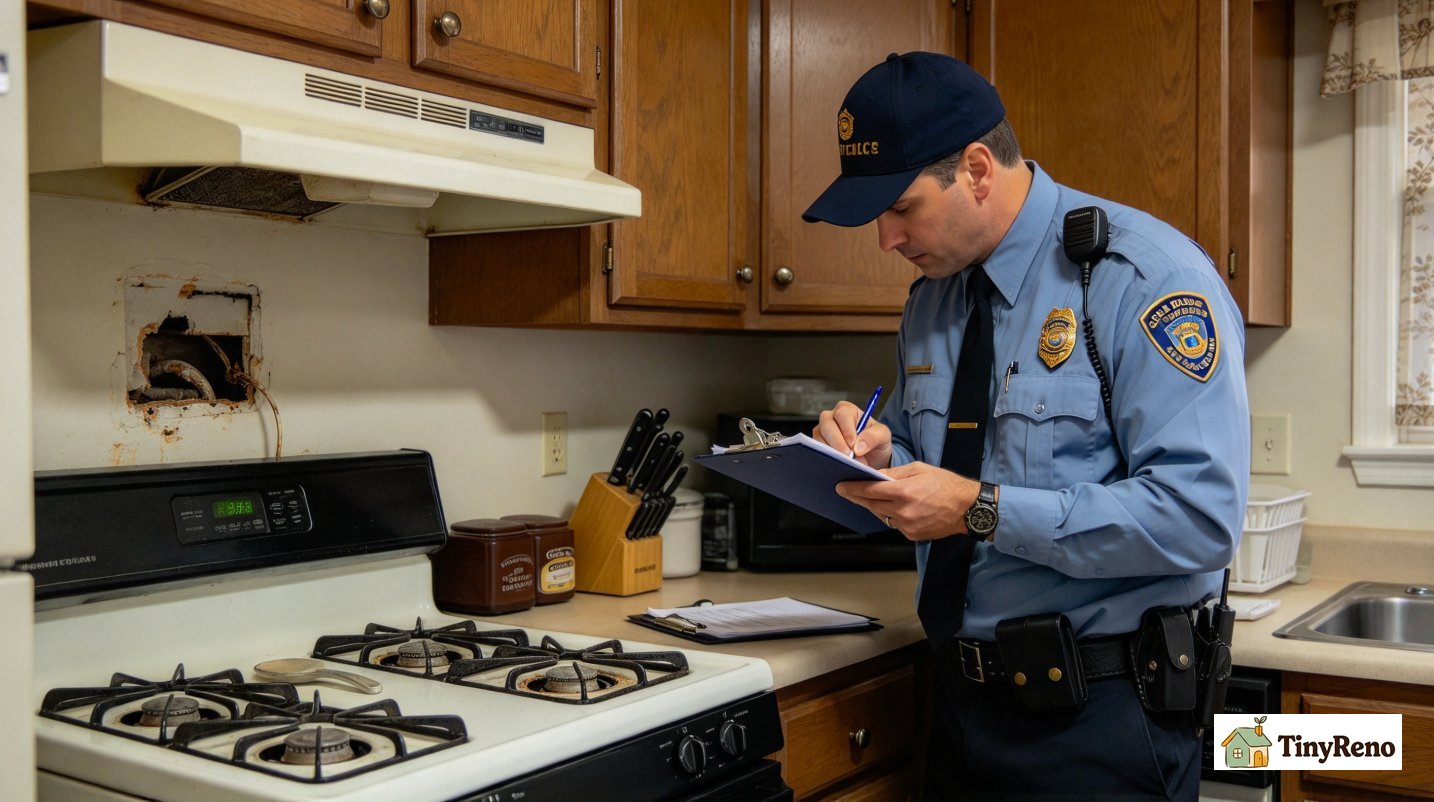
Step 3: Send the Certified Letter When the Second Request Fails
If the second request is ignored, the third step is the certified letter. The letter is mailed to the landlord's address of record, which is usually the address on the lease. The letter is the same content as the second email but it is on paper, certified, with return receipt requested. The post office receipt is your proof that the landlord was on notice. The green card is your evidence in any future legal action.
The certified letter looks like this. Dear landlord name, this is my third written notice regarding the issue described in my previous communications dated date and date. Despite those notices, the issue has not been addressed as of date. I am now sending this letter by certified mail to establish a formal record. I am requesting that the repair be completed within 14 days of the date of this letter. If the repair is not completed by date, I will pursue the remedies available to me under the lease, state habitability law, and local code enforcement. The remedies may include placing rent in escrow, filing a code enforcement complaint, and pursuing damages in small claims court. I would prefer to resolve this directly with you. Your name, unit number, date.
The certified letter is sent by physical mail. The receipt is the proof. The green card comes back in 3 to 7 days. You save the receipt, the green card, and a copy of the letter together. This is the document that wins disputes with insurance, with code enforcement, with a judge, and with a property manager.
If your repair is in the health or safety category, the deadline is shorter and the remedies are stronger. Health hazards include no heat in winter, no hot water, no running water, sewage backup, broken locks on exterior doors, electrical hazards, and gas leaks. Many states require landlords to address health hazards within 24 to 72 hours, but the exact timeline depends on your state's statute. Check it before citing a specific deadline. The certified letter for a health hazard should say so explicitly and should cite the state habitability statute.
Step 4: File the Code Enforcement Complaint When the Landlord Ignores the Letter
If the certified letter is ignored and the repair is a code violation, the next step is the local code enforcement office. Every city and county has one. The office takes complaints by phone, online, or in person. The complaint triggers an inspection. The inspector comes to your apartment with or without the landlord's knowledge. The inspector writes a report. The landlord is given a deadline to fix the violation. The deadline is enforced by fines or by court orders.
The code enforcement complaint is free. The inspection is confidential in most jurisdictions. The inspector cannot tell the landlord that you filed the complaint. The inspector's report is a public record. The landlord's compliance or non-compliance with the inspector's deadline is also a public record. The record is your evidence in any future legal action.
The code enforcement complaint is the right move when the repair is a clear violation of local habitability codes, when the landlord has ignored the certified letter, and when the issue is affecting the health or safety of the occupants. It is not the right move when the repair is cosmetic, when the issue is a disagreement about what is included in the lease, or when the issue is something you caused. Use code enforcement for habitability issues, not for preference issues.
To file the complaint, call the local code enforcement office or go to their website. Have your lease, your repair request emails, the certified letter receipt, and a description of the problem ready. The inspector will schedule a visit within 7 to 14 days. The inspector's report will be issued within 30 days. The landlord will be given a deadline to comply.
Step 5: Place Rent in Escrow for Habitability Issues
If the repair is a habitability issue and the landlord has failed to fix it after the certified letter and the code enforcement complaint, the next step is to place the rent in escrow. Rent escrow means you do not pay the rent to the landlord. You pay it to the court or to a designated escrow account. The rent stays in escrow until the landlord fixes the repair. Once the repair is complete, the rent is released to the landlord minus any costs you incurred because of the habitability issue.
Rent escrow is legal in most states, but the procedure is specific and the requirements vary. Most states require that the repair be a serious habitability issue, that the tenant has given the landlord proper notice, that the landlord has failed to act within a reasonable time, and that the rent be deposited with the court or with a designated third party. Tenants who place rent in escrow without following the procedure risk eviction for non-payment of rent. Tenants who place rent in escrow following the procedure are protected from eviction for non-payment while the repair is outstanding.
The procedure for rent escrow is in your state's landlord-tenant law. The procedure usually involves filing a motion with the local court, providing the court with the documentation of the repair request and the landlord's failure to act, and depositing the rent with the court clerk. The court schedules a hearing. The landlord appears. The judge decides. If the judge rules in your favor, the rent stays in escrow until the repair is complete. If the landlord completes the repair, the rent is released. If the landlord does not complete the repair, the rent may be released to you and the landlord may be ordered to make the repair.
Rent escrow is the right move when the repair is serious, when the landlord has ignored the certified letter and the code enforcement complaint, and when you are willing to go to court. It is not the right move when the repair is minor or when you are not willing to risk the relationship with the landlord.

Step 6: Withhold Rent for Reduced Habitability in Some States
A few states allow tenants to withhold a portion of the rent for habitability issues without going through the escrow process. The amount withheld is usually proportional to the reduction in habitability. A broken disposal in a kitchen where you do not cook much is a small deduction. No heat in winter is a much larger deduction.
Withholding rent without following the exact procedure is dangerous. The landlord can issue a pay-or-quit notice and start eviction proceedings. Even if you are right about the repair, a procedural mistake can cost you the case. Never withhold rent without first checking your state's statute and, if possible, consulting a tenant rights attorney or housing counselor. The tenant then has to defend the eviction in court and prove that the rent was withheld legally. The defense is easier if you have documentation, if you followed the notice procedure, and if you placed the withheld amount in a separate account that you can show to the court.
The states that allow rent withholding usually have a specific procedure for doing it. The procedure is in the state statute. Read the statute. Follow the procedure. Keep the documentation.
Step 7: Small Claims Court or an Attorney
If nothing else has worked, the last step is small claims court or an attorney. Small claims court is faster, cheaper, and easier than a full lawsuit. The filing fee is between $15 and $75. The hearing is usually within 60 days. You can sue for the cost of the repair, for the rent you paid during the period when the repair was outstanding, for the reduction in habitability, and for any damages caused by the habitability issue.
An attorney is the right move when the repair is very expensive, when the habitability issue is severe, when the landlord has violated the lease in other ways, or when you are facing retaliation from the landlord. Most landlord-tenant attorneys offer a free consultation. The consultation is worth the time even if you do not hire the attorney. The attorney will tell you whether you have a case, what the case is worth, and what the next step should be.
The path works because each step creates a document and a deadline. The specific rules vary by state, but the sequence is consistent. The landlord fixes the repair because the cost of not fixing the repair is higher than the cost of fixing it.
Jordan's repair took 21 days from the first email. The first email was the only document he needed. The second email got the plumber out. The garbage disposal is still working two years later. The paper trail from the first email and the second email is in a folder labeled apartment maintenance in case the landlord tries to deduct a repair from his deposit when he moves out. Jordan will not lose that deposit because he has the paper trail.
Keep every email, letter, receipt, and photo in a single folder labeled "apartment maintenance." If the landlord ever tries to deduct a repair from your deposit, this folder is your defense.


Discussion (0)
Sign in to join the discussion