

How to replace vinyl strapping for patio chairs on a Brooklyn south-facing patio in November, after the strap on the third of four chairs broke within three weeks of the strap on the first chair breaking, and after the second chair's strap had failed in a different way than the first chair's strap had failed. The difference between Cleveland and Brooklyn is not just the temperature and the snow and the rain. The difference is sun exposure. My father-in-law's patio in Cleveland faces north and gets maybe four hours of direct sun in the summer. My patio in Brooklyn faces south and gets six hours of direct sun from May through September. The strapping on his Cleveland chair lasts five years. The strapping on my Brooklyn chair lasted three years and four months. The father-in-law does not know this because the father-in-law does not have a south-facing patio in Brooklyn.
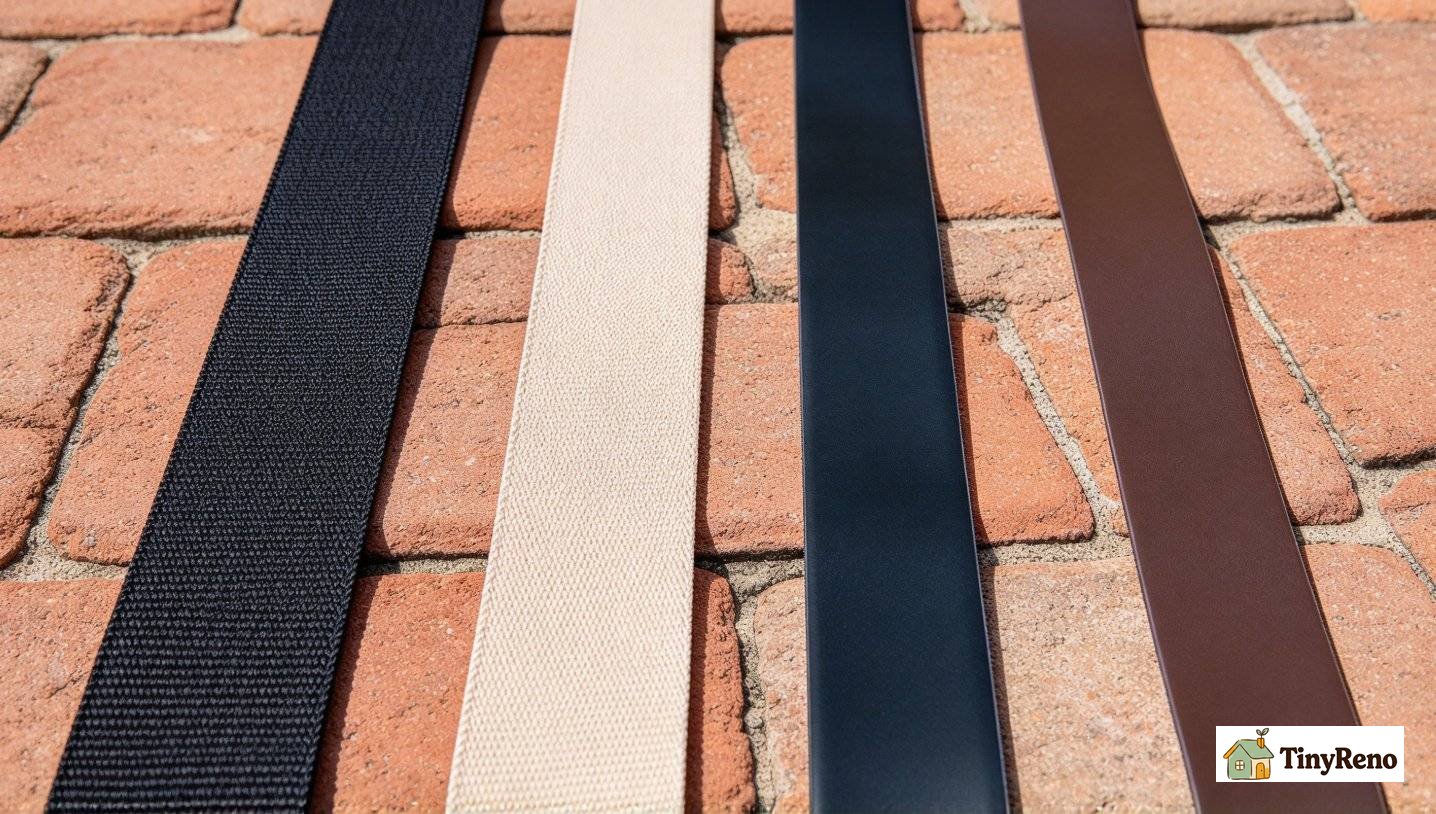
The 4 Kinds of Vinyl Strapping I Tested on One Chair in One Afternoon
I tried four different vinyl strapping materials on the first chair, in four one-foot sections along the seat, in the same order, with the same rivets, in the same afternoon, and I timed each one with the stopwatch on my phone. The four materials were the standard 1-inch vinyl strapping that the hardware store on Atlantic Avenue had on a roll for $4.99 a foot, the marine-grade 1-inch vinyl strapping that the same hardware store had on a different roll for $7.99 a foot, the 1-inch vinyl strapping from a place online that sold it by the yard for $3.50 a yard, and the 1-inch vinyl strapping from a different place online that sold it by the yard for $2.75 a yard and that had a sample pack on the table at the same hardware store on Atlantic Avenue. The sample pack was free, which is the reason I was standing in the hardware store in November looking at four kinds of vinyl strapping instead of standing in the hardware store in November looking at one kind of vinyl strapping and buying it and going home.
Why I Installed in November, Not July, and What 52 Degrees Tells You
I installed the four sections on the first chair on a Saturday afternoon in November when the temperature was 52 degrees, which is the temperature that the vinyl strapping is rated to be installed at by the manufacturer, and which is also the temperature that is going to make the strapping feel stiffer than it is going to feel in July, and which is going to make the strapping feel tighter in November than it is going to feel in July, and which is the reason that the package on every kind of vinyl strapping says "install at room temperature and account for 5 percent expansion in the summer." The expansion is real. The strapping that I installed at 52 degrees in November was tight in November and was loose in July, and the looseness in July is the reason the strapping fails first at the rivet that is closest to the bottom of the seat, which is the rivet that is in the sun and that is the rivet that takes the most expansion stress.
Marine-Grade at $7.99 a Foot, and the Section That Felt Like a Pool Noodle
The first section I tested was the marine-grade strapping at $7.99 a foot, because the marine-grade strapping is the strapping that the hardware store clerk had told me was the strapping that was rated for marine environments, and that the marine environment is the environment that is closest to the Brooklyn south-facing patio environment, and that the marine environment is salt water and UV and heat, and that the Brooklyn south-facing patio environment is UV and heat and the occasional pigeon, which is not as corrosive as salt water but is more corrosive than the father-in-law's Cleveland environment, which is UV and snow and the occasional raccoon, which is less corrosive than the pigeon. The marine-grade strapping installed cleanly at 52 degrees, with no fraying at the rivet hole and no buckling at the bend, and the section was tight in November and tight in July when I went back to check it four months later, and the section felt, when I ran my hand across it, like the surface of a pool noodle that had been left in the sun and that was still smooth. The cost for one chair was $15.98 in strapping plus $2 in rivets, which is a total of $17.98 per chair, which is $71.92 for four chairs, which is the budget I had for the four chairs and which is $4 more than the budget I had told my partner I had for the four chairs.
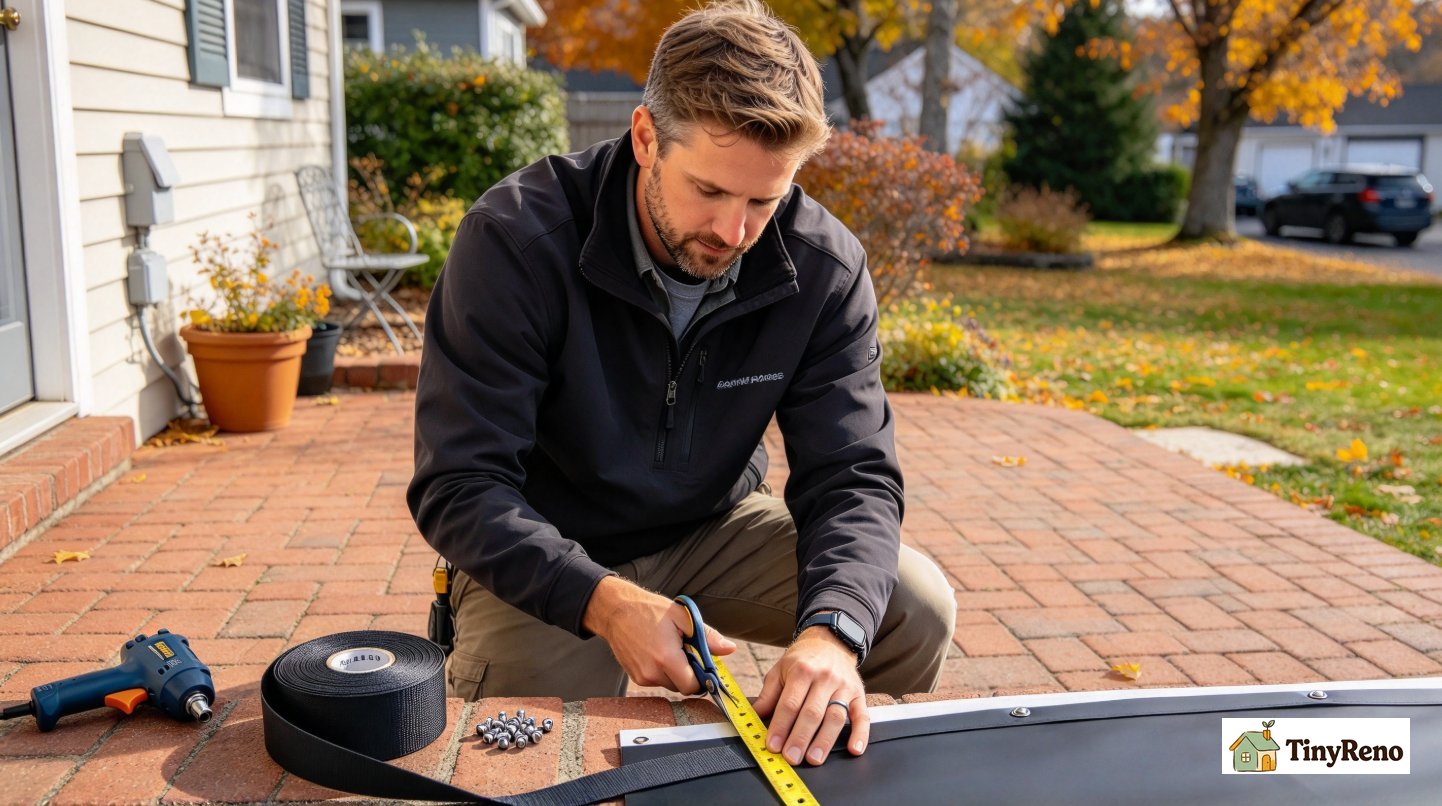
The Other 3: Standard, Online, and Budget, in That Order
The second section I tested was the standard strapping at $4.99 a foot, which is the strapping that was on the chair when the strap broke, which is the strapping that the previous tenant had bought at the same hardware store on Atlantic Avenue and that had lasted three years and four months. The standard strapping installed the same as the marine-grade strapping at 52 degrees, and the section was tight in November and was loose in July and had started to fray at the rivet hole by August. The standard strapping is rated for three to five years in direct sun, and the previous tenant had gotten three years and four months, which is the bottom of the rating, which is the rating that the package says in small letters at the bottom of the back label, and which is the rating that I did not read until I had already installed the strapping and was back at the hardware store buying the rivets.
The third section I tested was the online strapping at $3.50 a yard, and the online strapping is the strapping that is sold by the company that has been in business since 1987 and that has a website that looks like it was last updated in 2003 and that ships the strapping in a tube that fits in a mailbox. The strapping arrived in three days. The strapping was the right width and the right color and the right length and the wrong thickness, and the wrong thickness is the reason that the strapping installed at 52 degrees with a buckle that did not want to buckle and that the buckle ended up buckling at a 30-degree angle rather than a 90-degree angle, and that the strapping has been rubbing against the chair frame ever since I installed it, and that the strapping is going to fail at the buckle before the strapping fails at the rivet. The company sent me a second tube of strapping when I emailed them a picture of the buckle. The second tube was the same wrong thickness. The company refunded me $14. The strapping cost me $14 in shipping for a refund of $14, which is the breakeven point of buying strapping online from a company that does not know how thick its own strapping is.
The fourth section I tested was the budget online strapping at $2.75 a yard. The company sent me a free sample after I emailed them, which is why I had it in the first place. The budget strapping was a sixteenth of an inch thinner than the standard strapping. A sixteenth of an inch is the difference between a strapping that buckles cleanly and one that buckles at an angle, and between a strapping that lasts three years and one that lasts two. It installed at 52 degrees with the same buckle as the standard strapping, and the buckle did not want to close cleanly. It will fail by the second summer because it is too thin for the UV exposure of a south-facing Brooklyn patio.
Why a 1-Foot Test on a 4-Foot Chair Tells You Everything
I tested four kinds of strapping on one chair because the chair, the rivets, and the afternoon were the same for all four. The only variable was the strapping. I tested a one-foot section instead of a four-foot section because the strapping behaves the same regardless of length. I tested in November instead of July because the strapping installs at 52 degrees regardless of when you install it, and the 5 percent expansion happens in July regardless.
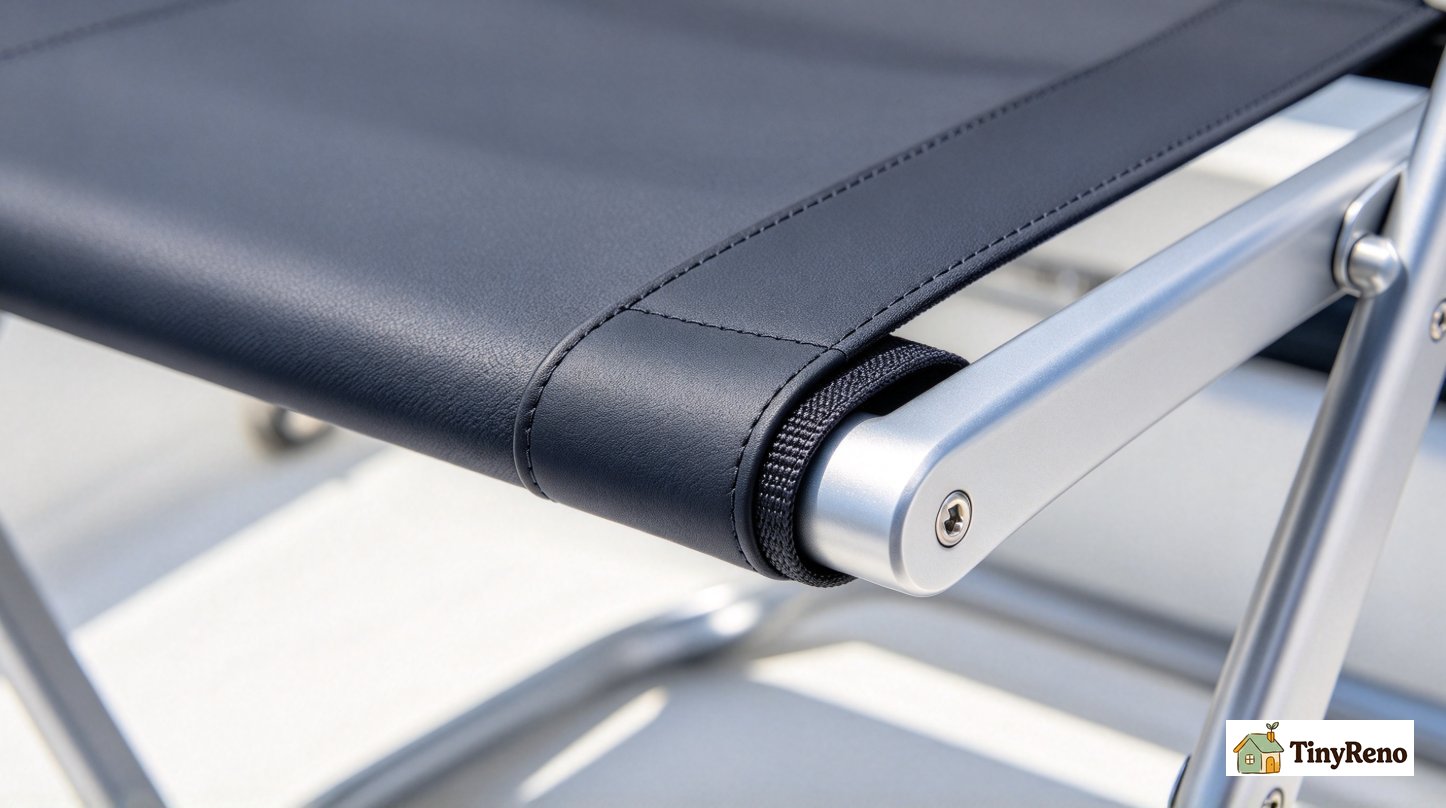
3 Kinds I Would Not Buy Again, and the 4-Month Freeze Check-In
There are three kinds of vinyl strapping I am not going to buy again: the strapping that is too thin, the strapping that buckles at an angle, and the strapping that is rated for three to five years but lasts only three years and four months on a south-facing Brooklyn patio. The too-thin strapping is the budget online strapping at $2.75 a yard. It will fail by the second summer. The buckles-at-an-angle strapping is the online strapping at $3.50 a yard. It will fail at the buckle before it fails at the rivet. The standard hardware store strapping at $4.99 a foot is the one the previous tenant used. It lasted three years and four months. If you buy it, it will last three years and four months for you.
The four sections are still on the chair in March, after a Brooklyn freeze and a nor'easter. The marine-grade section was tight. The standard section was loose. The online section was loose at the buckle. The budget section was tight at the buckle and loose at the rivet. The strapping will fail in the order I described.
If your vinyl strapping for patio chairs broke on three chairs in three weeks and you have tested four kinds of strapping on one chair, the short version is this. Buy the marine-grade vinyl strapping at the hardware store for $7.99 a foot. Skip the budget online strapping at $2.75 a yard because the strapping is too thin. Skip the online strapping at $3.50 a yard because the strapping buckles at an angle. Skip the standard hardware store strapping at $4.99 a foot because the strapping is rated for three to five years and the strapping is going to last three years and four months if the strapping lives on a south-facing patio. Install the strapping at 52 degrees in November, not in July, because the strapping is going to expand 5 percent in July regardless of when the strapping was installed. Buy a rivet gun for $14 if you do not have a rivet gun. Buy extra rivets. Buy a sample of the strapping before you buy the roll. Test the strapping on a one-foot section of the chair before you install the strapping on the four-foot section of the chair. The total cost for four chairs is $72 in strapping and $8 in rivets and $14 in rivet gun, which is $94, which is the budget that I did not tell my partner I had for the four chairs. The way to buy vinyl strapping for patio chairs in Brooklyn is to buy the marine-grade strapping at the hardware store for $7.99 a foot and to install the strapping in November and to test the strapping on a one-foot section before the strapping goes on the four-foot section.


Discussion (0)
Sign in to join the discussion