

In In the second week of March 2021, I had no plan for how to organize office furniture. I drove a Civic with one IKEA desk and a 60-pound heeler-mix named Cooper from the Bushwick sublet to a Long Island City one-bedroom I had not yet measured. The roommate on the lease, Maya, a pediatric nurse at NYU Langone, was packing for a twelve-hour night shift. The living room was the only square footage that was mine to claim, because Maya's bedroom door seals like a submarine hatch and she sleeps from 7 a.m. to 3 p.m. I had two suitcases, one IKEA desk from the Bushwick sublet that did not survive the move, and a $40 gift card to West Elm that I burned in a panic the first week.
Week 1: The Wrong Desk
Week 1. I bought the wrong desk first. I picked the cheapest 48-inch tabletop at West Elm that fit in my Civic on the drive home. It was 29 inches deep, which I did not think mattered until I tried to plug in a 27-inch monitor behind it. The stand took 9 inches of depth, the keyboard another 8, and I had 12 inches of usable writing space. I returned it on day 6, paid $28 in restocking, and bought a 24-inch-deep tabletop from IKEA for $79. That left me 7 inches of usable writing space—tighter, but workable because the monitor stand was narrower. The lesson I keep telling friends: how to organize office furniture always starts with how deep your monitor is, not how wide your desk is.
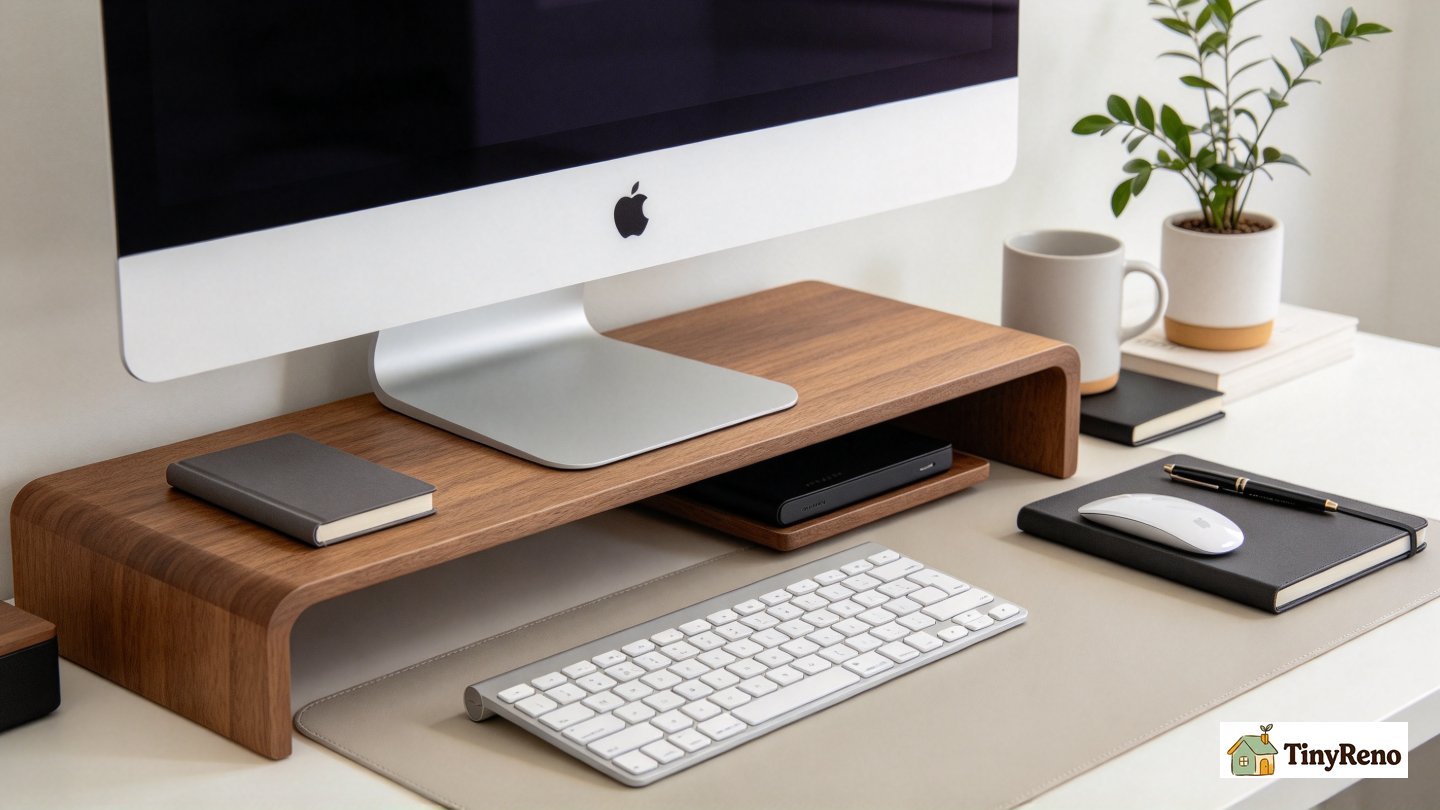
Week 3: The Wall That Saved Me
Week 3. Cooper's hearing and Maya's sleep schedule broke my first arrangement. My first setup put the desk in the middle of the living room, parallel to the windows. Cooper heard every keyboard clack from his bed in the corner and got up seven times a day. Maya started sleeping in earplugs she bought at CVS. By week 3 she knocked on my door at 11 p.m. on a Tuesday and asked if I could move the typing part of my job to the bedroom. I refused because her living room was also where I cooked. So I moved the desk to the wall the bed does not share with her bedroom. That move is the single biggest win of the fourteen months I have worked from this apartment, and the first real answer I have to how to organize office furniture without making a roommate miserable. The desk sits 4 inches off the wall, the monitor faces into the room, and Cooper still hears the keyboard, but he has stopped getting up because his bed is now closer to the front door and the keyboard sound is not the most interesting thing happening.
Week 6: The Pegboard I Took Down
Week 6. I tried to mount a pegboard above the desk. I am telling you this because every list about how to organize office furniture says "add a pegboard." I drilled four holes in the plaster wall, hung a 24-inch x 36-inch white-board with the hooks I bought at the hardware store, and put three pens and a pair of scissors in it. Maya came home from a 12-hour shift two days later, looked at it, and said "you are going to lose half your deposit." I took it down that weekend, patched the four holes with $6 of DAP spackle from the bodega on Vernon, and sanded it smooth before repainting. The patch is invisible now. The pegboard lives folded against the closet. If you rent, do not drill a pegboard into a wall unless your lease says you can.
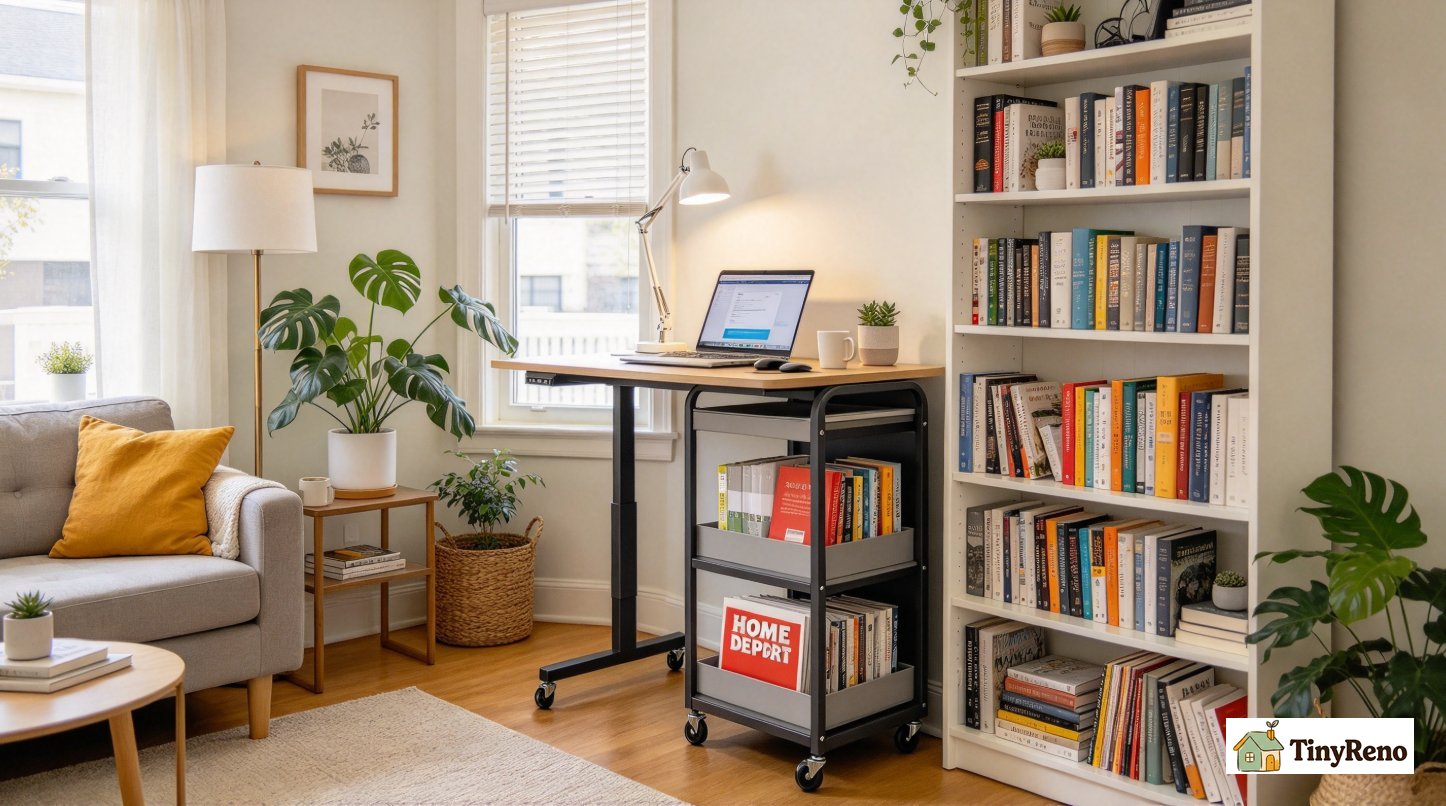
Week 9: The Rolling Cart for Two Roommates
Week 9. Maya moved out in July 2021, and a junior data analyst named Priya moved in. Priya worked hybrid—three days a week from the dining table, two from her Midtown office. We needed to share the kitchen table without one of us owning the corner where the lamp sits. I bought a 32-inch-wide rolling cart at Home Depot for $89 that parks between the bookshelf and the wall when not in use. When Priya works from home, she pulls it to her corner, plugs her laptop in, and rolls it back when she is done. The cart is the second answer I give people who ask how to organize office furniture in a small rental, because it does not need a permanent spot, it does not need a drill, and it does not need to win an argument about who owns which corner.
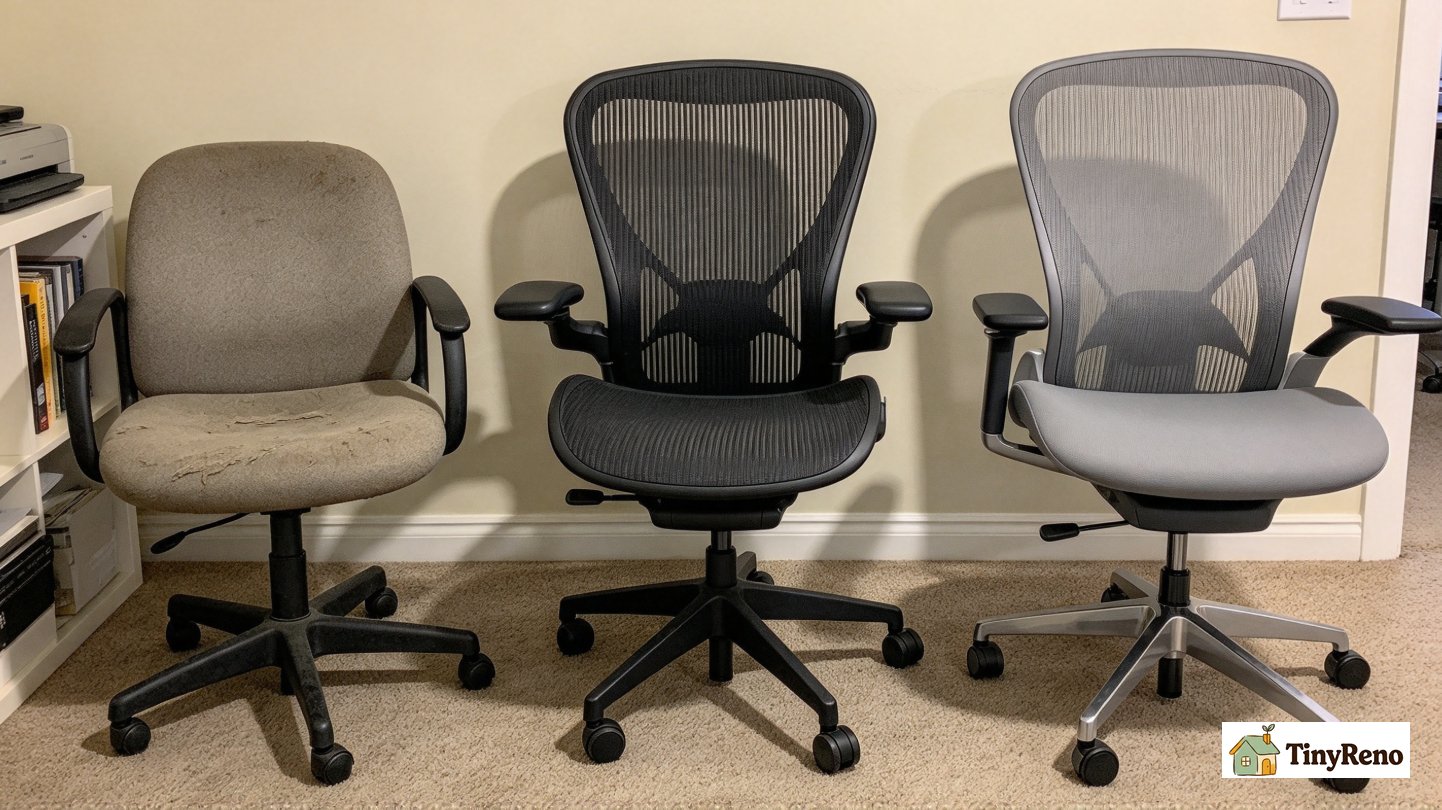
Months 4 to 6: The Three Chairs
Month 4 to month 6. I went through three chairs. The first was a $40 used office chair from a stoop sale on 44th Avenue, which lasted 47 days before the right arm fell off. The second was a $140 mesh chair from Amazon that left me with a numb left hand by month 3, because the lumbar curve did not match my spine. The third was a $220 used Steelcase Leap I found on Facebook Marketplace from a bankruptcy lawyer in Midtown who was closing his office. The Leap is the only office furniture I own that I would not give up. If you want to know how to organize office furniture so it survives the next five years, the chair is the only piece worth spending real money on. Desks come and go. Monitors come and go. The chair is the one piece your body has to live with for eight hours a day. Spend the $150 to $250 used and skip the new-chair markup.
Month 8: The Standing Desk Cooper Rejected
Month 8. I finally tried the standing desk conversion that every productivity blog tells renters to buy. I bought a $90 desk converter that sits on top of the IKEA tabletop. It lasted four days. The wobble made Cooper bark at my elbows every time I typed above a certain height, and Priya said the up-down motion from across the room made her dizzy. I returned it and bought a $40 floor mat instead, which I stand on for one hour a day while the laptop sits on the kitchen counter during calls. The lesson here is the part of how to organize office furniture that nobody writes about: not every productivity upgrade survives contact with a roommate and a 60-pound dog.
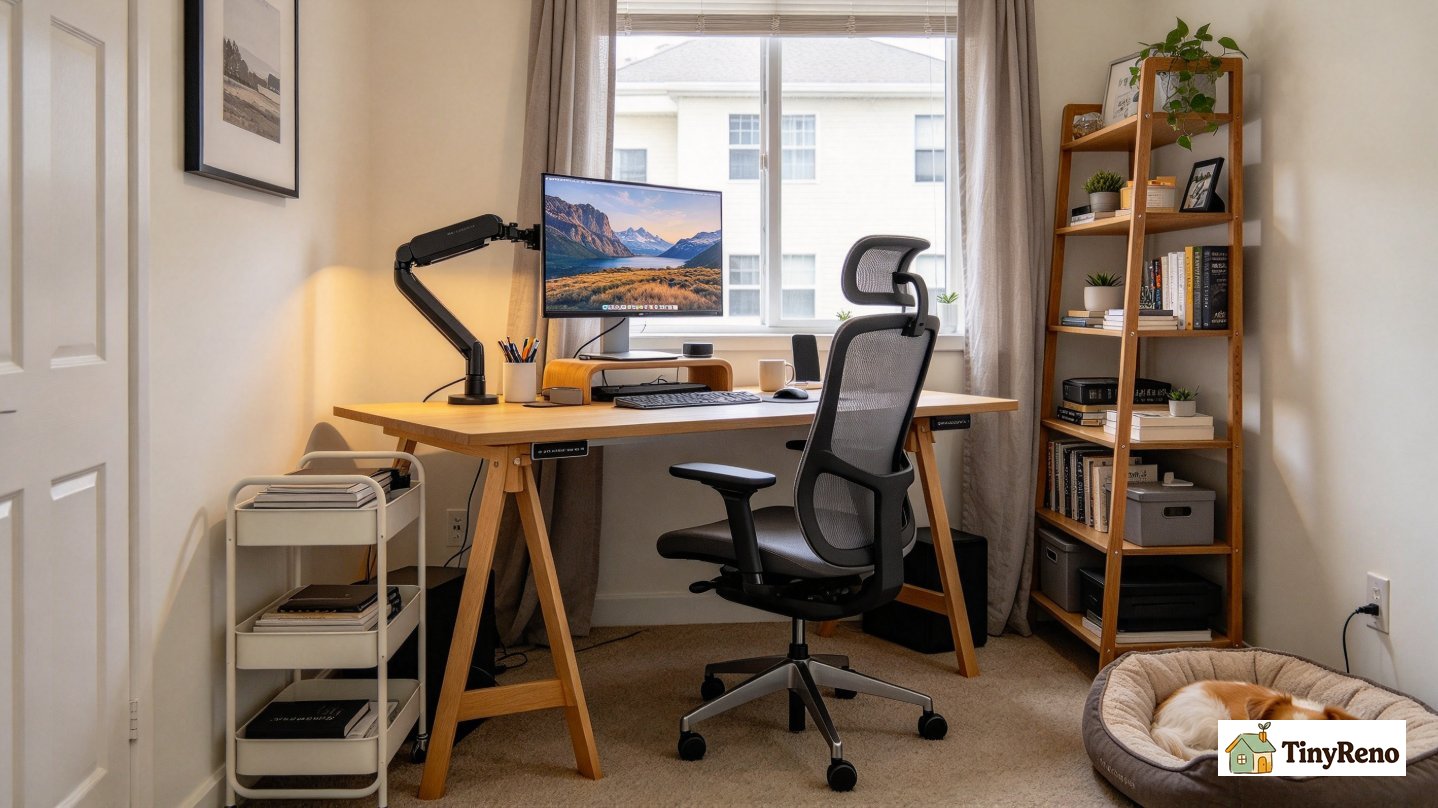
Month 14: What Survived the Lease
Month 14. Now. The living room has one desk (the $79 IKEA tabletop on a $35 IKEA trestle), one chair (the $220 used Steelcase Leap), one 27-inch monitor on a $25 VESA arm clamped to the back of the desk, one keyboard, one mouse, one laptop stand, and one $89 rolling cart. The desk sits on the wall Priya does not share with her bedroom. Cooper still sleeps in the corner. Maya moved out in July 2021, so the bedroom is mine alone now, but I keep the desk in the living room because the Wi-Fi is faster there and the morning light hits the monitor at the right angle.
The one piece I would not buy again is the 27-inch monitor. I have bought three monitors since I moved in. The first died at month 8, the second developed a flicker at month 11, and the current one is fine but I have already started pricing replacements because I do not trust it. If you want one piece of advice about how to organize office furniture from someone who has been doing it for fourteen months in a one-bedroom rental with a roommate and a large dog, skip the 27-inch monitor and buy a 24-inch used from a business liquidator for $80. The 24-inch has a smaller stand, leaves more desk for your coffee, and when it dies in month 14 you will not feel sick about the $80.
If a friend asked me next week how to organize office furniture, I would tell them three things. One: the desk is the second-most important piece, after the chair, and the cheapest 24-inch-deep tabletop from IKEA is fine for the first year. Two: pegboards are for people who own their walls, not people who rent them. Three: rolling carts solve the roommate-who-also-works-from-home problem better than any permanent furniture will. I would still buy the chair. I would still skip the 27-inch monitor. I would still use the same wall.
I am fourteen months in and the monitor will probably die before the lease is up. That is fine. The chair will not. The desk will not. The rolling cart will not. Cooper has stopped getting up when I type, which is the only metric that matters.


Discussion (0)
Sign in to join the discussion