

I found one bed bug but no others in my Brooklyn rental at 11 p.m. on a Tuesday in 2023, and I want to tell you what I did in the next 11 days so you do not have to do the same research at 3 a.m. The pillow was the cheap polyester one I had bought at Target for $14 two apartments ago, and the bed bug was a single adult, fully grown, sitting on the corner with the kind of confidence I have only seen in insects that know exactly where they are. I killed it with a tissue, sealed the tissue in a Ziploc bag, and then sat on the edge of the bed for about 20 minutes doing nothing productive. The pillowcase had two small rust-colored dots on it that looked like blood but were not blood. They were the digested blood that bed bugs leave behind after they feed, and the dots were the second piece of evidence I needed to confirm what I already suspected.
Here is what I wish someone had told me that Tuesday night. I ran five checks, in order, and I almost made one mistake that most renters make in this situation—a mistake that would have cost me $400 and three days of catch-and-release. If you find one bed bug but no others tonight, the next 11 days will go faster if you follow the steps below. I have run these checks on three different rentals in three different Brooklyn neighborhoods. Each time, the rest of the apartment told me whether I had a hitchhiker or a population.
Step 1: Make Sure It Is a Bed Bug
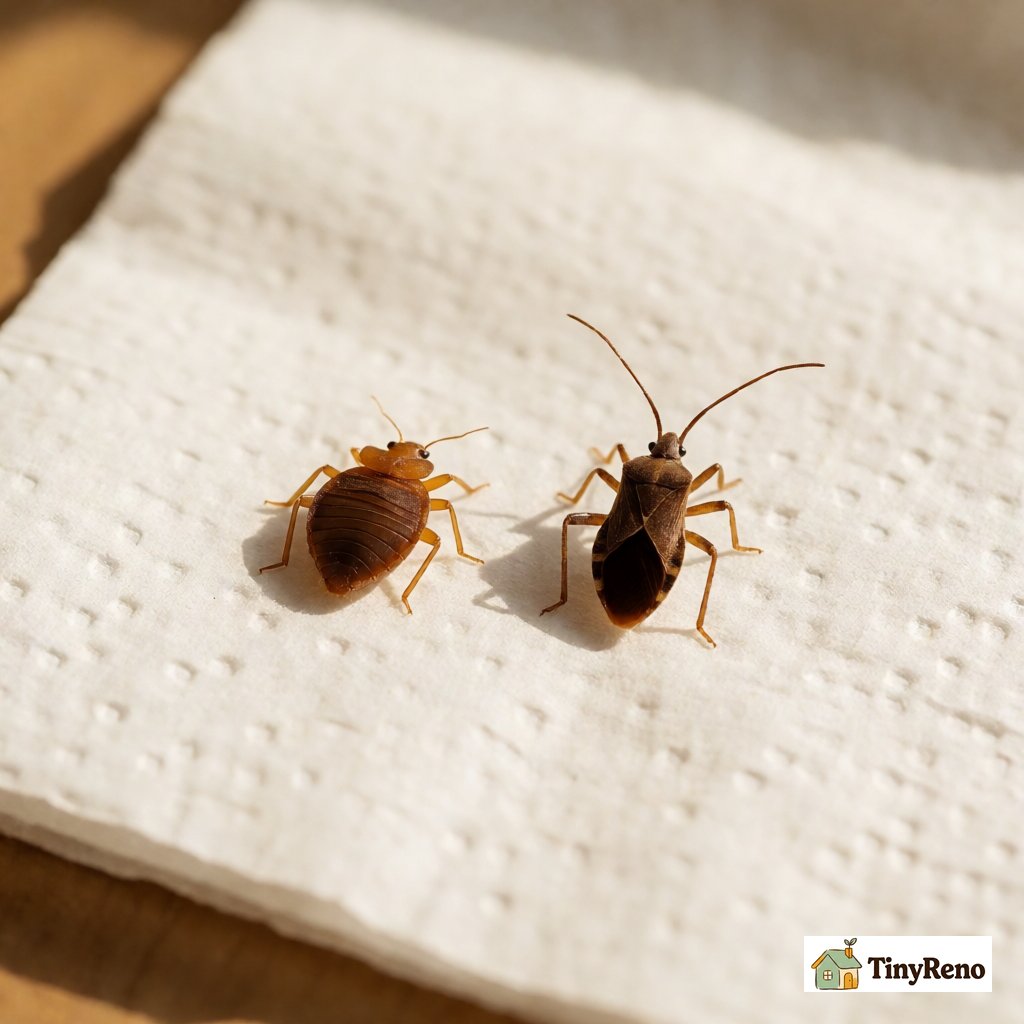
The first check is the most important one, because everything after it depends on it. There are three insects that look like bed bugs and show up in Brooklyn rentals: bat bugs, carpet beetles, and the small juvenile form of the bed bug itself. Bat bugs (Cimex adjunctus) look almost identical to bed bugs but feed on bat blood, and they show up in apartments above or below a roost. Carpet beetle larvae are the small brown hairy ones that look like a moving seed. They do not bite. They wander. If you find one in your bed and you do not see any other evidence of bed bugs, it might be a carpet beetle, and your problem is laundry, not pest control.
Bed bugs have a specific body shape that takes a minute to recognize but is unmistakable once you do. They are wider at the bottom than at the top—sort of an apple-seed shape—and their antennae are about a third as long as their body. Bat bugs look almost identical, but their antennae are longer relative to their body, and they have longer hairs on their thorax. If you can get a clear look at the bug, check the antennae ratio and the hairs. If the antennae are short and the body is smooth, it is probably a bed bug. If the antennae are long and the body is hairy, it might be a bat bug. Bat bugs need a different treatment because they live in the bat-wall, which is a structural problem and a landlord problem, not a laundry problem.
What I did that night was set the dead bed bug I had killed on a white paper towel and looked at it under my phone's magnifier. The antennae ratio was bed-bug-short, not bat-bug-long. The body was the apple-seed shape. The reddish-brown color was right. I had a bed bug. The next four checks were all about figuring out whether I had found one bed bug but no others, or whether I had found one of many.

Step 2: Look for the 4 Evidence Types on the Pillowcase and Sheets
There are four evidence types that confirm an infestation in addition to seeing the bug itself. The first is the digested-blood mark — small rust-colored dots on the pillowcase, sheets, or mattress. These are from the bed bug's previous feed. If you find one bed bug and one rust dot, you have at least one bug that has fed at least once. If you find one bed bug and ten rust dots, you have either multiple bugs or one bug that has been feeding multiple times over multiple nights. The second evidence type is shed skin. Bed bugs shed five times before becoming adults, and each shed skin is a pale translucent shell about the size of a sesame seed. They tend to accumulate in the seams of the mattress and the folds of the pillowcase. The third is fecal spots — small black dots that look like ink stains. The fourth is a sweet musty smell. If your apartment smells faintly like a wet towel that never fully dried, you have a smell and you have bugs.
I had two rust-colored dots on the pillowcase. I had no shed skins, no fecal spots, and no smell. This was good news. The single bed bug I had killed was most likely a hitchhiker that had come in on luggage or a thrift-store jacket in the last 48 hours. I had not yet had time to set up a population. I had a grace period of two or three days before eggs would have started hatching if the bug had mated recently. I had a small window to act. People who find one bed bug but no others should treat the moment the same way: kill the bug, look for the four evidence types on the pillowcase, and start the sticky-trap clock that night.
Step 3: Set Sticky Traps in 6 Placements
Sticky traps are the renter's best friend in this situation. They are not a treatment — they do not kill an infestation on their own. They are a monitor. They tell you whether you have one bug or twenty. The placement matters. You want the traps in six locations: under each leg of the bed frame (4), on the floor at the side of the bed where you sleep (1), and inside the closet near any luggage or bags that could be the source of the hitchhiker (1). You do not put them on the floor in the middle of the room. Bed bugs travel along edges and seams, not across open spaces.
If you find one bed bug but no others tonight and set 6 sticky traps in the morning, you will know within 7 days whether the trap catches zero bugs, one bug, or three or more. That single number tells you the entire story of what is happening in your bedroom.
I set 6 traps that night. The next morning I had zero catches. Day 2, zero. Day 3, I caught one bed bug in the under-bed trap on the side closest to the wall. Day 4, zero. Day 5, I caught a second bed bug in the closet trap. Day 6, zero. Day 7, I caught a third bed bug in the under-bed trap. Three bed bugs in seven days from six traps. The math told me I had at least three adult bed bugs in active rotation, plus whatever eggs were already laid. The hitchhiker scenario was over. This was an infestation.
Step 4: Decide Between DIY and Professional Heat Treatment
The decision between DIY and professional treatment comes down to three factors: number of bugs caught in traps in 7 days, evidence on the pillowcase and mattress, and budget. If you caught one bug and have zero evidence on the sheets, you can probably handle it with a $40 mattress encasement and aggressive vacuuming for two weeks. If you caught three or more bugs in a week and have rust dots on the pillowcase, you have a population and you need professional heat treatment. Heat treatment is the most reliable way to kill the eggs. Pesticide sprays kill the adults but not the eggs, and the eggs hatch two weeks later, starting the cycle over.
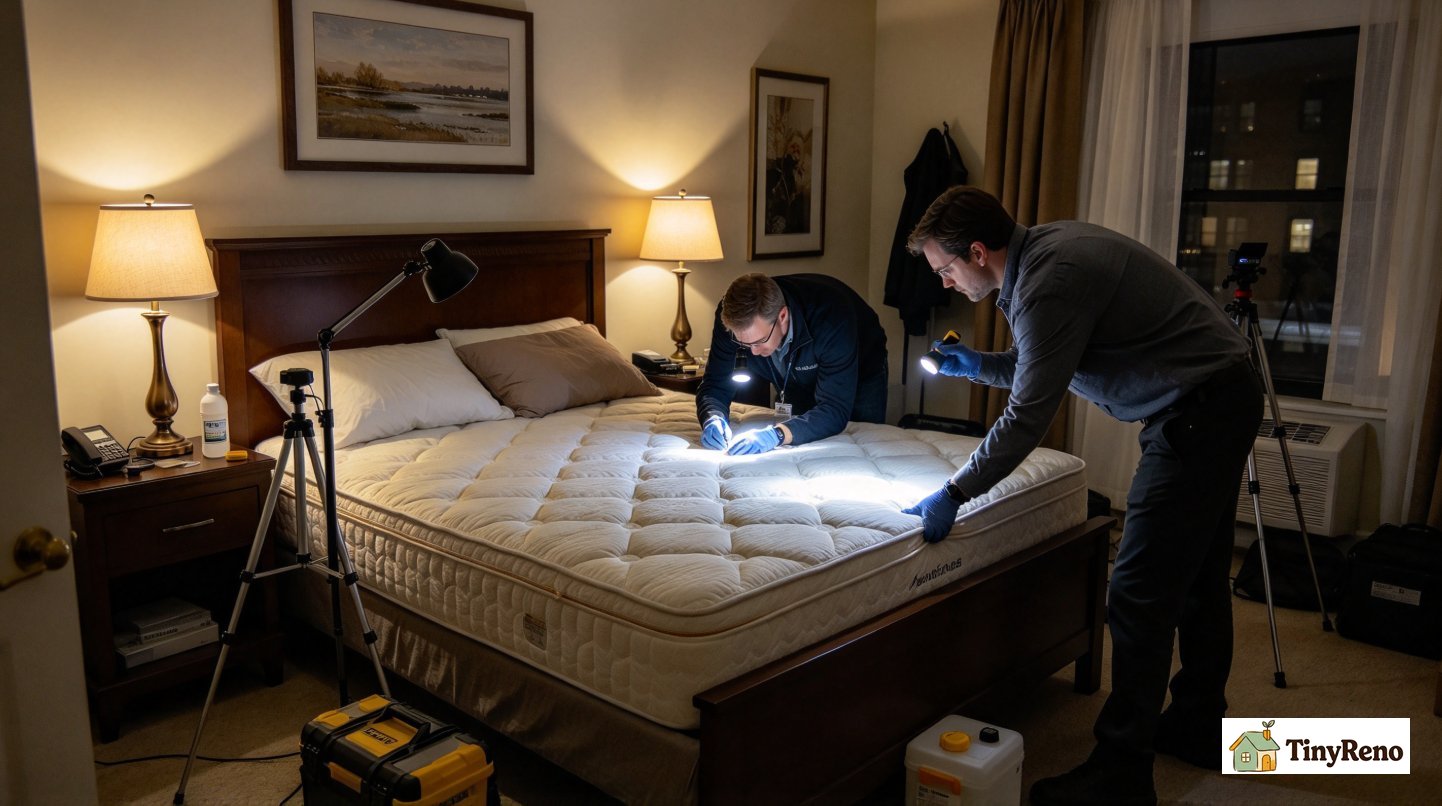
I caught three bed bugs in seven days. I had rust dots on the pillowcase. I called a licensed pest-control company that does heat treatment. The cost was $250 for the bedroom, $350 if they had to do the whole apartment. They sent a truck-mounted heater, raised the bedroom to 130 degrees for six hours, and the bed bugs died. The total time from the first bed bug sighting to the heat treatment was 11 days. The total cost was $302, including the $12 pack of sticky traps, the $40 mattress encasement, and the $250 heat treatment.
Step 5: The Mistake I Almost Made
The mistake I almost made was catching the first bed bug alive in a jar to show the landlord. I had picked up the jar and was walking toward the kitchen to find a lid when I realized the problem. Bed bugs lay eggs. A single mated female lays one to three eggs per day. If I had caught her alive, she would have laid eggs in the jar. The eggs would have hatched. The baby bed bugs would have walked out of the jar and into my apartment. The jar was a portable incubator for a new generation of bed bugs. If you want to save a bed bug as evidence for the landlord, save it in a sealed Ziploc bag, dead. Kill it first. A dead bed bug is good evidence. A live bed bug in a jar is a future infestation.
What I actually did that night was kill the bed bug with a tissue, seal the tissue in a Ziploc bag, write the date and the location on the bag with a Sharpie, and put the bag in the freezer. The landlord, when I called the next morning, did not need to see the bug. The evidence on the pillowcase and the catch history on the three sticky traps was enough. The Ziploc bag was for my records, not for the landlord. If your landlord is the kind who needs to see a physical bug to believe there is one, you can thaw the bag and show them. But do not, under any circumstances, keep a bed bug alive in a jar on your kitchen counter overnight. The eggs will hatch. The babies will walk out. You will have a worse infestation than the one you started with, and it will cost you more than the $250 heat treatment would have. If you find one bed bug but no others tonight, the alive-in-a-jar mistake is the one you cannot afford.
If you found one bed bug but no others, you are at the beginning of something, not the middle. The five checks—identify, look for evidence, set traps in 6 placements, decide DIY or pro, and never keep the bug alive—take one night to run and tell you everything you need to know. Yes, it might be a single hitchhiker. No, you should not assume that. Yes, you might need a professional. No, you should not wait three weeks to find out. The cost of finding out too late is not just the heat treatment. The cost is the heat treatment plus a second cycle of bites. If you act in the first 48 hours, you have a chance to contain it. If you act in the second week, you have a chance to treat it. If you act after that, you have a chance to move out and start over. Pick the right week. The first one is cheapest. People who find one bed bug but no others tonight will end up in one of those three places, and the difference is the five checks you ran on the first night.


Discussion (0)
Sign in to join the discussion